U.S. Healthcare System Actors and Incentives
Introduction to the U.S. Healthcare System
A System of Many Parts
The U.S. healthcare system isn't one single thing. It's a sprawling network of public and private organizations, all working together in a complex, and sometimes messy, way. Unlike countries with a single government-run system, the U.S. model is a hybrid. It involves private companies, government agencies, and individuals all playing a part.
To make sense of it, it helps to break the system down into its five main players: providers, payers, patients, employers, and the pharmaceutical industry. Each one has a distinct role, and they all interact constantly.
The Key Players
Let's look at each of these groups more closely.
Providers are the people and places that deliver medical care. This is a broad category that includes doctors, nurses, surgeons, and therapists. It also includes the facilities where they work, like hospitals, clinics, and urgent care centers.
Simply put, if you're receiving a medical service, you're getting it from a provider.
Payers are the organizations that foot the bill. They manage the financial side of healthcare. When a provider sends a bill for a doctor's visit or a hospital stay, a payer is usually responsible for covering a large portion of that cost.
Payers include private health insurance companies (like UnitedHealth, Anthem, or Aetna) and government programs. The two biggest government payers are Medicare, which primarily covers people 65 and older, and Medicaid, which covers low-income individuals and families.
Patients are at the heart of the system. This is any individual who needs or receives medical care. While payers cover a lot of the costs, patients are also responsible for a share through things like monthly premiums, deductibles, and co-pays.
Employers play a surprisingly large role. In the U.S., the most common way for people under 65 to get health insurance is through their job. Employers purchase health plans from payers and offer them to their employees as a benefit. They often cover a portion of the insurance premium, making it more affordable for the employee.
Finally, the Pharmaceutical Industry consists of the companies that research, develop, and manufacture medications and medical devices. These are the drugs prescribed by providers and the technologies used in hospitals. They are a critical part of treatment but also represent a significant portion of healthcare costs.
How They Interact
These five groups are in constant motion, exchanging services, information, and money. A typical interaction might look like this:
- An employer offers a health insurance plan from a payer to its employees.
- A patient (the employee) enrolls in the plan, paying a monthly premium. The employer also contributes.
- The patient feels sick and visits a provider (a doctor's office).
- The provider diagnoses the patient and prescribes a medication developed by the pharmaceutical industry.
- The provider then sends a claim for the visit to the payer.
- The payer processes the claim and pays the provider for the service, minus any portion the patient owes.
This is a simplified view, of course. The actual process of submitting and paying claims is incredibly complex, involving multiple steps and organizations to ensure data is handled correctly.
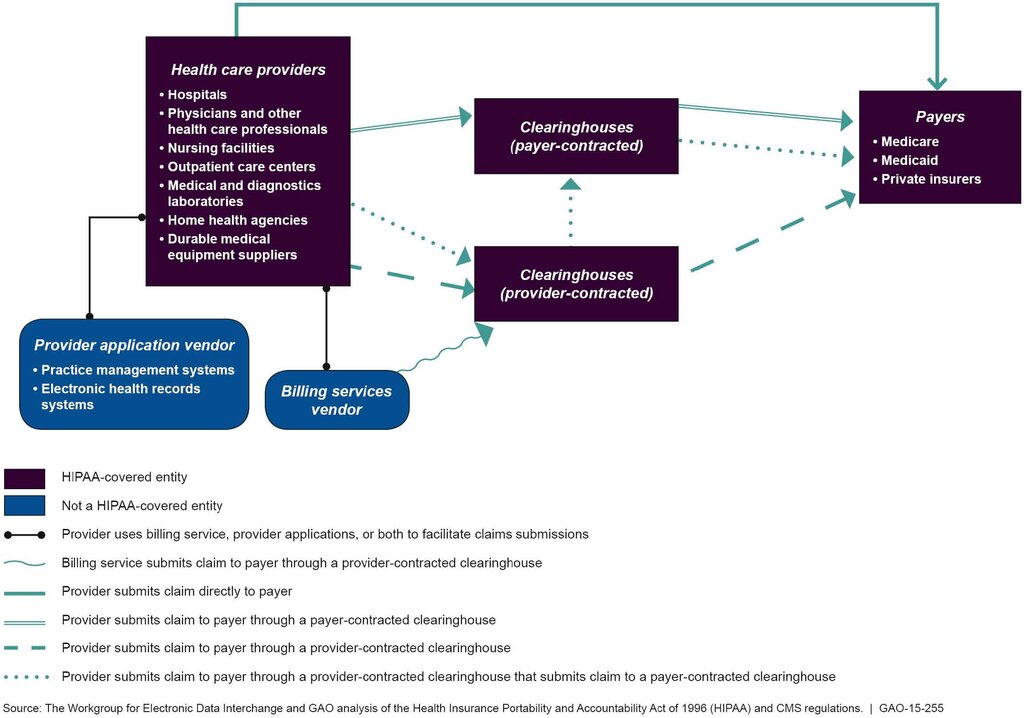
Each player in this system has its own goals and pressures, which shapes how they interact. Understanding this basic structure is the first step to grasping the challenges and opportunities within American healthcare.