US Citizenship Test Essentials
Naturalization Eligibility
The Path to Citizenship
Becoming a U.S. citizen through naturalization is a major life event. It's a formal process with clear requirements set by law. Think of it as a journey with specific milestones you need to reach. The main requirements revolve around your age, how long you've lived in the country, and your personal conduct. Let's break down what it takes to be eligible.
Core Requirements
For most people, the journey starts with a few key qualifications. First, you must be at least 18 years old to apply. You also need to be a Lawful Permanent Resident (LPR), commonly known as a green card holder, for a certain period.
This is where the residency rules come in. U.S. immigration law wants to see that you have made the country your home. This is measured in two ways:
- Continuous Residence: You must have maintained your residence in the United States for five years as an LPR without any long absences. A trip abroad for more than six months can disrupt this continuity.
- Physical Presence: Within that five-year period, you must have been physically present in the U.S. for at least half the time, which amounts to 30 months.
Finally, you need to have lived for at least three months in the state or USCIS district where you plan to apply. This shows you have ties to your local community.
| Requirement | Duration |
|---|---|
| Lawful Permanent Resident | 5 years |
| Physical Presence in U.S. | 30 months |
| State or USCIS District Residency | 3 months |
Beyond time and place, U.S. law requires applicants to have “good moral character.” This is a broad concept that looks at your behavior and conduct. USCIS will review your record to ensure you respect and follow the law.
Certain criminal convictions can permanently disqualify you from citizenship, while others may only require you to wait a few years after the incident before you can apply. Honesty throughout the immigration process is a key part of demonstrating good moral character.
Special Categories and Exceptions
The standard five-year residency rule doesn't apply to everyone. Congress has created special paths to citizenship for people in specific situations, recognizing their unique connections to the country.
Spouses of U.S. Citizens
If you are married to a U.S. citizen, you may be able to apply for naturalization after only three years as a Lawful Permanent Resident. To qualify for this exception, you must have been living with your citizen spouse for the entire three-year period, and your spouse must have been a citizen for that same duration. The physical presence requirement is also reduced to 18 months.
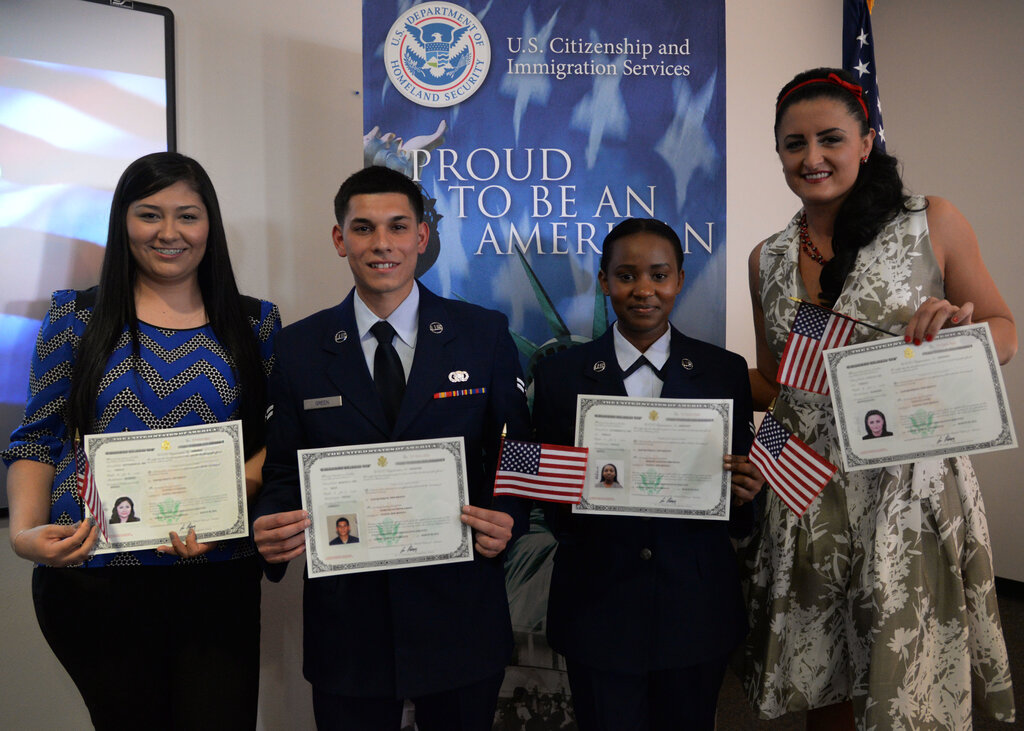
Members of the U.S. Military
Non-citizens who serve in the U.S. armed forces have access to an expedited path to citizenship. In recognition of their service and sacrifice, the residency requirements are often waived.
An individual who serves honorably for at least one year can apply for naturalization. If they serve during a designated period of hostilities, they may be eligible to apply immediately after enlisting, without having to become a Lawful Permanent Resident first.
Children of U.S. Citizens
Children often acquire or derive citizenship through their parents automatically. A child born outside the U.S. to a U.S. citizen parent may already be a citizen at birth. Others may become citizens automatically when their parent naturalizes.
If a child of a U.S. citizen did not automatically become a citizen, they may be eligible for naturalization once they are admitted to the U.S. as a Lawful Permanent Resident and are living in the legal and physical custody of their citizen parent. The usual residency and physical presence requirements do not apply to them.
Exemptions and Accommodations
The naturalization process is designed to be accessible. Applicants with disabilities may request accommodations, such as having a sign-language interpreter or a family member attend the interview.
Furthermore, there are exemptions to the English and civics test requirements based on age and length of residency. For example, applicants who are age 50 or older and have lived in the U.S. as a green card holder for at least 20 years are exempt from the English language requirement. They may take the civics test in their native language.
What is the standard period a Lawful Permanent Resident (LPR) must maintain continuous residence in the U.S. before being eligible to apply for naturalization?
To meet the physical presence requirement under the standard five-year rule, an applicant must have been in the U.S. for at least ___ months.
Meeting these eligibility criteria is the first major step toward becoming a U.S. citizen. Once you've confirmed you qualify, you can move on to the application process itself.