US-China Tariffs and Your Wallet
Introduction to Tariffs
What Is a Tariff?
A tariff is a tax imposed by a government on goods and services imported from other countries. Think of it as an entry fee that foreign products must pay to enter a domestic market. This fee increases the price of the imported goods, making them less attractive to consumers compared to locally produced alternatives.
The core purpose of a tariff is to either protect domestic industries from foreign competition, generate revenue for the government, or both.
Let's break down those two main goals.
First, there's protectionism. By making imported goods more expensive, tariffs give a competitive advantage to domestic companies. If a car made in another country suddenly costs more due to a tariff, a similar car made locally might look like a better deal. The goal is to encourage consumers to buy domestic products, which in turn supports local businesses and jobs.
Second, tariffs are a source of revenue. The taxes collected from imports go directly to the government, which can then use that money to fund public services. Historically, tariffs were a major source of income for many nations before the widespread use of income taxes.
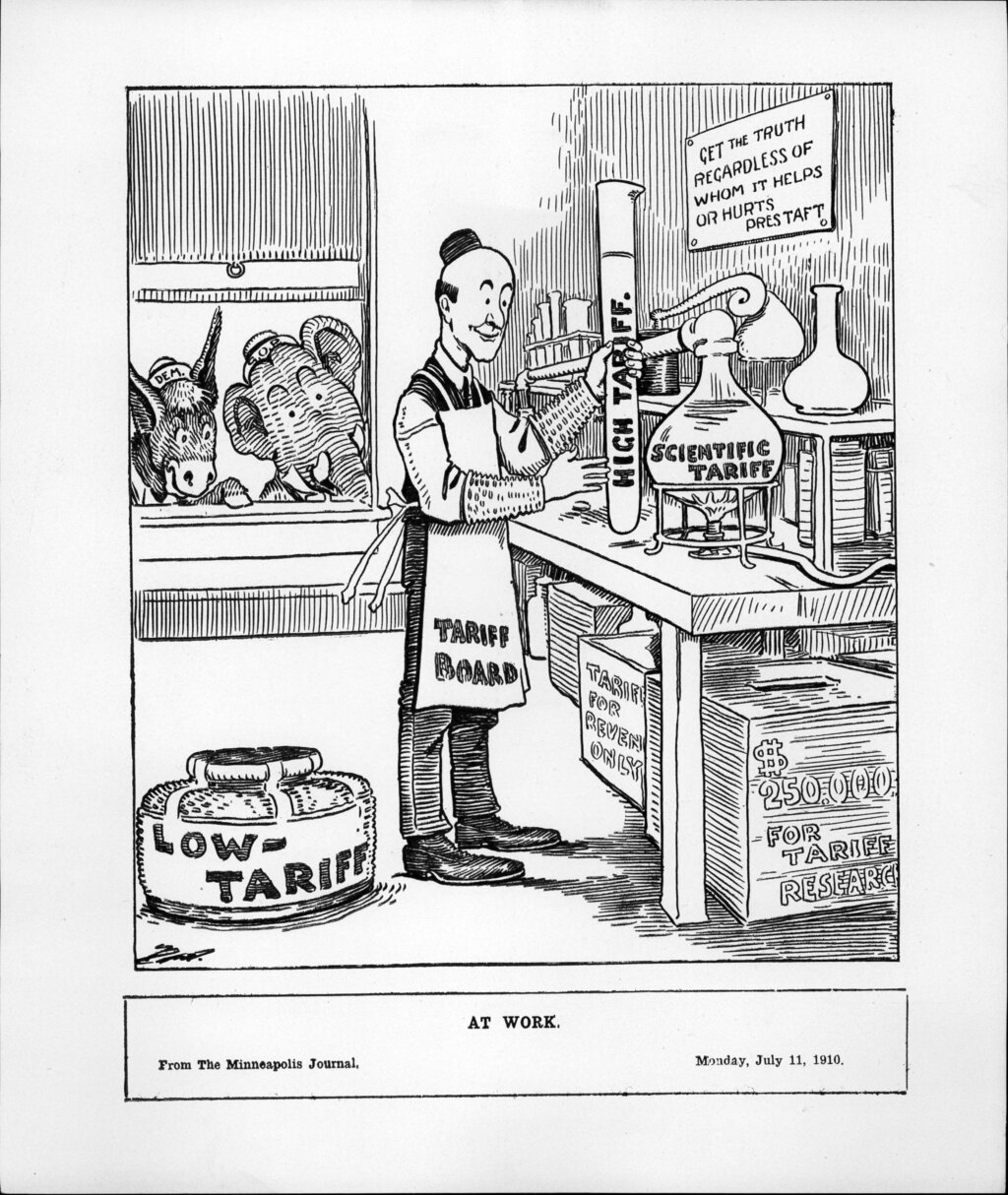
The Main Types of Tariffs
Not all tariffs are created equal. They are calculated in different ways, depending on the specific policy. The three most common types are ad valorem, specific, and compound tariffs.
Ad Valorem Tariff
adjective
A tariff levied as a percentage of the value of the imported good.
The term ad valorem is Latin for "according to value." This is the most common type of tariff. For example, if a smartphone is imported with a value of $500 and there's a 10% ad valorem tariff, the tax would be $50 (). The final cost to the importer, before any other fees, would be $550.
Specific Tariff
adjective
A fixed fee levied per physical unit of an imported good.
This type of tariff is based on the quantity or weight of the goods, not their value. For instance, a country might impose a $1 tariff on every barrel of imported oil, regardless of whether the market price of oil is high or low. The same goes for items like shoes or wheat—a fixed amount is charged per pair or per ton.
A compound tariff is simply a combination of an ad valorem and a specific tariff. An imported good might be taxed both on its value and per unit. For example, a tariff on a bicycle could be 💲10 plus 5% of its value.
| Tariff Type | How It's Calculated | Example |
|---|---|---|
| Ad Valorem | Percentage of the item's value | 10% tax on a $200 watch ($20 tariff) |
| Specific | Fixed fee per item or unit | $1 tax per imported shirt |
| Compound | A mix of both | $0.50 per pound plus 5% of the value |
Now that you understand the what and why of tariffs, let's test your knowledge.
What is the primary goal of a protectionist tariff?
A tariff calculated as a percentage of the imported good's price is known as what type of tariff?
Understanding these basic mechanics is the first step in seeing how tariffs can influence everything from the price of your groceries to global trade relationships.