US China Relations Unpacked
Early U.S.-China Relations
The Old China Trade
In the early 19th century, the United States was a young nation, but its merchants were already sailing the globe. China, under the Qing Dynasty, was a massive, ancient empire with a long history of carefully managed contact with the outside world. For decades, American ships had joined European vessels in the lucrative but restrictive “Old China Trade,” centered in the port of Canton (modern-day Guangzhou).
This trade was conducted on China's terms. Foreign traders were confined to a small district, dealt only with a designated group of Chinese merchants called the Co-hong, and were subject to Chinese law. There were no formal diplomatic relations, no embassies, and no official channels for communication between the U.S. government and the imperial court in Beijing.
Everything changed after the First Opium War (1839–1842) between Britain and China. Britain’s victory resulted in the Treaty of Nanking, which forced China to cede Hong Kong, open five ports to British trade, and grant British citizens legal protections. American merchants saw the new privileges Britain had won and worried they would be pushed out of the market. The U.S. government knew it needed to act, but it wanted to secure its own advantages without firing a single shot.
A Treaty of Peace, Amity, and Commerce
In 1844, American diplomat Caleb Cushing arrived in Macau to negotiate with the Qing imperial commissioner, Qiying. The result was the Treaty of Wanghia, named after the village where it was signed. It was the first formal agreement between the United States and China.
The motivations on both sides were purely pragmatic. The U.S. wanted to ensure its traders received the same benefits as the British. The Qing court, weakened and wary after its defeat, saw an opportunity to use the Americans and French to counterbalance the powerful British, a strategy sometimes called “using barbarians to control barbarians.” By granting similar terms to other nations, they hoped to prevent any single power from becoming too dominant.
The Treaty of Wanghia was a pivotal moment. It established a framework for U.S.-China relations that would last for nearly a century, based on commerce and defined legal rights rather than colonial ambition.
Key Provisions
The treaty was comprehensive, but a few articles stood out for their long-term impact.
| Provision | What It Meant |
|---|---|
| Extraterritoriality | American citizens accused of crimes in China would be tried by American officials under U.S. law, not in Chinese courts. This removed them from the jurisdiction of the Qing legal system. |
| Fixed Tariffs | The treaty established a clear, published schedule of taxes on imports and exports. This prevented local officials from charging arbitrary fees and made trade more predictable. |
| Most Favored Nation | This was the cornerstone of the agreement. It guaranteed that any right or privilege China granted to another country in the future would automatically be extended to the United States. |
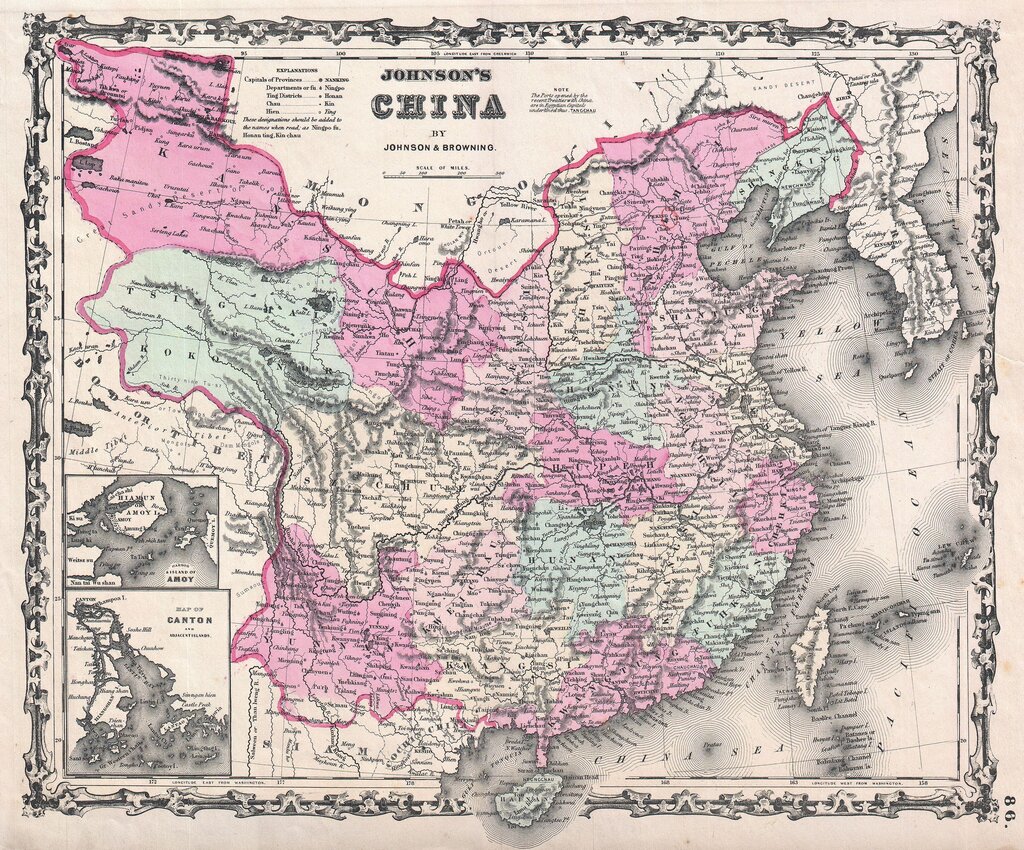
| Access to Treaty Ports | Americans gained the right to trade, reside, and build churches and hospitals in the five treaty ports opened by the British: Canton, Amoy, Fuchow, Ningpo, and Shanghai. |
The treaty also explicitly gave Americans the right to learn Chinese languages, a small but significant detail that showed an interest in deeper, more sustained contact.
The Impact
The Treaty of Wanghia successfully put U.S. trade on equal footing with Britain's and established the first official diplomatic ties between the two nations. For China, it further solidified a new and unequal relationship with the West. The principles of extraterritoriality and the most favored nation clause would become standard features in the series of “unequal treaties” that China signed with Western powers throughout the 19th century.
These early interactions set the stage for a complex relationship. They were driven by commerce and a mutual, if cautious, curiosity. While the treaty opened doors for American merchants, missionaries, and diplomats, it also embedded the U.S. within a system of foreign privilege that challenged China's sovereignty for the next hundred years.
Now, let's test your knowledge of these foundational events.
Before the 1840s, how was foreign trade in China, including that from the U.S., primarily conducted?
What major event directly prompted the United States to seek a formal treaty with China in the 1840s?