Urbach Tail and Anderson Localization Explained
Introduction to Condensed Matter Physics
The Order of Solids
Condensed matter physics is the study of “stuff.” It explores how large numbers of atoms, when packed together, give rise to the properties of the solids and liquids we see and touch every day. It answers questions like: Why is copper a good wire for your charger, while the plastic around it isn't? Why is glass transparent, but wood is opaque?
The key to understanding solids is realizing they aren't just random jumbles of atoms. In many materials, especially metals and minerals, atoms arrange themselves in a highly ordered, repeating pattern. This rigid, three-dimensional framework is called a crystal lattice.
Think of a perfectly stacked pile of oranges at the grocery store. Each orange is placed in a precise location relative to its neighbors, forming a predictable pattern. A crystal lattice is the atomic version of this.
The smallest repeating piece of this pattern is called the unit cell. By copying and pasting the unit cell over and over in three dimensions, you can build the entire crystal. The shape of the unit cell determines many of the material's properties. While there are many complex crystal structures, most metals use one of three simple, cubic arrangements.
Electrons in a Crowd
Now that we have a picture of the atomic scaffolding, let's consider the electrons. In a single, isolated atom, electrons can only have specific, discrete energy levels, like rungs on a ladder. But when you bring billions of atoms together into a crystal lattice, something interesting happens.
The electrons from one atom start to interact with the electrons and nuclei of their neighbors. This interaction forces the discrete energy levels to broaden into wide ranges of allowed energies called energy bands. In between these bands are forbidden energy ranges, known as band gaps.
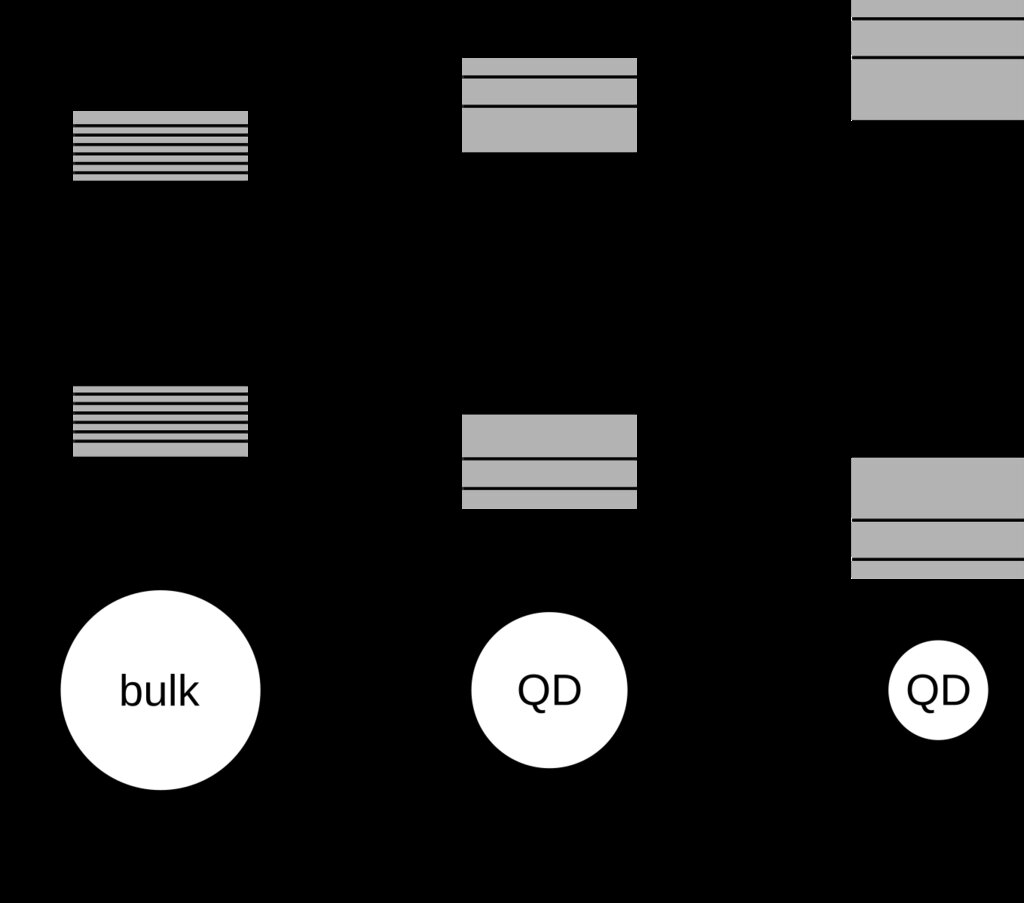
This concept, called band theory, is crucial. The arrangement and filling of these bands dictate a material's electronic properties. The highest energy band that is at least partially filled with electrons at absolute zero temperature is the valence band. The next band up, which is often empty, is the conduction band. Electrons in the conduction band are free to move throughout the crystal and conduct electricity.
band gap
noun
The range of energy levels that no electron in a solid can have. It separates the valence band from the conduction band.
The energy an electron needs to jump from the valence band to the conduction band is called the band gap energy, . The size of this gap is everything.
Conductors, Insulators, and Semiconductors
Band theory elegantly explains the vast difference in electrical conductivity between materials. It all comes down to the band gap and how the bands are filled with electrons.
Conductors: In materials like copper and aluminum, the valence band and conduction band overlap. There is no band gap. Electrons can move effortlessly into the conduction band with even a tiny bit of energy. This abundance of mobile electrons makes them excellent conductors of electricity.
Insulators: In materials like rubber, glass, and diamond, the valence band is completely full of electrons, and a very large band gap separates it from the empty conduction band. It takes a huge amount of energy to kick an electron across this gap. Since almost no electrons can reach the conduction band, these materials do not conduct electricity.
Semiconductors: Materials like silicon and germanium are the interesting middle case. They have a small, but not zero, band gap. At absolute zero, they act like insulators. But at room temperature, thermal energy is enough to excite a few electrons from the valence band into the conduction band. This allows them to conduct a small amount of electricity.
The magic of semiconductors is that we can precisely control their conductivity by adding impurities, a process called doping. This ability to tune their electronic properties is the foundation of all modern electronics, from your phone to the largest supercomputers.
Now let's test your understanding of these core concepts.
What is the smallest repeating piece of a crystal's highly ordered, three-dimensional pattern?
According to band theory, what happens to the discrete electron energy levels of individual atoms when they are brought close together to form a solid?
Understanding crystal structures and band theory provides the framework for exploring the rich and complex behaviors of the materials that make up our world.