UPS Logistics and Supervision Mastery
Supply Chain Fundamentals
What Is a Supply Chain?
Think about your morning coffee. The journey of that coffee didn't start at the cafe. It began with a farmer growing beans, perhaps thousands of miles away. From there, the beans were harvested, processed, shipped, roasted, packaged, and delivered to the store before they ever reached your cup.
That entire network of people, companies, resources, and activities is a supply chain. It’s the complete system for moving a product or service from supplier to customer.
Every supply chain, whether for coffee or for overnight packages, has a few key players:
- Suppliers provide the raw materials.
- Manufacturers turn those materials into finished products.
- Distributors (or wholesalers) buy in bulk from manufacturers and sell to retailers.
- Retailers sell the products directly to the public.
- Customers are the final link, purchasing and using the product.
Of course, in a company like UPS, you're not just one link. You are the connective tissue that holds many of these stages together, ensuring goods move smoothly from one point to the next.
The Two Critical Flows
A supply chain isn't just about moving physical stuff. Two equally important currents are always moving: the flow of goods and the flow of information.
Goods flow forward from supplier to customer. Information flows in every direction, tying the entire chain together.
The flow of goods is what most people picture when they think of logistics. It's the physical movement of raw materials, parts, and finished products. This also includes reverse logistics, which is the process of handling returns and sending items back up the chain for repair, recycling, or disposal.
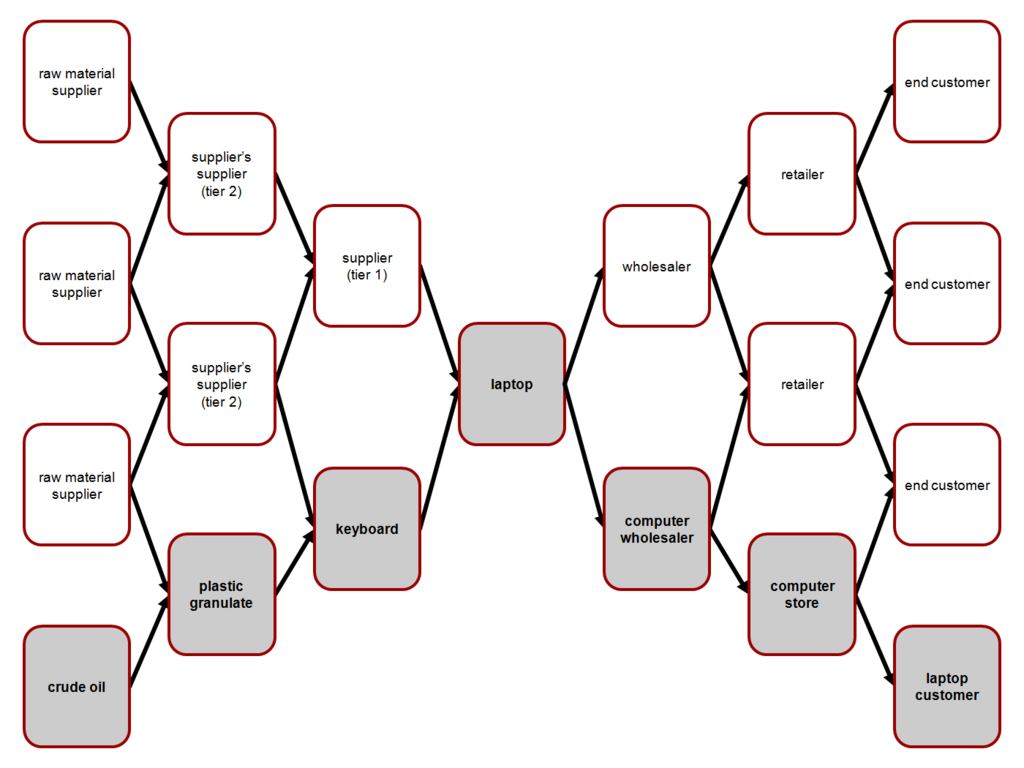
The flow of information is the data that moves alongside the goods. This includes purchase orders, shipping notifications, inventory data, invoices, and delivery confirmations. Without a clear and constant flow of information, the movement of goods would grind to a halt. Imagine trying to manage a warehouse without knowing what shipments are scheduled to arrive.
Why Teamwork Matters
A supply chain is a team of different organizations, all with their own goals. For the chain to work efficiently, every player needs to be in sync. This is where integration and coordination come in.
Think of it like a relay race. The speed of each individual runner is important, but what truly determines success is the handoff. If the baton is dropped or the timing is off, the race is lost. In a supply chain, the handoffs happen every time goods or information move from one partner to another, from a supplier to a factory, or from a distribution center to a delivery driver.
Coordination means sharing information and planning together. When a retailer shares its sales data with a manufacturer, the manufacturer can better predict how much product to make, preventing shortages or wasteful overproduction. When all parties have visibility into where a shipment is, they can plan their own operations more effectively.
The fundamental goal of supply chain management is to enhance customer value and satisfaction.
When all parts of the supply chain are integrated and coordinated, the results are clear: costs go down, delivery times get shorter, and customers get what they want, when they want it. That efficiency is the core of successful supply chain management.
What is the best definition of a supply chain?
In a typical supply chain for a physical product, which player buys in bulk from manufacturers and sells smaller quantities to retailers?