Upper Limb Venous Anatomy
Superficial Venous Networks
The Body's Surface Venous Map
While deep veins run alongside arteries, bundled securely within muscle, a second, more visible network exists just beneath the skin. This superficial system is responsible for draining blood from the skin and subcutaneous tissues. In the upper limb, this network begins in the hand.
On the back of your hand, you can see a web of veins that form the of the hand. This network collects deoxygenated blood from the fingers and palm. These smaller veins merge to form a more prominent structure called the dorsal venous arch, which runs horizontally across the back of the hand. This arch serves as the primary collection point before channeling blood into the two main superficial veins of the arm.
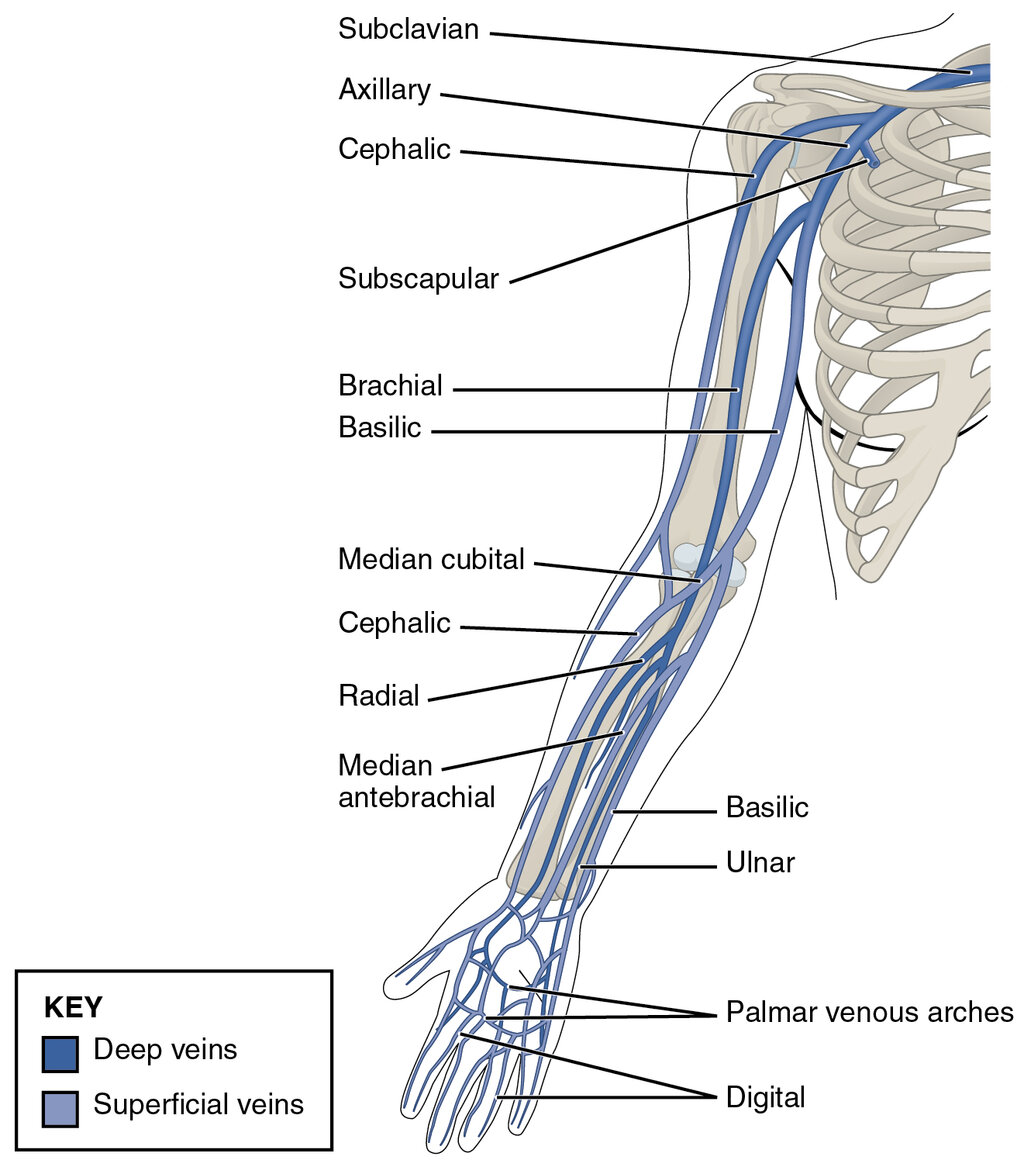
From this arch, two major vessels arise. The cephalic vein originates from the thumb side (lateral aspect) of the dorsal venous arch. It travels up the lateral side of the forearm and arm, eventually diving deep near the shoulder to join the axillary vein. The basilic vein begins on the pinky finger side (medial aspect) of the arch. It ascends along the medial side of the forearm, where about halfway up the upper arm, it also dives deep to become the axillary vein.
A Tale of Two Systems
Unlike the deep venous system, which is relatively consistent from person to person, the superficial network is known for its high degree of anatomical variation. The classic textbook pattern is just one of many possibilities. For example, the median cubital vein, a common site for drawing blood, connects the cephalic and basilic veins in the crook of the elbow. However, its exact location, size, and even its presence can vary significantly.
These variations are clinically important. Knowing the common patterns helps healthcare workers locate veins for procedures like phlebotomy and IV insertions, but they must also be prepared for a patient's unique anatomy.
More Than Just Plumbing
Superficial veins play a crucial role in —the body's ability to maintain a stable internal temperature. When you are hot, blood is shunted from the deep veins to these superficial ones. Bringing more blood close to the skin's surface allows excess heat to radiate away into the environment, cooling you down. You can often see these veins become more prominent after exercise or on a hot day for this exact reason. Conversely, when you are cold, blood flow to the superficial veins is restricted to conserve body heat.
This dual function of drainage and temperature control makes the superficial venous system a dynamic and essential part of our circulatory anatomy.