Upper Limb Venous Anatomy
Superficial Venous Networks
Your Body's Surface Highways
Your arm has two main sets of veins working in parallel: a deep system and a superficial one. We're going to focus on the superficial network, which runs just beneath your skin. This system is crucial for cooling you down and is the primary site for drawing blood or placing an IV line.
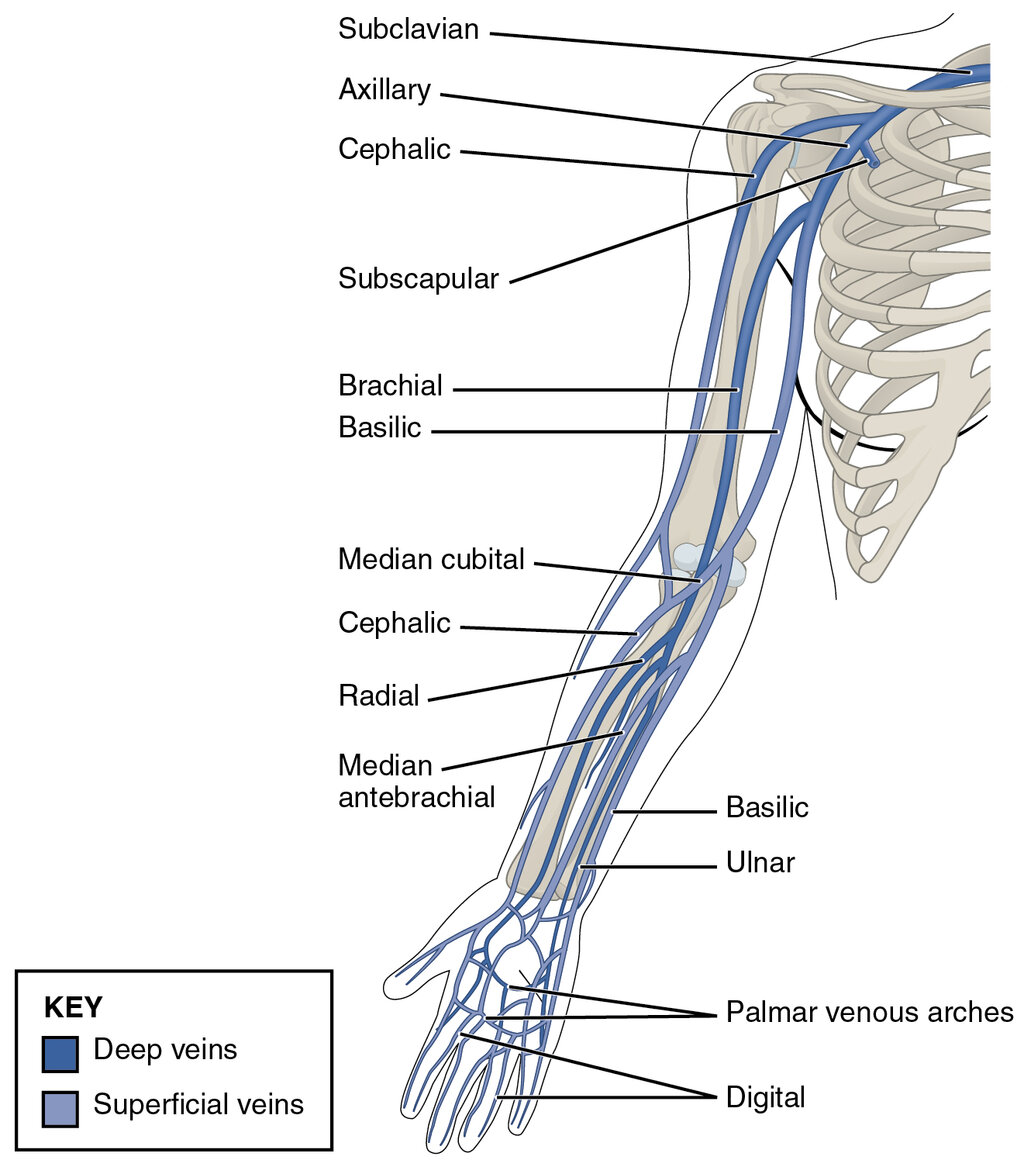
Everything starts on the back of your hand in the , a web of small veins that collect deoxygenated blood from your fingers and hand. Think of it as a collection of small streams. These streams merge to form the two major superficial "rivers" of the arm: the cephalic and basilic veins.
The Cephalic Vein's Journey
The cephalic vein is one of the two main superficial veins of the arm. It begins on the thumb-side (radial aspect) of the dorsal venous network. From there, it travels up the lateral side of the forearm and arm. You can often see it on the outer part of your bicep.
As it approaches the shoulder, the cephalic vein passes through a landmark called the , which is the indentation between your deltoid (shoulder) and pectoralis major (chest) muscles. After passing through this groove, it dives deep to connect with the axillary vein in your armpit.
The Basilic Vein's Path
The basilic vein starts on the pinky-finger side (ulnar aspect) of the dorsal venous network. It ascends along the inner side of your forearm. While it starts superficially, its journey takes a turn about halfway up the upper arm.
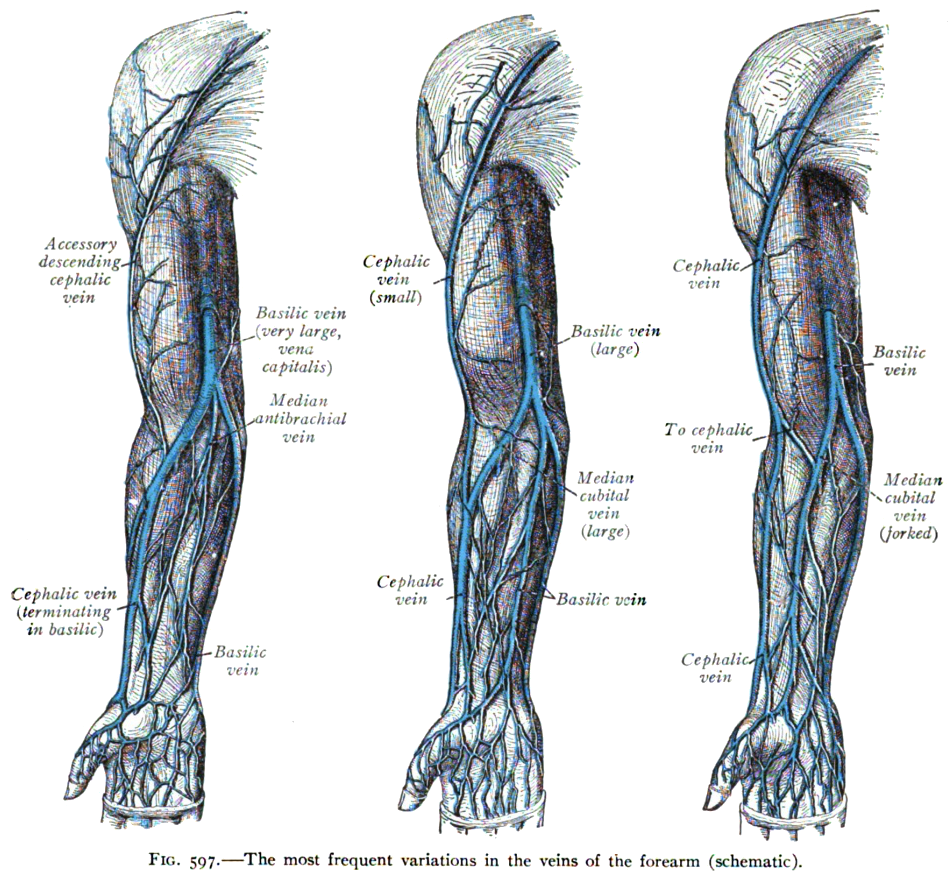
Here, the basilic vein dives deep, piercing the tough connective tissue layer known as the brachial fascia. This is a key difference from the cephalic vein, which stays superficial almost its entire length. Once it's in the deeper compartment, the basilic vein merges with the brachial veins to form the axillary vein. In the elbow pit, or cubital fossa, a branch called the median cubital vein often connects the cephalic and basilic veins. This is the most common site for .
Nerves and Veins
These superficial veins don't travel alone. They run alongside cutaneous nerves, which provide sensation to the skin. For example, parts of the medial antebrachial cutaneous nerve (which supplies skin on the inner forearm) run close to the basilic vein. This anatomical relationship is important. When inserting a needle into a superficial vein, care must be taken to avoid irritating or injuring these adjacent nerves, which can cause pain, tingling, or numbness.