Upper Body Exercise Therapy Train the Trainer
Anatomy and Physiology
The Upper Body Framework
Your upper body's ability to push, pull, lift, and throw starts with its bony architecture. Three key bones form the foundation: the clavicle (collarbone), the scapula (shoulder blade), and the humerus (upper arm bone). The clavicle acts as a strut, connecting your arm to your torso. The scapula is a floating, triangular bone that provides a base for arm movement, gliding across your ribcage.
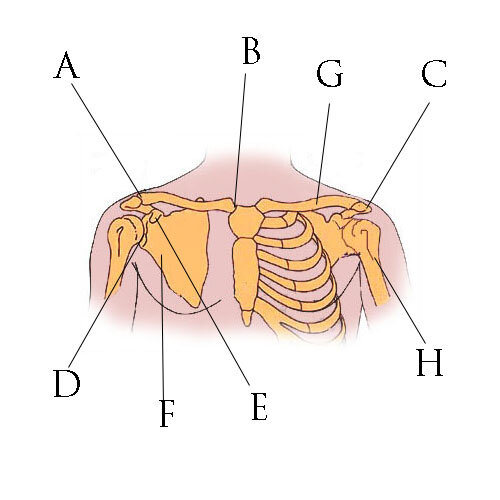
These bones meet to form the shoulder joint, or glenohumeral joint. This is a ball-and-socket joint, where the ball-like head of the humerus fits into a shallow socket on the scapula called the glenoid fossa. This design allows for incredible range of motion but also makes it less stable than other joints.
Further down the arm, the humerus connects with the bones of the forearm to create the elbow joint. Unlike the shoulder, the elbow is a simple hinge joint, designed primarily for bending (flexion) and straightening (extension).
Major Movers and Stabilizers
Bones don't move on their own. They're pulled into action by muscles. The major muscles of the upper torso and back are responsible for the powerful movements of the shoulder and arm.
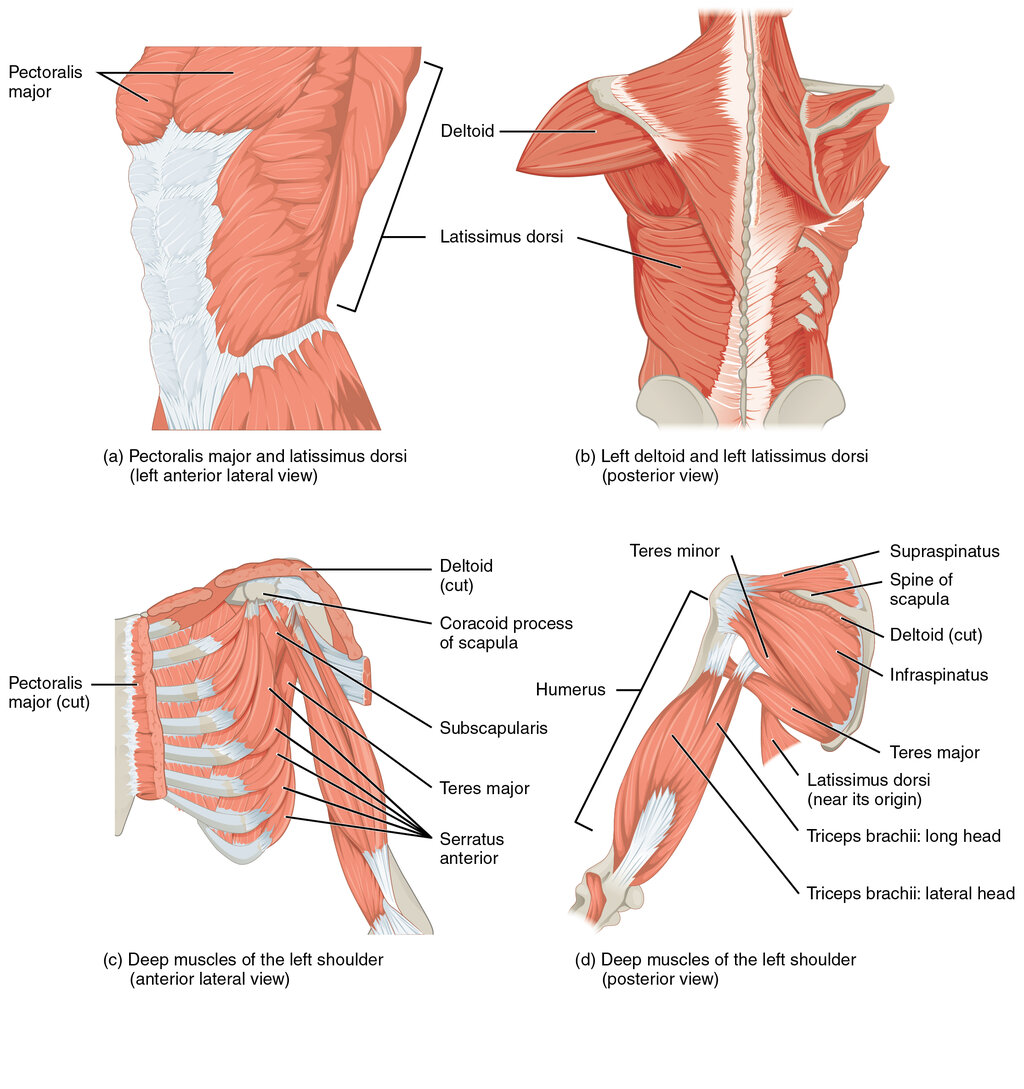
The deltoid is the cap-like muscle that covers the shoulder. It has three distinct sections, or heads: anterior (front), lateral (side), and posterior (rear). Together, they lift the arm in any direction.
The pectoralis major, or "pecs," is the large fan-shaped muscle of the chest. Its main job is to push things away from you and bring your arm across your chest, a movement called adduction.
The latissimus dorsi, or "lats," is the largest muscle in the upper body, stretching across your back. It's the primary muscle for pulling motions, like doing a pull-up or rowing.
Finally, the trapezius, or "traps," is a large diamond-shaped muscle covering the upper back and neck. It has upper, middle, and lower fibers that work to shrug your shoulders up, pull them back, and draw them down.
| Muscle Group | Location | Primary Function |
|---|---|---|
| Deltoids | Shoulder | Arm abduction (lifting arm out to the side) |
| Pectoralis Major | Chest | Arm adduction and pushing |
| Latissimus Dorsi | Back | Arm extension and pulling |
| Trapezius | Upper Back/Neck | Scapular elevation, retraction, depression |
Control and Command
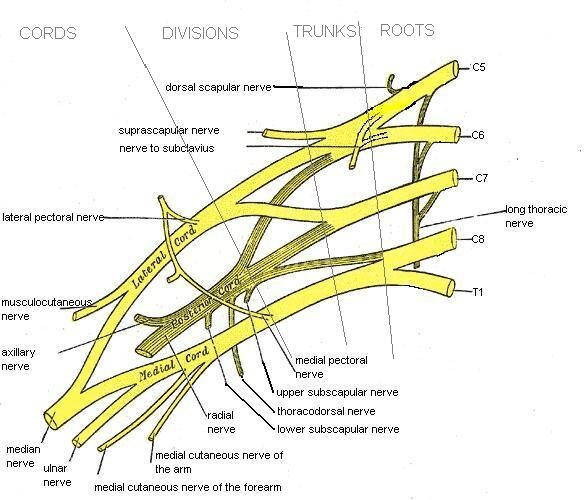
Every movement, from a powerful throw to a gentle touch, is controlled by the nervous system. Your brain sends electrical signals down the spinal cord and out through a complex network of nerves called the brachial plexus. This bundle of nerves originates in the neck and branches out to supply every muscle in the arm and hand.
When you decide to lift your arm, a signal travels from your brain to the deltoid. The nerve endings release a chemical called acetylcholine, which causes the muscle fibers to contract. This contraction shortens the muscle, pulling on the humerus and raising your arm. The brain constantly adjusts these signals based on feedback from sensory nerves in the muscles and joints, ensuring the movement is smooth and coordinated.
The biceps and triceps are the primary movers of the elbow. The biceps brachii, on the front of the upper arm, is responsible for flexing the elbow (bending your arm) and supinating the forearm (turning your palm up). The triceps brachii, on the back of the arm, does the opposite: it extends the elbow (straightening your arm).
Biceps and triceps are an antagonistic pair. When one contracts to create movement, the other must relax and lengthen to allow it.
Putting It All Together
Understanding these individual parts helps us see how they work together in common movement patterns.
Pushing movements, like a push-up or bench press, primarily involve the pectoralis major, anterior deltoids, and triceps. The muscles work together to push a load away from the body.
Pulling movements, such as rowing or pull-ups, rely on the latissimus dorsi, middle and lower trapezius, and biceps. These muscles work in concert to pull a load toward the body.
Overhead movements, like lifting a box onto a high shelf, require the deltoids to lift the arm and the trapezius and other smaller muscles to rotate the scapula upward, clearing space for the humerus to move freely. This coordinated action is known as scapulohumeral rhythm.
Effective exercise therapy depends on understanding these relationships. An issue in one area, like weak scapular stabilizers, can lead to problems elsewhere, such as shoulder pain during overhead movements. By knowing the anatomy, you can better identify the source of dysfunction and design exercises to correct it.
Which of the following best describes the glenohumeral joint?
During a classic pushing movement like a bench press, which muscle group is LEAST involved?