Unveiling the Electrical Relay
Relay Components
Anatomy of a Relay
At its core, a relay is a switch that's flipped not by your finger, but by an electrical signal. This allows a small, low-power circuit to control a separate, high-power circuit. To understand how it works, we need to look at its four main parts: the coil, the armature, the contacts, and the spring.
The Coil
The coil is the relay's muscle. It's simply a length of copper wire wrapped around a small iron core. When an electric current flows through this wire, the iron core becomes a temporary magnet—an electromagnet. The strength of this magnetic field is what sets everything else in motion.
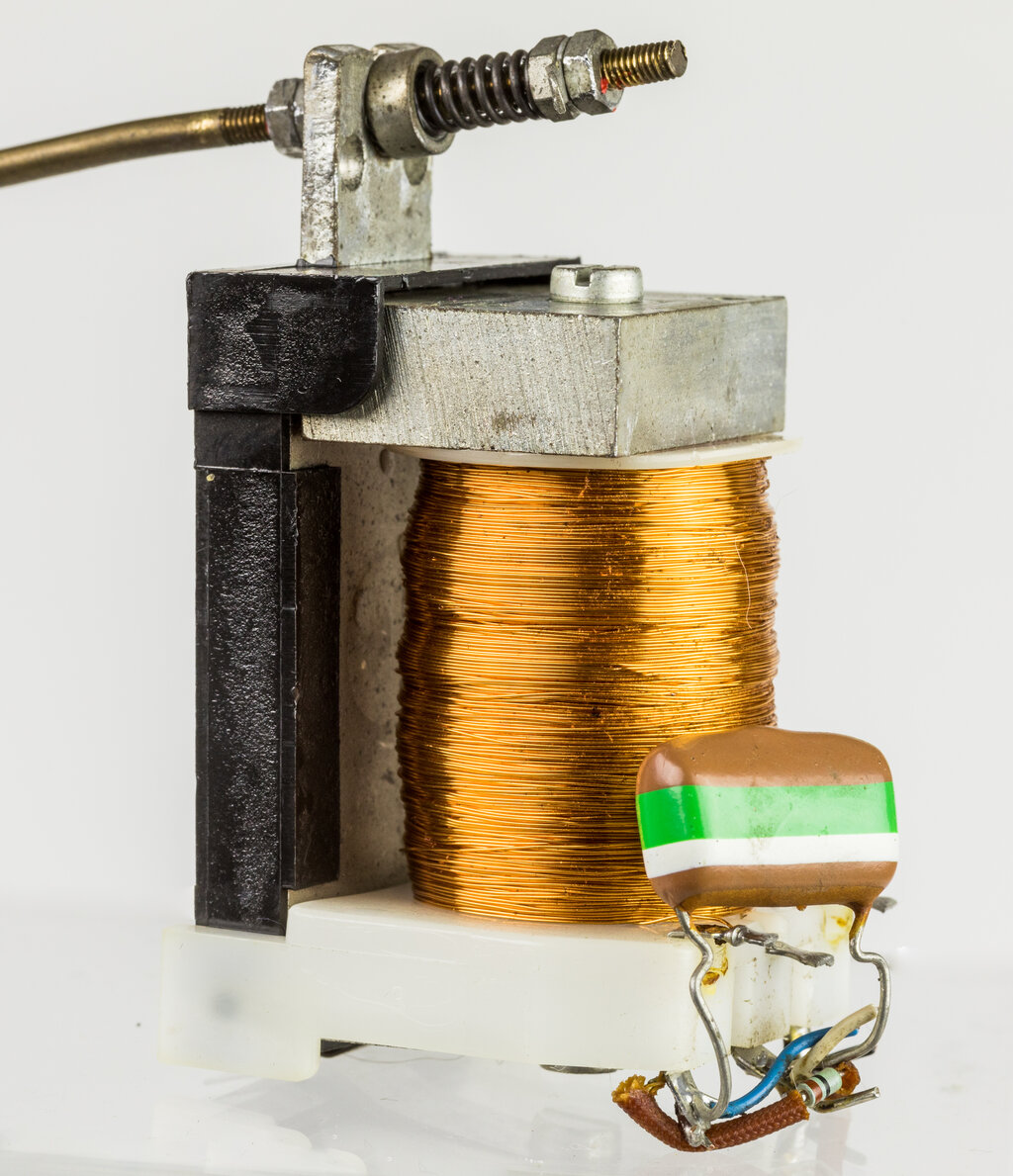
When the current stops, the magnetic field disappears instantly. This ability to turn magnetism on and off with electricity is the key to the relay's function.
The Armature and Spring
The armature is the moving part of the relay. It’s a small, hinged lever positioned very close to the electromagnet's core. When the coil is energized and creates its magnetic field, it pulls the armature toward it. This pivoting motion is what operates the switch contacts.
Working against the armature is the spring. Its job is simple: return the armature to its original, or "normal," position as soon as the coil loses power. This ensures the switch reliably opens or closes when the control signal is removed.
The Contacts
The contacts are the business end of the relay. They are the metal points that physically open and close to control the second circuit. The armature's movement directly controls whether these contacts touch or separate. There are three main types of contact terminals you'll find.
| Terminal | Name | Description |
|---|---|---|
| COM | Common | This is the terminal the armature is connected to. Current enters or leaves the switch through COM. |
| NO | Normally Open | This contact is open when the relay coil is not energized. The circuit is broken. |
| NC | Normally Closed | This contact is closed when the relay coil is not energized. The circuit is complete. |
When the coil is energized, it pulls the armature. This movement flips the state of the contacts. The armature breaks its connection with the Normally Closed contact and simultaneously makes a connection with the Normally Open contact.
By arranging these contacts, a single relay can be used to turn a circuit on, turn a circuit off, or switch power between two different circuits. Now let's check your understanding of these parts.
What is the primary function of the coil in a relay?
Which component is directly responsible for making or breaking the connection in the secondary (high-power) circuit?
Together, these four simple parts create a reliable and versatile electrical component used in countless applications.