Unveiling Gravitational Attraction
Introduction to Gravity
The Invisible Pull
Drop a pencil. It falls. Jump in the air. You come back down. These things are so ordinary we rarely think about them. But behind them is one of the most fundamental forces in the universe: gravity.
Gravity
noun
The natural force of attraction between any two objects with mass. The more mass an object has, the stronger its gravitational pull.
Simply put, gravity is the reason things fall. It’s an invisible pull that every object in the universe exerts on every other object. You have a gravitational pull, and so does your desk, your house, and the planet Earth. Earth's pull is just so massive that it easily overpowers everything else, keeping us and everything around us firmly on the ground.
But gravity's influence extends far beyond our daily lives. It's the grand architect of the cosmos, holding stars together, binding galaxies, and dictating the orbits of planets. Without it, the universe would be a chaotic soup of particles.
Early Clues
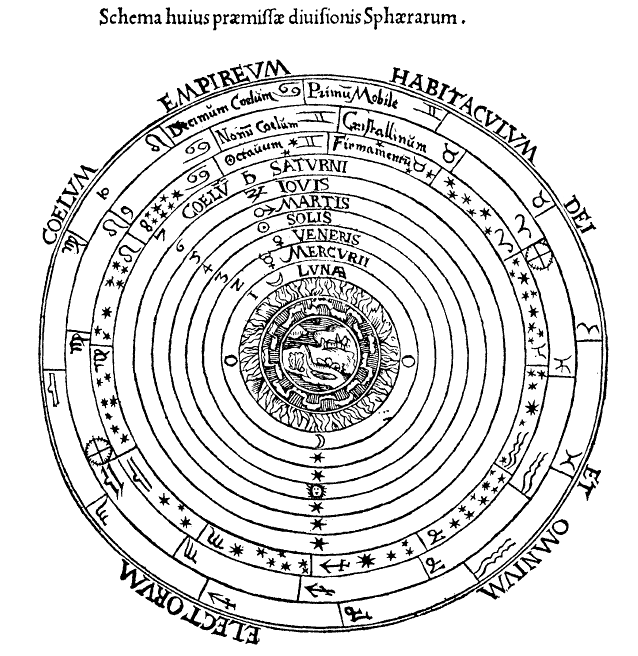
For much of human history, our understanding of the universe was quite different. Ancient astronomers believed Earth was the center of everything, with the sun, moon, and planets revolving around it in perfect circles. This geocentric model seemed logical, as it matched what people saw in the sky every day.
This view began to change in the 16th and 17th centuries. One of the key figures was Galileo Galilei. He challenged long-held beliefs with direct observation and experimentation. Legend has it that he dropped two spheres of different masses from the Leaning Tower of Pisa to prove they would land at the same time. While the story might be an exaggeration, his actual experiments with rolling balls down inclined planes led to the same revolutionary conclusion.
Galileo discovered that, ignoring air resistance, an object's mass has no effect on its acceleration during free fall.
While Galileo studied motion on Earth, another scientist, Johannes Kepler, was looking to the heavens. Using a massive collection of astronomical data, Kepler meticulously calculated the paths of the planets. He realized their orbits weren't the perfect circles everyone had assumed.
The Rules of Planetary Motion
Kepler laid out three laws that described how planets move. He didn't know the underlying reason for these patterns, but his descriptions were incredibly accurate.
First, he showed that planets travel in ellipses, a kind of stretched-out circle, with the Sun not at the center, but at one of two points called foci.
Second, he found that a planet moves faster when it is closer to the Sun and slower when it is farther away. He described this with a clever rule: a line connecting a planet to the Sun sweeps out equal areas in equal amounts of time.
Finally, he discovered a mathematical relationship between a planet's distance from the Sun and the time it takes to complete one full orbit. Planets farther away have much longer orbital periods, not just because their path is longer, but also because they move more slowly.
Kepler's laws provided a beautiful description of how the planets moved, but they didn't explain why. What invisible force was guiding them along these elliptical paths? The work of Galileo and Kepler set the stage for the next great leap in understanding gravity, providing the crucial observations needed to finally uncover the underlying cause of this universal attraction.