Unveiling Dickinson's Bird
Historical Nature Context
Nature, Up Close and Unsentimental
In the mid-19th century, many American writers saw nature as a grand, spiritual mirror. For thinkers in the Transcendentalism movement, like Ralph Waldo Emerson and Henry David Thoreau, the wilderness was a place to find divine truth and human virtue. A forest wasn't just trees; it was a cathedral. A pond wasn't just water; it was a source of profound self-reflection. Nature was a harmonious, idealized force that reflected the best parts of humanity.
Emily Dickinson wasn't convinced. Writing from her quiet home in Amherst, Massachusetts, she looked at the same natural world and saw something different. Her observations were less romantic and more scientific, almost clinical. She saw beauty, yes, but also a stark, amoral reality. Nature, for Dickinson, wasn't a reflection of humanity. It was something entirely separate—an 'Other' with its own rules, both elegant and brutal.
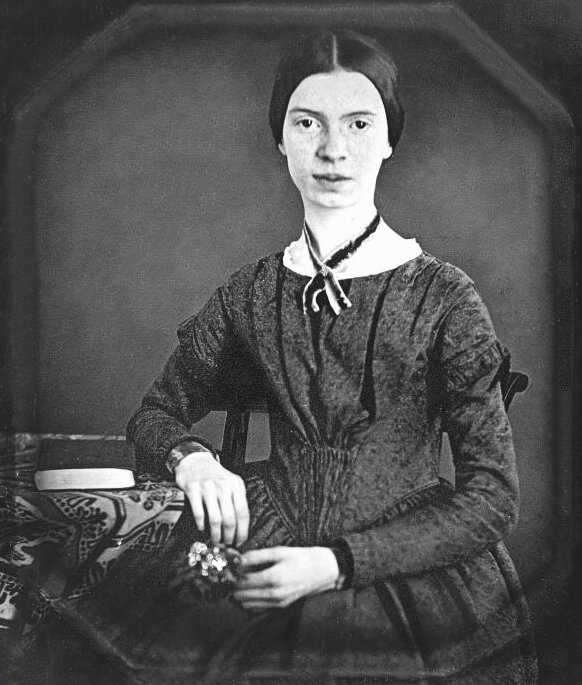
This perspective comes alive in "A Bird Came Down the Walk," written during an astonishingly creative period in 1862 when she composed hundreds of poems. The poem begins with a seemingly gentle, domestic scene. The bird moves with a delicate, almost nervous energy.
He bit an Angleworm in halves / And ate the fellow, raw
Suddenly, the image shatters. The bird's meal is described with unflinching, graphic detail. There is no sentiment here, just the raw fact of survival. Dickinson presents the bird not as a sweet songbird from a pastoral painting, but as an efficient predator. This dual vision—nature as both graceful and savage—was a radical departure from the prevailing romantic view.
An Unbridgeable Divide
Dickinson's unique viewpoint may have been shaped by her environment. Amherst was a hub of scientific inquiry in the 19th century, particularly in natural history. Amherst College, where her father served as treasurer, had extensive collections of specimens, and the scientific language of classification and observation was part of the town's intellectual air. This likely influenced Dickinson's precise, unsentimental descriptions.
The poem's conclusion highlights the deep chasm between the human and natural worlds. The speaker offers the bird a crumb, a gesture of domestication and connection. The bird, however, ignores this offering. It sees the human not as a friend, but as a potential threat.
And he unrolled his feathers / And rowed him softer home – // Than Oars divide the Ocean, / Too silver for a seam – / Or Butterflies, off Banks of Noon / Leap, plashless as they swim.
Its escape is described with breathtaking beauty, but the message is clear. The bird belongs to a world that humans can observe, but never truly enter. It flies away not on wings, but on invisible oars, moving through the air as if it were water. Nature is ultimately untamable, a foreign territory with a grace and logic all its own.
How did Transcendentalist thinkers like Ralph Waldo Emerson and Henry David Thoreau primarily view nature?
True or False: In "A Bird Came Down the Walk," the bird accepts the crumb offered by the speaker, symbolizing a harmonious connection between humans and nature.