Unveiling Dark Matter
Introduction to Dark Matter
The Universe's Invisible Glue
Look up at the night sky. Everything you see—stars, planets, galaxies—is made of what we call normal, or baryonic, matter. This is the stuff of atoms, the building blocks of you, me, and everything we can touch. For a long time, we thought this was all there was. But it turns out, all the visible matter in the universe accounts for less than 5% of its total mass and energy. A much larger chunk, about 27%, is something entirely different.
Dark matter is a term used in physics to describe a type of matter that does not emit, absorb, or reflect light, making it invisible and detectable only through its gravitational effects on visible matter.
This mysterious substance is called dark matter. It’s not “dark” in the sense of being black; it’s dark because it’s transparent. It doesn't interact with light or any other form of electromagnetic radiation. It simply doesn't seem to notice photons at all. Yet, it has mass, and where there's mass, there's gravity. It's this gravitational pull that gives it away.
An Unexpected Discovery
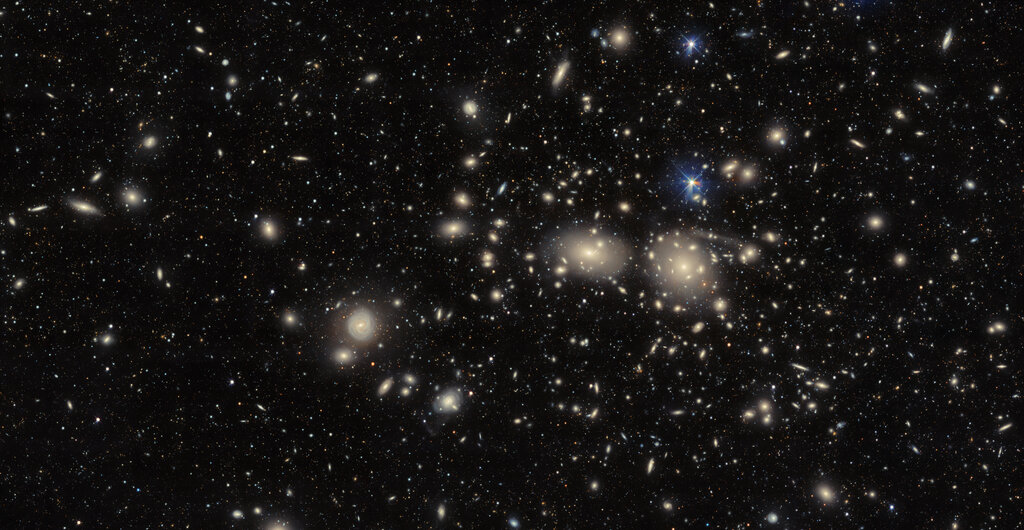
The story of dark matter begins in the 1930s with an astronomer named Fritz Zwicky. He was studying the Coma Cluster, a massive collection of over a thousand galaxies. As he measured the velocities of these galaxies, he noticed something strange. They were moving incredibly fast—so fast that the gravitational pull from all the visible matter in the cluster shouldn't have been nearly strong enough to keep them from flying apart.
Zwicky calculated that there had to be hundreds of times more mass than he could see. He called this missing mass dunkle Materie, or dark matter. For decades, his observation was largely treated as a curiosity, a puzzle that might be explained away by errors in measurement or a misunderstanding of galaxy clusters.
The idea didn't gain widespread acceptance until the 1970s, thanks to the meticulous work of astronomer Vera Rubin. She was studying the rotation of individual spiral galaxies, like our own Milky Way. Based on the distribution of visible stars and gas, she expected to see stars near the galactic center moving quickly, while stars farther out would move more slowly, much like the outer planets of our solar system orbit the Sun more slowly than the inner ones.
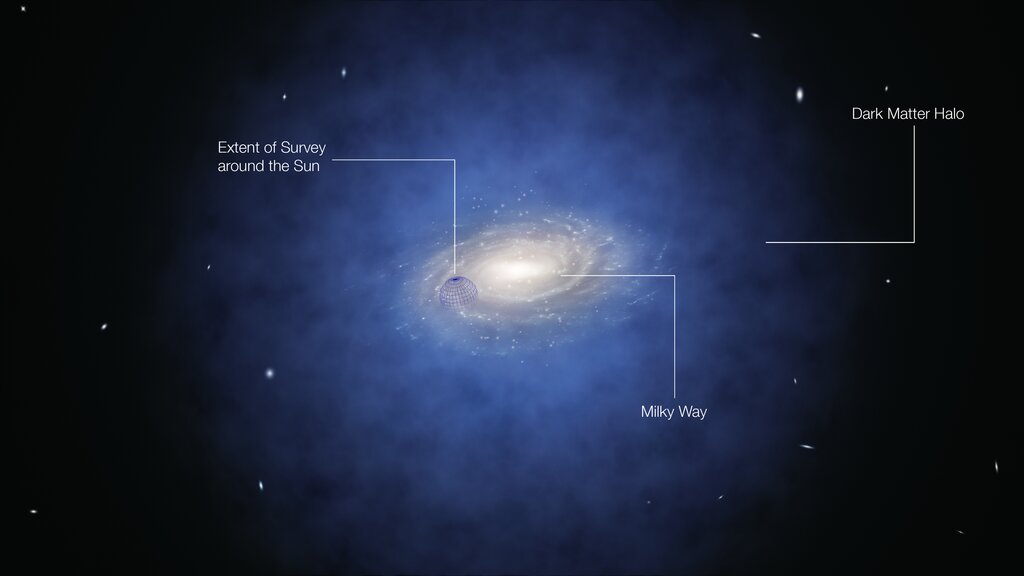
But that's not what she found. Instead, the stars on the outer edges of galaxies were orbiting just as fast as the stars closer in. The only way to explain this was if the galaxies were embedded in a huge, invisible halo of matter, exerting a gravitational pull that kept these speedy outer stars in their orbits.
This flat rotation curve was a bombshell. It was powerful, repeatable evidence that the gravity we see doesn't match the matter we see. The universe had to be filled with something else.
The Cosmic Scaffolding
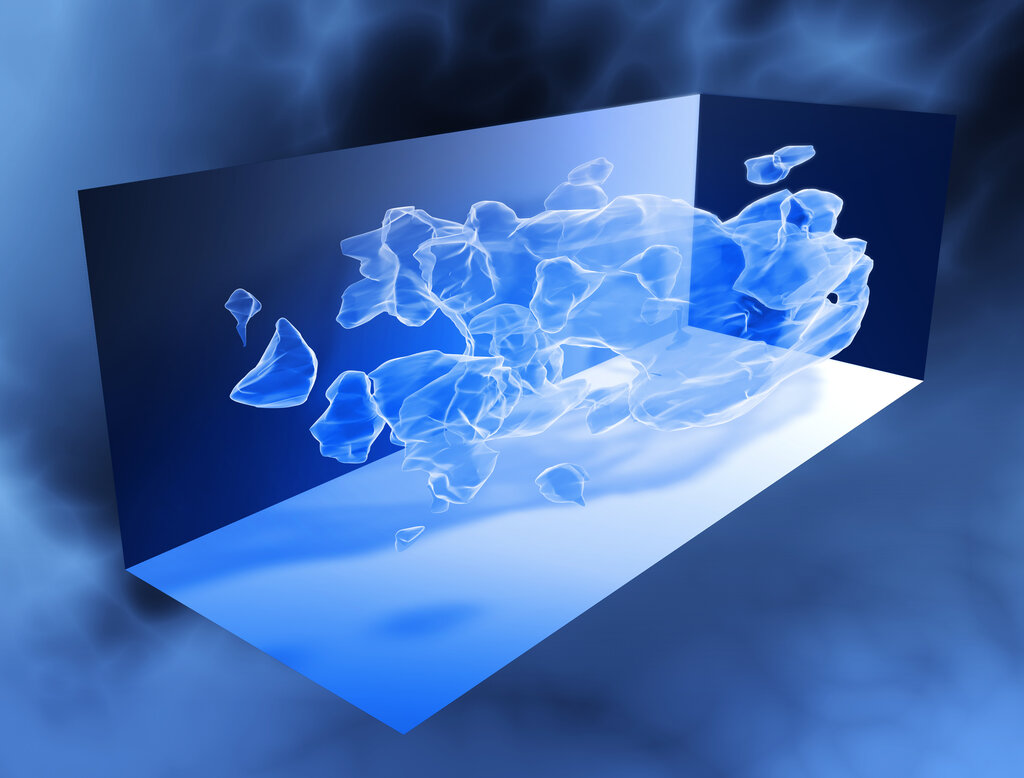
We still don't know what dark matter is made of, but we know what it does. Its gravity is the dominant force shaping the universe on the largest scales. Computer simulations show that without dark matter, the universe wouldn't look the way it does today. The normal matter we see would be too spread out to form the intricate web of galaxies and galaxy clusters we observe.
Think of it as a cosmic scaffolding. In the early universe, dark matter began to clump together under its own gravity. As these clumps grew, their gravitational pull attracted normal matter, which then coalesced into the first stars and galaxies. Without this invisible framework, the structures we see today would never have formed.
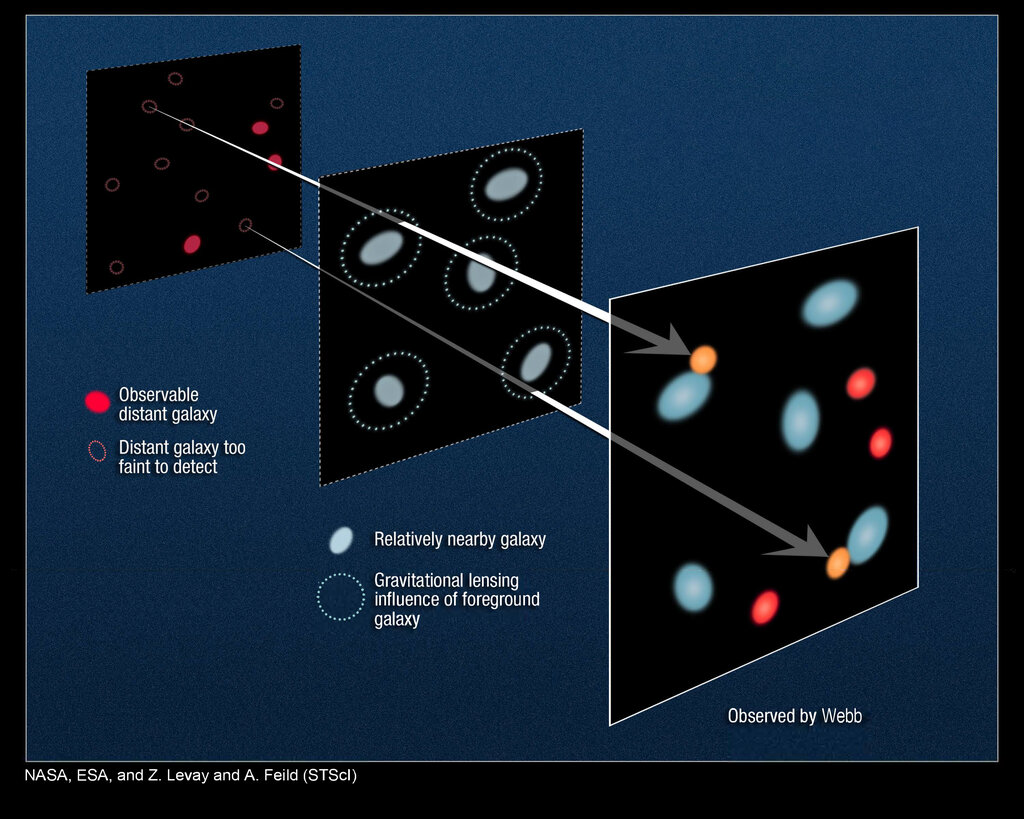
Another way to “see” dark matter is through gravitational lensing. According to Einstein's theory of general relativity, massive objects warp the fabric of spacetime. This means light doesn't always travel in a straight line. When light from a distant galaxy passes through a massive cluster of galaxies, its path is bent, creating distorted, magnified, or even multiple images of the background galaxy. By measuring the amount of this distortion, astronomers can calculate the total mass of the foreground cluster. Time and again, these calculations reveal far more mass than can be accounted for by visible matter alone. The difference is, once again, dark matter.
The search for the dark matter particle is one of the most exciting frontiers in modern physics. While we haven't found it yet, the evidence for its existence is overwhelming. It’s a constant reminder that what we see is only a tiny fraction of what's out there.
According to current cosmological models, what percentage of the universe's total mass and energy is estimated to be dark matter?
Which astronomer first proposed the existence of 'dunkle Materie' (dark matter) after observing that galaxies in the Coma Cluster were moving too fast to be held together by their visible mass alone?