Unteachable Topics
Understanding Educational Value
What Is Educational Value?
Educational value isn't just about cramming facts into your head. It’s about how useful and meaningful the learning experience is. Think of it like the difference between knowing the date of a historical battle and understanding why that battle was a turning point. One is a piece of trivia; the other is knowledge that helps you understand the world.
Educational Value
noun
The measure of how effectively learning content contributes to knowledge acquisition, skill development, critical thinking, and real-world application.
Truly valuable education sticks with you. It changes how you think, helps you solve problems, and connects to your life in practical ways. It provides a framework for future learning, not just a collection of standalone facts.
What Makes a Topic Valuable?
Several factors determine a topic's educational worth. The most important are relevance, depth, and applicability.
Relevance is about connecting learning to a student’s life. When students see how a topic matters to them, their families, or their communities, they are more engaged and motivated to learn.
Depth means going beyond surface-level information. A valuable topic encourages you to ask "why" and "how." Instead of just memorizing the formula for the area of a circle, , a deep dive might explore where comes from and how the formula was derived. This builds a much stronger foundation of understanding.

Finally, applicability is about whether you can use what you've learned. Learning about budgets is valuable because you can apply it to your own finances. Learning to code is valuable because you can use it to build websites or automate tasks. Knowledge that can be put into action is always more valuable.
By applying these concepts to real-world problems, students not only enhance their problem-solving skills but also deepen their understanding and retention of the subject matter.
Guiding the Way with Objectives
How do curriculum designers choose which topics to include? They use educational objectives as their guide. These are clear statements about what a student should know or be able to do after a lesson or course. They act as a filter, ensuring that every piece of content serves a purpose.
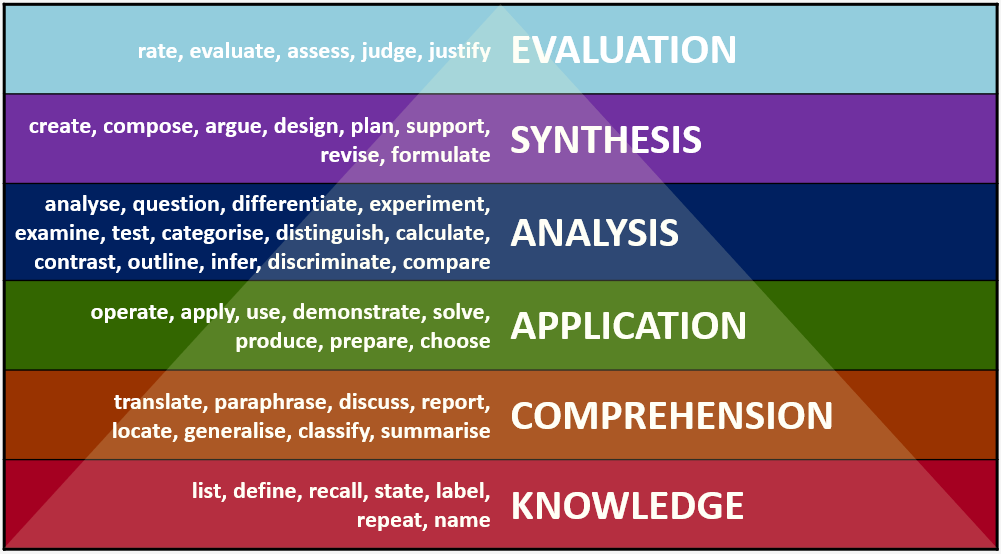
For example, an objective might be "Students will be able to analyze the causes of the American Revolution," not just "Students will know facts about the American Revolution." This focus on a higher-order skill like analysis guides the selection of topics. It prioritizes discussions on economic pressures and philosophical ideas over memorizing a list of names and dates. Clear objectives ensure that learning is focused, efficient, and built to enhance critical thinking.
It's How You Teach It
Even the most valuable topic can fall flat if taught poorly. The teaching method has a massive impact on the perceived value of the content. A passive lecture where you just listen is rarely as effective as an interactive workshop where you actively solve problems.

Engaging instructional strategies bring content to life. Debates, hands-on experiments, group projects, and real-world case studies transform abstract concepts into tangible experiences. An effective teacher acts as a facilitator, creating an environment where students can explore, question, and connect with the material on a deeper level. The method of delivery is just as important as the content itself.
Ready to check your understanding?
According to the text, what is the primary difference between a piece of trivia and truly valuable knowledge?
Which of the following best exemplifies the principle of "depth" in learning?
Ultimately, educational value is about empowering learners with knowledge and skills that serve them long after the course is over. It's the key to creating learning that truly matters.