Unspecified Topic
Introduction to Curriculum Development
The Blueprint for Learning
Curriculum development is the thoughtful process of planning what students will learn. It's like creating a blueprint for a house. You don't just start throwing up walls and hoping for the best. You plan where the rooms go, how they connect, and what purpose each one serves, ensuring the final structure is sound and functional.
At its core, curriculum design is about creating a coherent journey for the learner. It moves beyond simply listing topics to cover. Instead, it carefully maps out experiences, activities, and content to achieve specific, meaningful goals. Every piece of the curriculum should have a clear purpose, contributing to the overall learning experience.
For the optimization of educational programs, it is crucial to design course learning outcomes (CLOs) according to the different cognitive levels of Bloom Taxonomy.
This ensures that learning is not a random collection of facts but a structured path toward mastery.
Connecting the Dots
To create a powerful learning path, we need to connect the big picture with the small details. This is where Program Learning Outcomes (PLOs) and Course Learning Outcomes (CLOs) come in.
Think of a Program Learning Outcome as the final destination. It's the broad, high-level skill or capability a student should have after completing an entire program, like a degree in engineering. For example, a PLO might be: "Graduates will be able to design and conduct experiments, as well as analyze and interpret data."
Course Learning Outcomes are the specific, measurable skills a student gains in a single course. They are the individual stops on the journey. In an introductory physics course that supports the engineering program, a CLO might be: "Students will be able to apply Newton's laws of motion to solve problems involving single objects."
The magic happens when CLOs are systematically aligned with PLOs. Each course becomes a deliberate step toward the program's ultimate goals.
When this alignment is missing, students can feel like they're taking a series of disconnected classes. But when it's done right, every assignment, lecture, and project builds logically on the last, creating a clear and effective path to competence.
This top-down approach ensures that everything a student does in a course is directly contributing to the skills they're expected to have upon graduation.
Evolving Through Feedback
A curriculum isn't something you create once and then forget about. The best educational programs are living documents that evolve through continuous improvement. This is powered by feedback loops.
A feedback loop is a simple cycle: deliver instruction, gather data on how well it worked, analyze that data, and then make adjustments. This data can come from many sources: student performance on exams, survey results, feedback from instructors, or input from industry advisors.
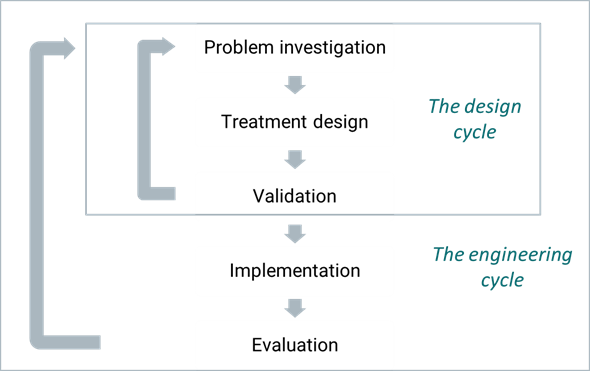
Imagine a data science program where graduates are consistently telling faculty that their skills in a certain programming language are not strong enough for the job market. This is critical feedback. The program committee can use this information to revise courses, add new content, or change teaching methods to better meet industry needs. Without this loop, the curriculum would quickly become outdated and less valuable to students.
Meeting the Standard
Finally, curriculum development is often guided by external forces, particularly accreditation standards. Accreditation is a process of quality assurance where an external agency evaluates a school or program to see if it meets certain standards.
These agencies (like ABET for engineering or AACSB for business) provide a framework that helps ensure programs are high-quality, relevant, and consistent. They set standards for what the curriculum must cover, the qualifications of the faculty, and the resources available to students.
While some might see this as restrictive, these standards are incredibly helpful. They provide a clear benchmark for quality and push institutions to engage in the very practices we've discussed: aligning outcomes, using feedback for improvement, and ensuring the curriculum provides real value. They help guarantee that a degree from an accredited institution represents a meaningful and recognized level of achievement.
What is the most fitting analogy for the process of curriculum development?
Which statement best describes the relationship between Program Learning Outcomes (PLOs) and Course Learning Outcomes (CLOs)?
Thinking about curriculum in this structured way transforms it from a simple list of topics into a dynamic and purposeful plan for student success.