Unspecified Topic
Introduction to Curriculum Development
Start with the Destination
When you plan a road trip, you don't just start driving. You pick a destination first, then map out the route. Building an educational curriculum works the same way. The first step isn't choosing textbooks or planning lectures; it's defining exactly what students should know and be able to do by the end.
This approach is called Outcome-Based Education (OBE). Instead of focusing on the topics we'll cover, we focus on the results we want to achieve. The entire learning experience is designed backward from these goals.
The core question of OBE is: What are the essential skills and knowledge a graduate needs to succeed in their field?
These goals are defined at two levels. First, there are the big-picture goals for the entire program, known as Program Learning Outcomes (PLOs). A PLO for an engineering program might be, "Graduates will be able to design and conduct experiments, as well as analyze and interpret data."
Then, each course has its own smaller goals, called Course Learning Outcomes (CLOs). These are the specific stepping stones that help students achieve the broader program outcomes. For that same engineering program, a CLO in a first-year physics course might be, "Students will be able to apply Newton's laws of motion to solve problems involving forces and acceleration."
Everything Must Connect
Having outcomes isn't enough. They need to be connected in a meaningful way. This is called curriculum coherence. Every part of the curriculum should work together toward the same ultimate goals. Each course's learning outcomes (CLOs) must directly support one or more of the program's learning outcomes (PLOs).
This study proposes a quantitative framework to enhance curriculum coherence through the systematic alignment of Course Learning Outcomes (CLOs) and Program Learning Outcomes (PLOs), contributing to continuous improvement in outcome-based education.
Think of it like building a pyramid. The PLOs are the peak, and the CLOs from various courses form the strong, supportive base. If a course has outcomes that don't connect to the program's goals, it's like a random block sitting off to the side—it doesn't contribute to the overall structure.
This systematic alignment ensures that students are not just learning isolated facts. Instead, their learning is cumulative. The skills and knowledge they gain in one course provide the foundation for more advanced topics in the next, all while building toward the professional competencies defined in the PLOs.
The Rules of the Road
This structured approach isn't just an educational theory; it's often a requirement. Professional fields have accreditation bodies that set quality standards for educational programs. These organizations, like ABET for engineering or the NCAAA in Saudi Arabia, ensure that graduates from a program are truly prepared for their careers.
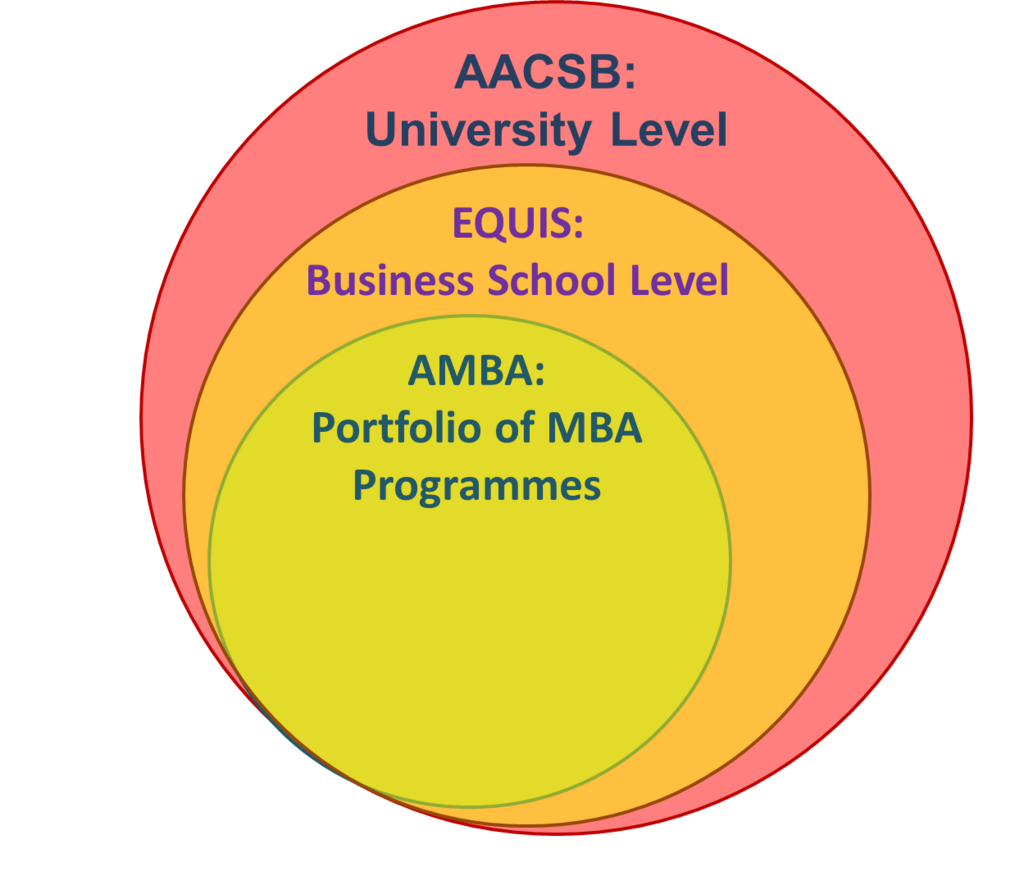
Accreditation standards typically require programs to define clear learning outcomes and demonstrate how their curriculum helps students achieve them. By building a coherent curriculum based on outcomes, institutions not only provide a better-structured education but also meet the rigorous demands of these quality assurance bodies.
What is the primary focus of Outcome-Based Education (OBE)?
How do Course Learning Outcomes (CLOs) relate to Program Learning Outcomes (PLOs)?
Understanding these foundational concepts is the first step in creating powerful and effective learning experiences.