Unraveling Consciousness Theories and Thinkers
Historical Foundations
The Ghost in the Machine
How do you know you exist? For 17th-century philosopher René Descartes, the answer was simple: the very act of doubting his existence proved it. His famous conclusion, "I think, therefore I am," became the bedrock of his philosophy. It separates the act of thinking from the physical body.
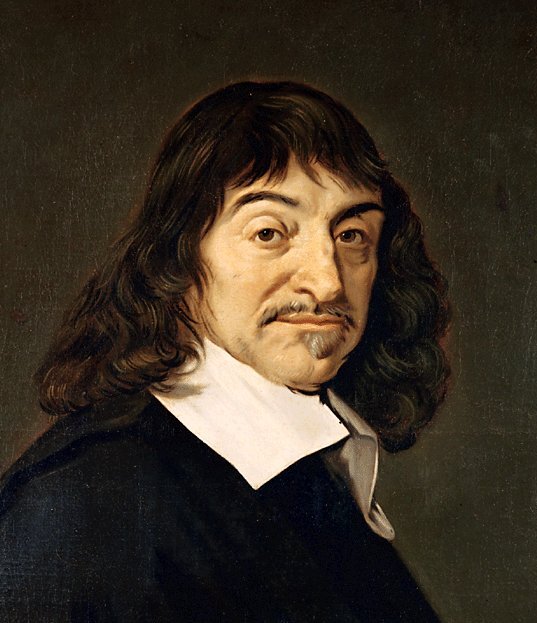
This led Descartes to a powerful idea called dualism. He argued that the universe consists of two fundamentally different substances: the physical (like your brain, bones, and the chair you're sitting on) and the mental (your thoughts, feelings, and sense of self). The body is a machine, subject to the laws of physics, but the mind is a non-physical, thinking thing. In his view, your consciousness is a kind of ghost inhabiting the machine of your body.
This created a puzzle that philosophers still debate today: the mind-body problem. If the mind is non-physical and the body is physical, how do they interact? How can a feeling of sadness (mental) cause you to cry (physical)? How can a stubbed toe (physical) cause you to feel pain (mental)?
Descartes made a guess. He proposed that the two connected in the pineal gland, a tiny organ deep inside the brain. While we now know this isn't correct, his formulation of the problem set the stage for centuries of debate about the nature of consciousness.
The Mind as a Blank Slate
Not long after Descartes, English philosopher John Locke offered a completely different take. While Descartes believed some ideas were innate, Locke argued that the mind begins as a tabula rasa — a blank slate. He championed empiricism, the idea that all knowledge comes from experience.
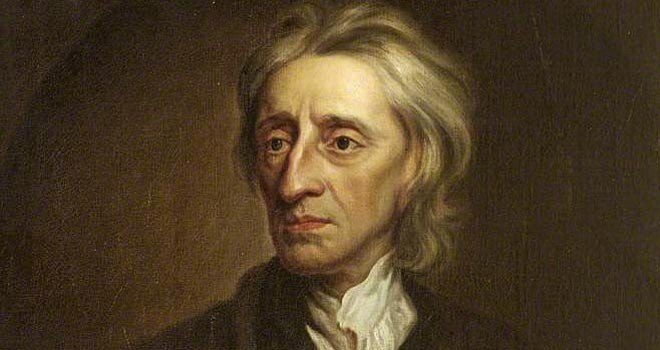
According to Locke, we aren't born with knowledge. Instead, our senses gather information from the outside world, like light, sound, and texture. The mind then reflects on these sensory inputs to form ideas. Simple ideas, like 'red' or 'sweet', are the basic building blocks. By combining these, we form complex ideas, like 'apple' (red + sweet + round) or abstract concepts like 'justice'.
For an empiricist like Locke, consciousness isn't a separate substance. It's the product of the brain processing sensory experiences from the physical world. There is no ghost, only the machine and what it learns.
Descartes' dualism and Locke's empiricism represent two foundational pillars in the study of consciousness. One places the mind outside the physical world, creating a deep philosophical puzzle. The other grounds it firmly within our lived experiences, turning the question of consciousness into one about learning and perception. These opposing views kicked off a debate that continues to shape how we think about our own minds.
Ready to check your understanding?
What famous phrase summarises René Descartes' proof for his own existence?
According to Descartes' theory of dualism, what are the two fundamental substances that make up the universe?
These early philosophical frameworks, though centuries old, still influence how scientists and thinkers approach the mystery of consciousness today.