Unpacking the Tragedy of Romeo and Juliet
Agency Versus Fate
Choice or Destiny
From the very beginning, Shakespeare tells us how Romeo and Juliet will end. The opening prologue lays it all out, famously describing the young lovers as 'star-crossed'.
A pair of star-crossed lovers take their life; Whose misadventured piteous overthrows doth with their death bury their parents' strife.
This immediately frames the story as a tragedy of destiny. The stars, a powerful symbol of fate in Elizabethan England, have already decided the outcome. It suggests that Romeo and Juliet are just puppets, their strings pulled by cosmic forces they can't control. The end is inevitable, written in the heavens before the play even begins.
But is it that simple? While fate looms large, the play is also a tragedy of character. The choices the characters make, often impulsive and rash, are what truly propel the story toward its disastrous conclusion. The tension between what is destined and what is chosen is the central engine of the play.
The Characters' Choices
Consider Romeo's decision to attend the Capulet ball. No one forces him to go. He crashes the party of his family's mortal enemy on a whim, hoping to see Rosaline. This single act of free will sets the entire tragedy in motion. If he had stayed home, he never would have met Juliet.
Similarly, Tybalt's aggressive nature, Mercutio's provocative wit, and Friar Laurence's risky plan to fake Juliet's death are all products of individual agency. The characters are constantly making decisions that escalate the conflict. After slaying Tybalt in a fit of rage, Romeo himself seems to recognise the hand of fate, but only after his own actions have forced it.
O, I am fortune's fool!
This line is a perfect summary of the conflict. Romeo feels like a plaything of fate ('fortune'), but he only ended up in this position because of his own impulsive choice to avenge Mercutio.
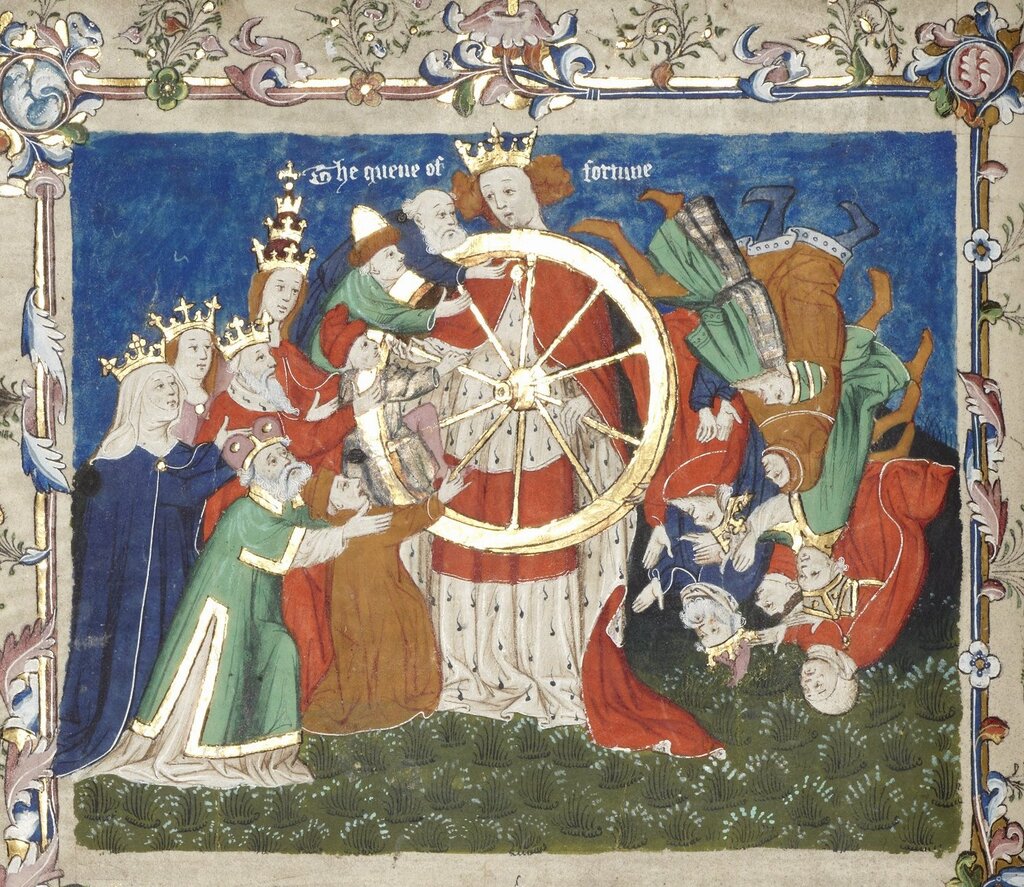
A Cascade of Misfortune
Even with the characters' choices, it's hard to ignore the overwhelming string of bad luck that plagues them. It often feels like the universe is conspiring against them. The most significant example is Friar Laurence's letter to Romeo, which would have explained that Juliet was not actually dead.
The message fails to reach Romeo because the messenger, Friar John, is unexpectedly quarantined due to an outbreak of the plague. This is a random, external event that has nothing to do with any character's choices, yet it dooms the lovers. It's a moment of pure, terrible luck. This pattern of accidental timing and near-misses reinforces the sense that a higher power is ensuring the tragic outcome foretold in the prologue.
Upon hearing of Juliet's 'death', Romeo makes his most defiant stand against destiny. He screams, "I defy you, stars!" and takes matters into his own hands, deciding to join Juliet in death. It's a powerful assertion of his own will. He refuses to accept the fate given to him and chooses his own.
Ironically, in trying to defy fate, he fulfills it. His choice to die is the final step that makes the prophecy of the 'star-crossed lovers' come true. This is the ultimate paradox of the play.
And the reader is led to wonder: are they really just victims of fate? Or do their own dumb choices lead them to their downfall?
So, who is responsible for the tragedy? Is it the ancient feud? The lovers' own impulsiveness? The hand of fate? Shakespeare doesn't give a simple answer. He leaves the audience to ponder the delicate, and often tragic, balance between the choices we make and the circumstances we are born into.
Time to check your understanding.
What does the opening prologue's description of Romeo and Juliet as 'star-crossed lovers' immediately suggest?
Which of the following events is presented as a clear example of a character's choice, or free will, directly causing the tragedy to escalate?
Ultimately, the power of Romeo and Juliet comes from this very ambiguity, forcing us to ask how much control we really have over our own lives.