Unpacking Kieślowski's Three Colors Trilogy
Introduction to Kieślowski and the Three Colors Trilogy
From Poland to Paris
Before he became an international art-house icon, Krzysztof Kieślowski was a documentarian chronicling the complexities of life in his native Poland. His early films, both documentary and fiction, were grounded in a stark reality. They observed ordinary people grappling with difficult moral choices under the weight of a repressive political system. Kieślowski had an eye for the subtle dramas of everyday existence, focusing on how grand social forces impacted individual lives.
In the late 1980s and early 1990s, his work began to shift. With productions like The Decalogue, a series of films based on the Ten Commandments, he moved toward more metaphysical and universally human questions. This evolution culminated in his final work, the Three Colors trilogy, a French-Polish co-production that would secure his legacy.
Colors of an Ideal
The inspiration for the trilogy is famously tied to the French flag and the ideals it represents: liberty, equality, and fraternity. Each film takes one of these concepts, symbolized by a color—blue, white, and red, respectively—and explores its meaning in the context of a contemporary personal story.
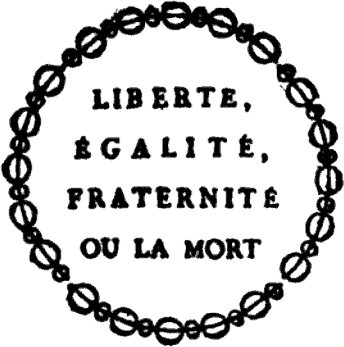
But Kieślowski wasn't interested in making straightforward political statements. Instead of examining liberty in a courtroom or equality in a social protest, he turned his camera inward. He asked what these grand, abstract ideals truly mean to an individual. How does a person live out the idea of freedom after immense personal loss? What does equality look like in a broken relationship? Can fraternity exist between complete strangers?
The films use their guiding principles not as political slogans, but as starting points for deeply intimate, psychological journeys.
Weaving a Human Web
While each film in the trilogy—Blue (1993), White (1994), and Red (1994)—can stand on its own, they are designed as a cohesive whole. Kieślowski and his co-writer, Krzysztof Piesiewicz, subtly interlink the stories. A character from one film might make a fleeting appearance in another, or a key event from one story is briefly glimpsed in the background of a different one.
These connections are rarely central to the plot. They act more as threads of fate, creating a sense of a shared universe where individual lives, though seemingly separate, are constantly brushing up against one another. A recurring visual motif is the act of an elderly person trying to recycle a bottle, a small struggle that appears in each film and is noticed by the protagonists with varying degrees of engagement.
This subtle web of connections reinforces one of the trilogy’s central themes: the mysterious and often invisible ties that bind people together. Kieślowski suggests that even in a world that feels isolating, we are all part of a larger human story, moved by chance, fate, and the consequences of each other's actions.
What was the primary focus of Krzysztof Kieślowski's early films made in Poland?
The ideals of the French flag—liberty, equality, and fraternity—are central to the Three Colors trilogy. How did Kieślowski primarily explore these concepts?
This trilogy was Kieślowski's final statement as a filmmaker. It's a profound meditation on modern European life, using abstract ideals as a lens to explore the very concrete and emotional realities of human connection.