Unlocking Your Infinite Potential
Understanding Limiting Beliefs
The Invisible Walls
We all have a running commentary in our minds. Sometimes, it’s a helpful guide. Other times, it’s a harsh critic that tells us what we can and can't do. These critical thoughts are often rooted in limiting beliefs, the invisible walls we build around our potential.
Limiting Belief
noun
A thought or conviction you hold about yourself, others, or the world that you believe is true, and which restricts you in some way.
These aren't just fleeting negative thoughts. They are deep-seated assumptions that we accept as rules for how life works. They feel like facts, even when they're not. They’re the stories we tell ourselves about our capabilities, our worth, and our place in the world. And because we believe them, we act as if they are true, turning them into self-fulfilling prophecies.
Imagine being tethered to a post by a rope. A limiting belief is like that rope. It may have been put there long ago, and you might not even feel its pull most of the time. But the moment you try to step beyond its length, it yanks you back.
Where Beliefs Begin
Limiting beliefs don't appear out of thin air. They are often planted in our minds from a young age and reinforced over time. One of the most common sources is our past experiences. A failure in a school project might plant the seed of "I'm not smart enough." A painful breakup could lead to the belief that "I'm unlovable."
Society and culture also play a huge role. We absorb messages from family, friends, media, and our community about what is possible for someone like us. These external voices can become our internal script, dictating our ambitions and shaping our self-perception without us even realizing it.
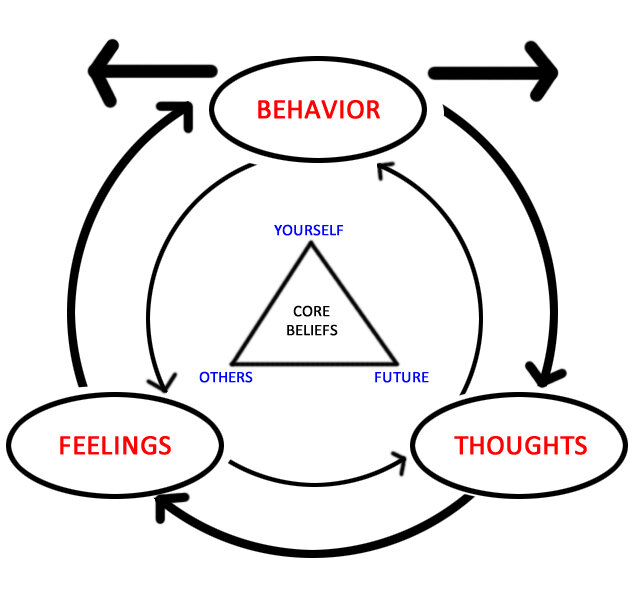
Ultimately, these experiences and messages are filtered through our own interpretations. Two people can have the exact same experience, but one might walk away feeling defeated while the other feels determined. Our perception shapes the belief. Over time, these beliefs solidify and become part of our core identity, operating on autopilot in the background of our lives.
The Ripple Effect
The impact of a limiting belief is rarely confined to one area of life. Like a drop of ink in water, it spreads, coloring everything from our relationships to our careers to our financial well-being.
When we hold limiting beliefs such as “I’m not capable enough,” “I don’t deserve success,” or “I’m bound to fail,” our minds unconsciously seek to validate those beliefs even at the cost of progress.
In our personal development, these beliefs act as a brake on growth. They tell us not to apply for the promotion, not to learn a new skill, or not to pursue a passion because we're convinced we'll fail. We avoid risk and stay within a narrow comfort zone, missing out on experiences that could help us grow.
In relationships, beliefs like "I'm too difficult" or "People always leave" can lead to self-sabotage. We might push people away or avoid intimacy altogether to protect ourselves from the outcome we already expect. Similarly, beliefs about money, such as "Rich people are greedy" or "I'll never be wealthy," can prevent us from making sound financial decisions or seeking opportunities to improve our financial situation.
| Life Area | Common Limiting Belief | Potential Impact |
|---|---|---|
| Career | "I'm not qualified enough for that job." | Avoids applying for promotions or new roles. |
| Relationships | "If I show my true self, people won't like me." | Hides true feelings, leading to shallow connections. |
| Health | "I've never been athletic, so I can't get fit." | Avoids exercise and healthy habits. |
| Finance | "I'm just bad with money." | Ignores budgets and avoids learning about finances. |
Recognizing these beliefs is the first step. By simply becoming aware of the invisible walls you've built, you can begin to see them for what they are: not facts, but stories. And stories can be rewritten.