Unlocking Your Creative Potential
Understanding Creativity
What is Creativity?
Many people think creativity is a rare gift, something only artists, musicians, and writers possess. But that's a narrow view. At its core, creativity is the ability to generate new ideas or see new connections between existing ones. It’s about solving problems in novel ways.
Creativity
noun
The use of imagination or original ideas to create something; inventiveness.
Think of it like playing with building blocks. The blocks are pieces of knowledge and experience you already have. Creativity is the act of combining those blocks in a way you—or others—haven’t tried before. You're not making new blocks; you're creating a new structure. This could be a fresh marketing slogan, a more efficient workflow, or a unique solution to a customer's complaint.
Creativity isn't about making something from nothing. It's about reorganizing what already exists.
Creativity in the Workplace
In any job, the ability to think creatively is a powerful asset. It's what drives progress and keeps businesses relevant. When a market changes, creative teams can adapt. When a tough problem arises, they find a way forward. It's the difference between merely doing a job and truly innovating within it.
This doesn't always mean grand, world-changing inventions. Often, workplace creativity shows up in small but significant ways:
- Problem-Solving: A support agent figures out a non-obvious fix for a recurring customer issue.
- Efficiency: An accountant devises a simpler method for tracking expenses, saving the team hours each month.
- Communication: A project manager uses a visual analogy to explain a complex timeline, ensuring everyone understands their role.
Every time you find a better way to do something, you're exercising your creative muscles.
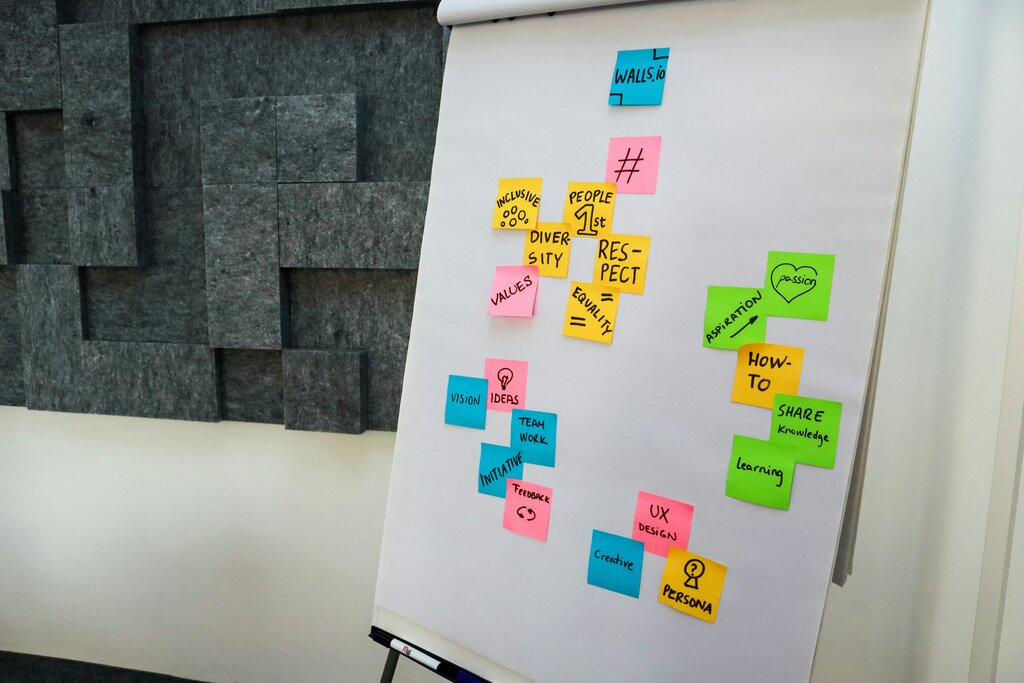
Organizations that encourage this kind of thinking are more resilient and successful. They foster an environment where new ideas are welcomed, not shut down. This allows them to stay ahead of the competition and solve challenges before they become crises.
Creativity and innovation aren’t just for artists or entrepreneurs—they’re essential skills for every student, no matter what path they choose.
The Creative Mind's Toolkit
Creative thinking isn't a single, mysterious event. It’s a process that involves different modes of thought. Two of the most important are divergent and convergent thinking.
Divergent thinking is the exploratory phase. It's about generating a wide range of ideas without judgment. Brainstorming is a classic example. The goal is quantity over quality. You cast a wide net to see what you can catch.
Convergent thinking is the analytical phase. After you have a long list of possibilities from divergent thinking, you switch gears. Now, you start to analyze, evaluate, and filter those ideas to find the most promising one. It's about narrowing down your options to make a decision.
Effective creativity requires both: first open your mind to all possibilities, then focus it to find the best path forward.
Another key part of the process is incubation. This is the period when you step away from a problem and let your subconscious mind work on it. Have you ever had a great idea pop into your head while you were in the shower or out for a walk? That’s incubation at work. Allowing for downtime isn't lazy—it’s an active and essential part of the creative process.
According to the text, what is the core of creativity?
A team is holding a brainstorming session where every idea is written down without any criticism or evaluation. Which mode of thinking is being primarily used?
Understanding these core concepts is the first step toward intentionally boosting your own creative output.