Unlocking the World of Proteins
Amino Acids
The Building Blocks of Proteins
Everything in our bodies, from the muscles that move us to the enzymes that speed up chemical reactions, is made of proteins. And all of these incredibly complex proteins are built from a set of just 20 small molecules called amino acids. Think of them like LEGO bricks; you can build almost anything imaginable by arranging them in different ways.
All amino acids that appear in proteins (a.k.a. ‘α-amino acids) possess a structure which includes a central carbon atom called Cα, surrounded by four substituents: a hydrogen atom, an amino group (α-amino), a carboxyl group (α-carboxyl), and a fourth group referred to as side-chain:
At the heart of every amino acid is a central carbon atom, called the alpha-carbon (). Attached to it are four different components:
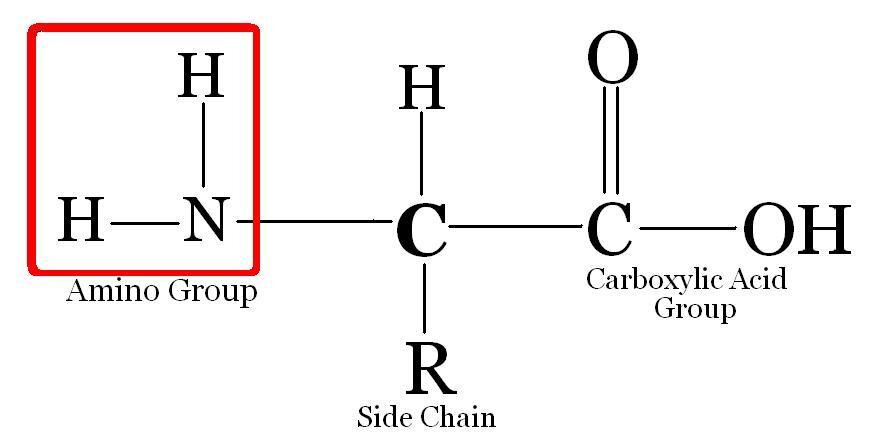
- An amino group (): A group containing nitrogen that acts as a base.
- A carboxyl group (): A group containing carbon and oxygen that acts as an acid.
- A hydrogen atom (H).
- A side chain (R group): This is the part that's different for every amino acid.
amino acid
noun
An organic compound containing both a carboxyl (—COOH) and an amino (—NH2) group, which functions as the monomer unit of proteins.
The Decisive Side Chain
The first three components are the same for almost all amino acids. It's the fourth component, the R group, that gives each amino acid its unique identity and properties. This side chain can be as simple as another hydrogen atom (in the amino acid glycine) or as complex as a large ring structure (like in tryptophan).
The chemical properties of the R group determine how an amino acid behaves. Is it big or small? Does it prefer to be near water or avoid it? Does it carry an electrical charge? These characteristics are crucial because they dictate how a protein folds into its final shape and how it functions.
A Family of 20
We can sort the 20 standard amino acids into four main groups based on the properties of their side chains.
| Group | Side Chain Property | Water Interaction | Examples |
|---|---|---|---|
| Nonpolar | Mostly carbon & hydrogen | Hydrophobic (avoids) | Glycine, Alanine, Valine, Leucine |
| Polar | Contains oxygen or sulfur | Hydrophilic (likes) | Serine, Threonine, Cysteine, Glutamine |
| Acidic | Negatively charged | Hydrophilic (likes) | Aspartic acid, Glutamic acid |
| Basic | Positively charged | Hydrophilic (likes) | Lysine, Arginine, Histidine |
The terms hydrophobic (water-fearing) and hydrophilic (water-loving) are key here. Just like oil and water don't mix, nonpolar, hydrophobic side chains tend to bury themselves on the inside of a protein to hide from the watery environment of the cell. In contrast, polar and charged side chains are hydrophilic and are happy to be on the protein's surface, interacting with water.
Essential Nutrients
Our bodies are amazing chemical factories, capable of synthesizing many of the molecules we need to survive. However, there are some amino acids we can't make ourselves, or can't make in sufficient quantities. These are called essential amino acids, and we must get them from our diet.
There are nine essential amino acids for humans: histidine, isoleucine, leucine, lysine, methionine, phenylalanine, threonine, tryptophan, and valine.
Amino acids that our bodies can produce are known as non-essential amino acids. This doesn't mean they're less important—they're just as critical for building proteins. The name simply means it's not essential that we consume them directly. Our metabolism can convert other molecules into these amino acids as needed.
A balanced diet provides all the essential amino acids required for our bodies to build and repair tissues, make enzymes, and carry out countless other vital functions.
Now, let's test your knowledge on these fundamental building blocks.
What four components are attached to the central alpha-carbon of almost every amino acid?
What is the primary significance of the side chain (R group) in an amino acid?