Unlocking the Secrets of Prime Numbers
Understanding Numbers
The Building Blocks of Math
Numbers are a fundamental part of our world. We use them to count, measure, and label things. The simplest numbers we use are the ones we first learn as children.
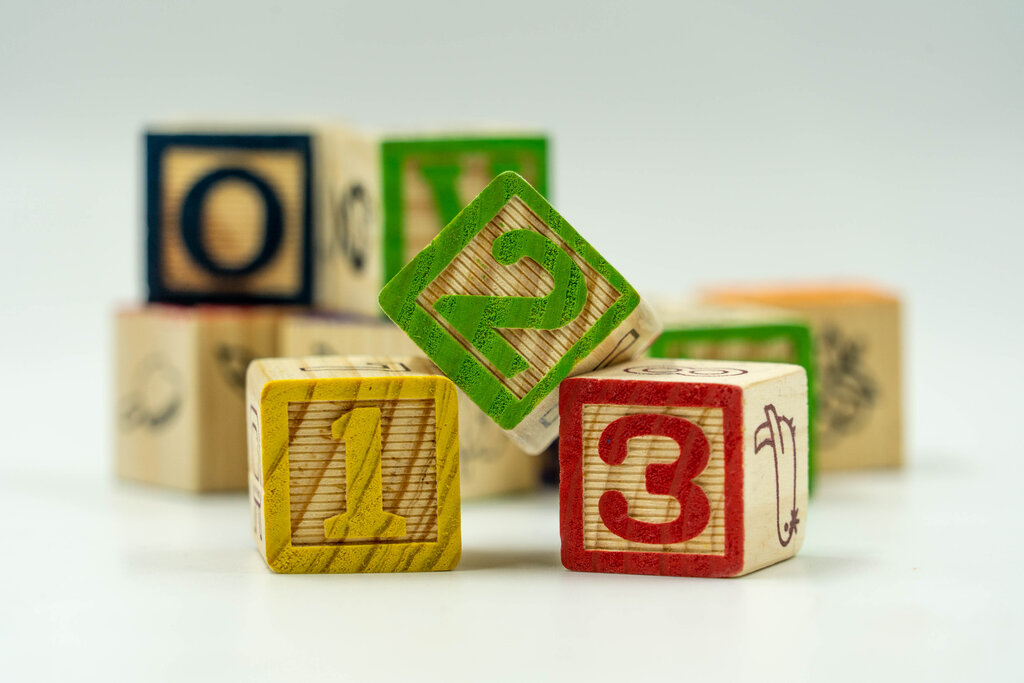
These are called natural numbers, or counting numbers. They are the positive whole numbers starting from 1 and going on forever. Think about counting apples: one apple, two apples, three apples, and so on. That's all natural numbers are.
Natural Numbers = {1, 2, 3, 4, 5, ...}
Natural Number
noun
A positive whole number used for counting objects.
Numbers in Daily Life
We might not always notice it, but we rely on numbers constantly. When you set an alarm, you're using numbers to tell time. When you follow a recipe, you use numbers to measure ingredients. Your address and phone number are sequences of numbers that identify a specific place or person.

Money is another key example. We use numbers to understand the price of an item, calculate change, and manage a budget. From telling you the date to showing the speed of your car, numbers provide essential information that helps us navigate our daily routines.
Adding Zero to the Mix
You might have noticed that the number zero (0) isn't in the set of natural numbers. That's because we don't start counting from zero. Zero represents the absence of something—like having zero apples.
When we add zero to the set of natural numbers, we get a new group called whole numbers.
Whole Number
noun
A number without fractions; an integer. It includes all the natural numbers plus zero.
So, while natural numbers are {1, 2, 3, ...}, whole numbers are {0, 1, 2, 3, ...}. It's a small change, but an important one. The idea of zero was a major breakthrough in mathematics.
Even and Odd
We can also classify whole numbers in other ways. One of the most common is by sorting them into even and odd numbers.
An even number is any whole number that can be divided into two equal groups with nothing left over. For example, 6 is even because you can split it into two groups of 3. All even numbers end in 0, 2, 4, 6, or 8.
An odd number is a whole number that has one left over when you try to divide it into two equal groups. For instance, 7 is odd because if you split it into two groups, you'll have one group of 3 and one group of 4. Odd numbers always end in 1, 3, 5, 7, or 9.
| Type | Definition | Examples |
|---|---|---|
| Even | Divisible by 2 with no remainder | 0, 2, 14, 38, 100 |
| Odd | Has a remainder of 1 when divided by 2 | 1, 3, 15, 49, 101 |
This simple way of sorting numbers is a foundational concept in mathematics and helps us understand patterns and relationships between numbers.
Now, let's test your understanding of these basic building blocks.
Which of the following best describes natural numbers?
What is the key difference between natural numbers and whole numbers?
With these fundamentals in place, we're ready to explore how numbers interact with each other in more complex ways.