Unlocking Science Comprehension
Scientific Terminology
The Language of Science
Scientific writing can feel like a different language. It's packed with specific terms, abbreviations, and jargon that you won't find in everyday conversation. This isn't meant to be confusing. The goal is precision. Every term has a distinct meaning to ensure that researchers across the world are talking about the exact same thing.
jargon
noun
Special words or expressions that are used by a particular profession or group and are difficult for others to understand.
Think of scientific vocabulary as a set of building blocks. Many complex terms are constructed from common Greek and Latin roots, prefixes, and suffixes. If you learn to recognize these components, you can often figure out the meaning of a new word without having to look it up.
Keep a small list of common roots and prefixes (like cyto, bio, thermo, ase). Understanding these parts makes even unfamiliar words more manageable.
Learning these small pieces can unlock the meaning of hundreds of words. Here are a few common examples to get you started.
| Part | Meaning | Example |
|---|---|---|
| bio- | life | Biology (study of life) |
| -logy | study of | Biology (study of life) |
| thermo- | heat | Thermometer (measures heat) |
| micro- | small | Microscope (tool to see small things) |
| macro- | large | Macromolecule (a large molecule) |
| -meter | measure | Thermometer (measures heat) |
Decoding Abbreviations
Beyond jargon, scientific papers are filled with abbreviations and acronyms. These are shorthands used to save space and avoid repeating long, complicated names. For example, instead of writing out "deoxyribonucleic acid" every time, a biologist will simply write "DNA."
The key is to find the definition. The first time an abbreviation or acronym appears in an article, it should be written out in full, followed by the shorthand in parentheses. For example: "The study analyzed samples using a Scanning Electron Microscope (SEM). The SEM provided detailed images of the surface."
A good habit is to jot down any new abbreviations on a separate piece of paper as you read. This creates a quick reference sheet for that specific article.
Putting It All Together
When you open a new research paper, don't feel like you have to read it cover to cover like a novel. The structure is designed to help you find information efficiently. Each section has a specific purpose.
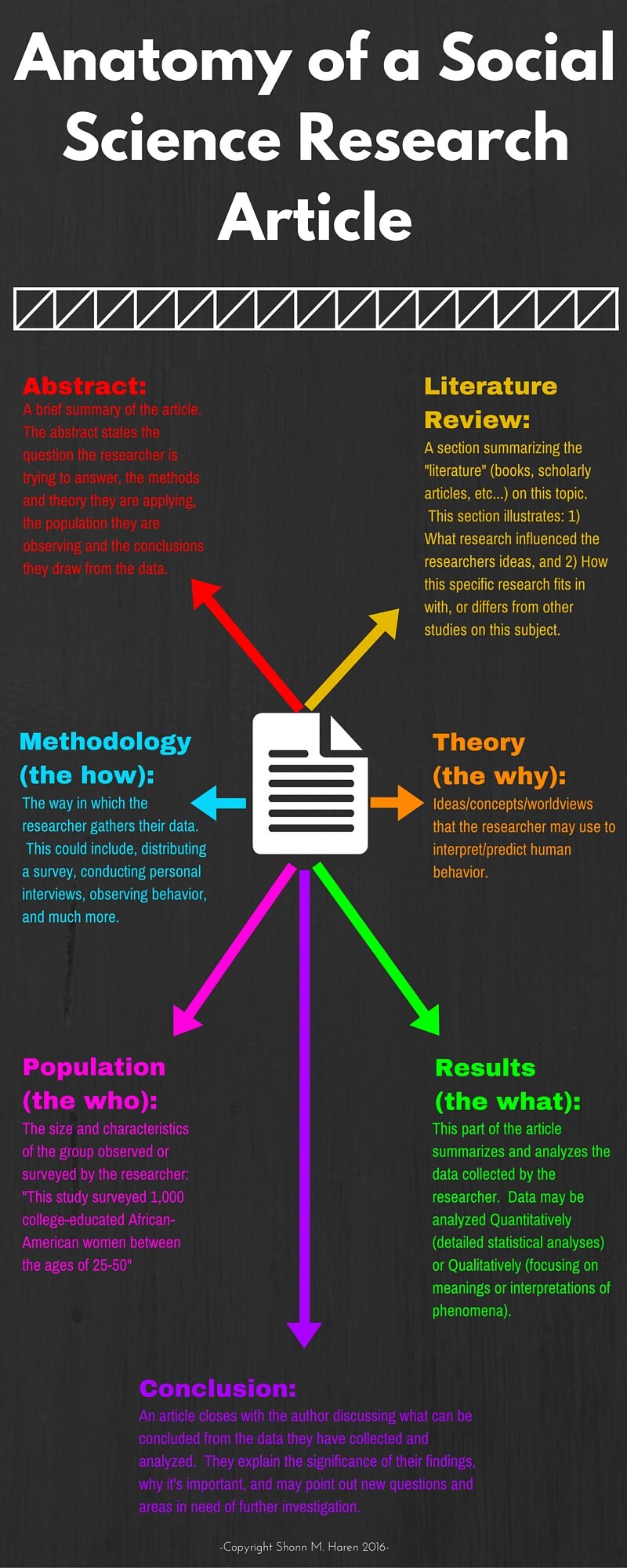
Start with the title and abstract. The abstract is a short summary of the entire paper: the research question, the methods used, the main findings, and the conclusion. Reading this first will tell you if the article is relevant to your interests and give you a roadmap of the key terms and concepts to look for.
Start with the Title and Abstract: Preview the PurposeBefore you dive into complex terminology or dense data sets, begin with the title and abstract.
As you read through the rest of the paper, pay attention to the context in which new terms appear. Sometimes, the surrounding sentences will provide clues to a word's meaning. Don't be afraid to use a scientific dictionary or a quick online search to clarify terms you don't understand. Building your scientific vocabulary is a gradual process.
Ready to check your understanding? Let's see what you've learned about the language of science.
What is the primary reason scientific writing uses specific, technical jargon?
According to best practices, how should an acronym be introduced for the first time in a scientific paper?
With these strategies, you can begin to break down the language of science into understandable parts, making complex research more accessible.