Unlocking Romeo and Juliet
Poetic Structure and Symbols
The Shape of Fate
Before a single character speaks, Shakespeare tells us exactly what will happen. The Prologue to Romeo and Juliet is a sonnet, a tightly structured 14-line poem. This isn't just a fancy introduction; it's a structural clue. By casting the play's entire plot into this rigid poetic form, Shakespeare suggests that the lovers' fate is as predetermined and inescapable as the poem's rhyme scheme.
Two households, both alike in dignity, In fair Verona, where we lay our scene, From ancient grudge break to new mutiny, Where civil blood makes civil hands unclean.
The sonnet's structure—three quatrains followed by a concluding couplet—mirrors the play's own progression. The quatrains set up the conflict and the lovers' meeting, while the final couplet delivers the tragic conclusion. The form itself becomes a container for destiny, holding the entire narrative in its grasp from the very first line. When Romeo and Juliet first meet and speak, their shared lines form another perfect sonnet. Their love is literally born from poetry, but it's a form that has already been used to seal their doom.
Words at War
The language of the play is filled with contradictions. When we first meet Romeo, he is heartbroken over Rosaline, and he describes his feelings using a series of oxymorons—pairs of words that seem to cancel each other out.
O brawling love! O loving hate! O heavy lightness! Serious vanity! Feather of lead, bright smoke, cold fire, sick health!
These aren't just the ramblings of a lovesick teenager. They are a key to the play's central conflict. The constant mashing of opposites reflects a world where love and hate are deeply intertwined, where passion leads directly to violence. This technique, called antithesis, is woven into the fabric of the play. Verona is a city of passion and death, of sacred love and profane feuds. The characters live in a state of permanent contradiction, and their language shows it.
The Sound of Status
Not everyone in Verona speaks the same way. The style of speech is a powerful indicator of social class and emotional state. The nobility, like the Capulets, Montagues, and the Prince, speak in blank verse. This is unrhymed iambic pentameter, a poetic rhythm that sounds elevated and formal, like a steady heartbeat.
In contrast, the servants and common folk, like the Nurse or Peter, speak in prose. Their language is plain, direct, and often comedic. It lacks the formal rhythm of the upper class, making their speech feel more grounded and everyday. This linguistic divide creates a clear social hierarchy.
Shakespeare’s plays are driven by their characters and every choice that’s made about words, structure and rhythm tells you something about the person, their relationships or their mood in that moment.
Pay attention to when the patterns break. As the play's order unravels, so does its language. When emotions run high or chaos erupts, noble characters sometimes abandon verse and slip into the urgency of prose. This shift signals a loss of control, a moment where the formal structures of their world—and their speech—begin to collapse.
A Play of Light and Shadow
Throughout the play, Shakespeare uses a powerful pattern of light and dark imagery. When Romeo first sees Juliet, he immediately associates her with light, a force that banishes the darkness.
O, she doth teach the torches to burn bright! ...It is the east, and Juliet is the sun.
Light represents the purity and intensity of their love. It is a beacon in the dark world of their families' feud. However, this symbolism is tragically inverted. For their love to exist, they must hide in the darkness. The night, a time of secrecy and danger, becomes their sanctuary. Daylight, which should bring safety, instead exposes them to the hatred of their families.
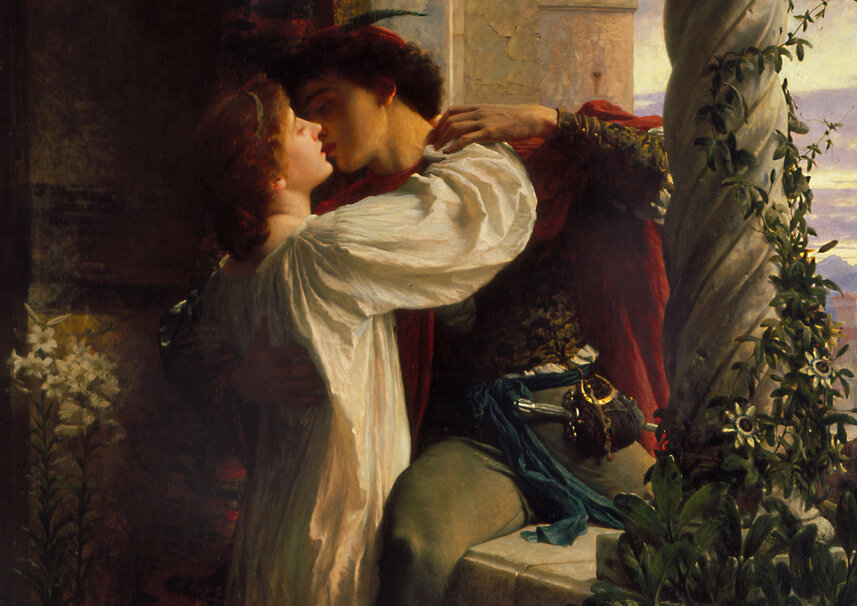
As the play progresses, this tension grows. Light becomes a threat. When dawn arrives after their one night together, Juliet laments, "Then, window, let day in, and let life out." The very light that once symbolized her beauty now signals their separation and impending death. Their love, born in a flash of light, is ultimately consumed by the encroaching darkness of their world.
How does Shakespeare's use of a sonnet for the Prologue of Romeo and Juliet influence the audience's perception of the story?
In the play, Romeo describes his feelings for Rosaline using phrases like "loving hate" and "heavy lightness." What is the primary function of these contradictions, known as oxymorons?
Understanding these poetic structures and symbols allows us to see the play not just as a tragic story, but as a carefully constructed piece of literary art where every word and image contributes to its powerful effect.