Unlocking Recursive Velocity
Introduction to Recursive Velocity
What is Recursive Velocity?
Imagine trying to push a giant, heavy ball. At first, it barely budges. But with each push, it rolls a little farther, a little faster. Soon, the ball's own momentum helps you push it, and what started as a struggle becomes an unstoppable force. This is the core idea behind recursive velocity.
Recursive velocity is the acceleration you gain when you repeatedly apply effort, learn from the results, and then apply that learning to your next effort. It’s about building momentum that compounds over time.
The term combines two powerful concepts. "Velocity" is about speed and direction. "Recursive" describes a process that repeats itself, with the output of one cycle becoming the input for the next. Together, they describe a system where each action not only moves you forward but also makes the next action more effective.
The Power of Iteration
The engine of recursive velocity is the iterative process. Iteration simply means repeating a cycle of actions. Instead of trying to get something perfect in one giant leap, you take a small step, see how it goes, and then take another, slightly better step. It's a loop: Act, review, adjust, and repeat.
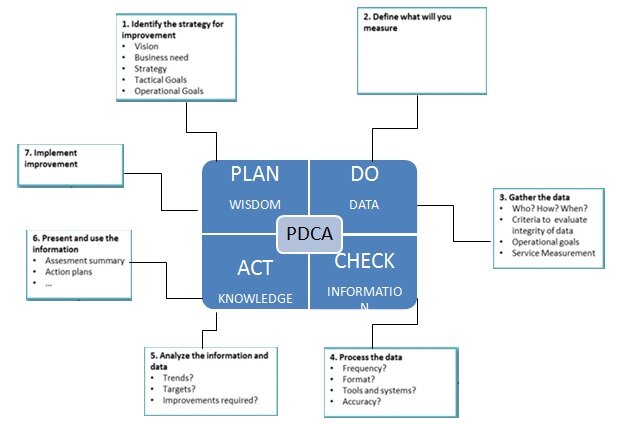
Think about learning a new language. You don't memorize the entire dictionary and grammar book before speaking your first word. You learn a few phrases (Act), try them out and get corrected (Review), refine your pronunciation (Adjust), and then try again (Repeat). Each cycle, or iteration, builds on the last, making your progress faster and more effective.
Fueling Growth with Feedback
If iteration is the engine, feedback is the fuel. A feedback loop is the process where the results of an action are used to modify the next action. Without feedback, you're just repeating the same steps over and over. With feedback, you're improving.
There are two main types of feedback loops that drive growth:
Reinforcing Loop
noun
A loop where an action produces a result that encourages more of the same action, creating exponential growth. Also known as a positive feedback loop.
A reinforcing loop is like a snowball rolling downhill. As it picks up more snow, it gets bigger, which allows it to pick up even more snow, even faster. Success breeds more success.
The second type is a balancing loop. This is your course-correction system. It provides feedback that helps you stay on track by identifying what's not working. If you're building a business and a marketing campaign fails (the feedback), you don't just run it again. You analyze why it failed and adjust your strategy. This correction prevents you from wasting energy and keeps you moving toward your goal.
Compounding and Exponential Growth
When you consistently combine iteration with feedback, something amazing happens: your efforts begin to compound. Compounding is the process where growth builds on previous growth, leading to an explosive, upward curve. It's the same principle behind compound interest in finance, but applied to skills, knowledge, or business.
Initial progress feels slow and linear. But over time, the accelerating nature of recursive velocity creates a sharp turn upwards, resulting in exponential growth.
Each small improvement, each lesson learned, and each successful cycle adds to your base. The next cycle then starts from this higher base, making the next gain even larger. This is the essence of recursive velocity: turning small, consistent efforts into powerful, accelerating momentum.
What is the core idea of 'recursive velocity'?
In the context of the iterative process, what is the primary role of a feedback loop?