Unlocking Lucid Dreams
Understanding Lucid Dreaming
Waking Up in a Dream
Have you ever been in the middle of a bizarre dream and suddenly realized, "Wait, this is a dream"? If so, you've had a lucid dream. It’s the experience of becoming aware that you are dreaming while the dream is still happening. Once you're lucid, you can often observe the dream world knowingly, and sometimes even influence it.
Lucid dreaming is when you’re conscious during a dream.
The idea isn't new. For centuries, practitioners of Tibetan Buddhist dream yoga have used dream awareness as a path to enlightenment. But the term "lucid dream" was coined in 1913 by a Dutch psychiatrist named Frederik van Eeden. He used "lucid" to refer to the mental clarity of the dreamer, not the visual brightness of the dream itself.
The Science of Awareness
For a long time, lucid dreaming was treated as a fringe topic. That changed in the late 1970s and 80s thanks to pioneering research by psychophysiologist Stephen LaBerge at Stanford University. He devised a brilliant experiment to prove that consciousness in dreams was real and verifiable.
While asleep in a lab and hooked up to monitoring equipment, LaBerge performed a pre-arranged signal once he became lucid: a specific sequence of eye movements. Since the body is paralyzed during REM sleep (the stage where most vivid dreaming occurs), the eyes are one of the few things a dreamer can still control. Researchers watching the readouts saw the signal, providing the first objective proof of communication from within a dream.
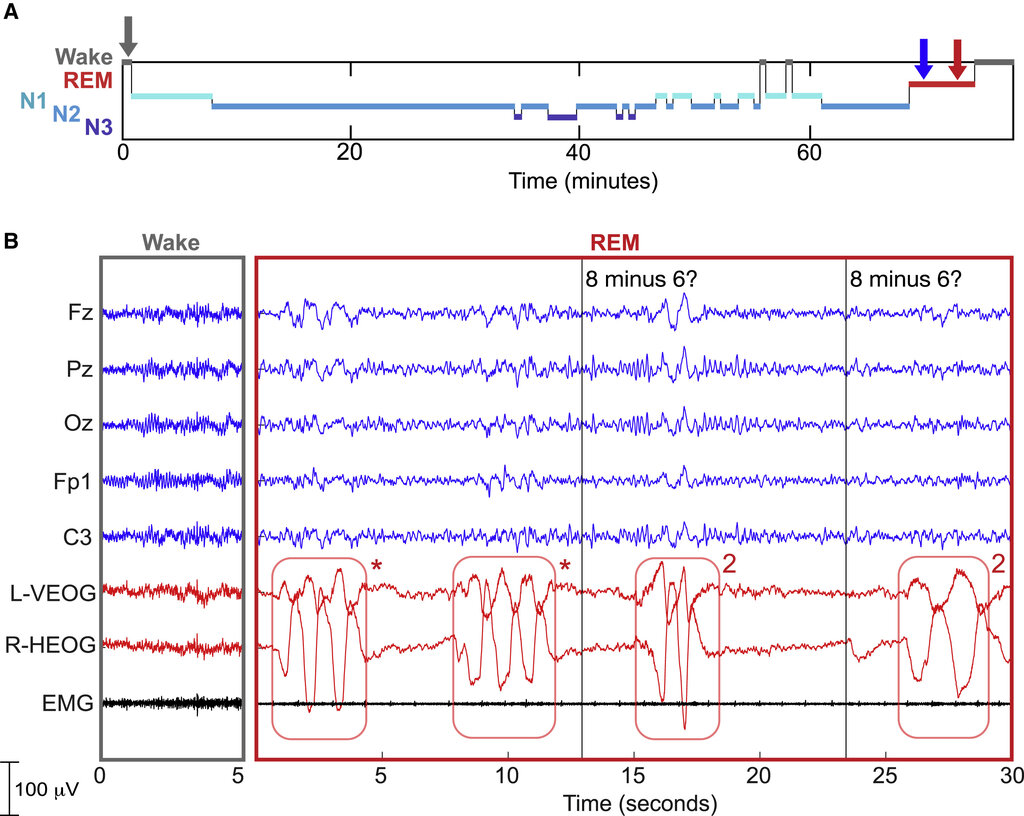
Brain scans of lucid dreamers show something fascinating. Areas of the brain that are normally quiet during REM sleep, like the prefrontal cortex, light up. This region is linked to higher-level functions like self-awareness, working memory, and decision-making. In a lucid dream, it's as if parts of your waking brain switch on, allowing you to bring conscious awareness into the dreamscape.
Benefits of Dream Control
Beyond being a fascinating experience, lucid dreaming has practical benefits. It can be a powerful tool for personal growth and creativity.
One of the most common applications is overcoming nightmares. Instead of being a passive victim, a lucid dreamer can confront the source of their fear, ask what it represents, or even change the dream's outcome. This can reduce the frequency and intensity of recurring nightmares.
It's also a sandbox for creativity and skill rehearsal. Stuck on a problem? You can try to solve it in a dream, where the rules of reality don't apply. Want to practice a musical instrument or rehearse a public speech? The dream state provides a perfectly safe, private venue to build confidence and muscle memory.
Common Myths
A few misconceptions about lucid dreaming persist. Let's clear them up.
| Myth | Reality |
|---|---|
| You can get stuck in a dream. | This is impossible. You will always wake up naturally, just as you do from any other dream. There's no physical or psychological mechanism that could trap you. |
| It's dangerous or unnatural. | There's no scientific evidence that lucid dreaming is harmful. It's a natural state of consciousness that many people experience spontaneously. |
| Lucid dreaming stops you from getting restful sleep. | Research suggests lucid dreaming occurs during the REM stage and doesn't disrupt the sleep cycle's restorative functions. You still get the physical rest you need. |
| You can't control anything. | While full dream control takes practice, many lucid dreamers can influence their dreams. However, the primary experience is awareness, not necessarily control. The dream environment can still be surprising and unpredictable. |
Understanding what lucid dreaming is and what it isn't is the first step. It’s not about escaping reality, but about exploring the vast landscape of your own mind.
What is the defining characteristic of a lucid dream?
Who first coined the term "lucid dream"?