Unlocking Artificial Intelligence
Machine Learning Core
The Art of Learning from Data
Machine learning (ML) is a subfield of artificial intelligence that gives computers the ability to learn without being explicitly programmed. Instead of writing a rigid set of rules for a computer to follow, we give it a large amount of data and let it figure out the patterns on its own.
Think about the difference between telling a child exactly how to recognize a cat versus showing them hundreds of pictures of cats. With traditional programming, you'd write specific rules: "If it has pointy ears, whiskers, and a long tail, it might be a cat." This is brittle; what about a cat with folded ears or no tail? With machine learning, you simply show the system the pictures. The model learns the underlying patterns of "cat-ness" for itself, becoming far more flexible and robust.
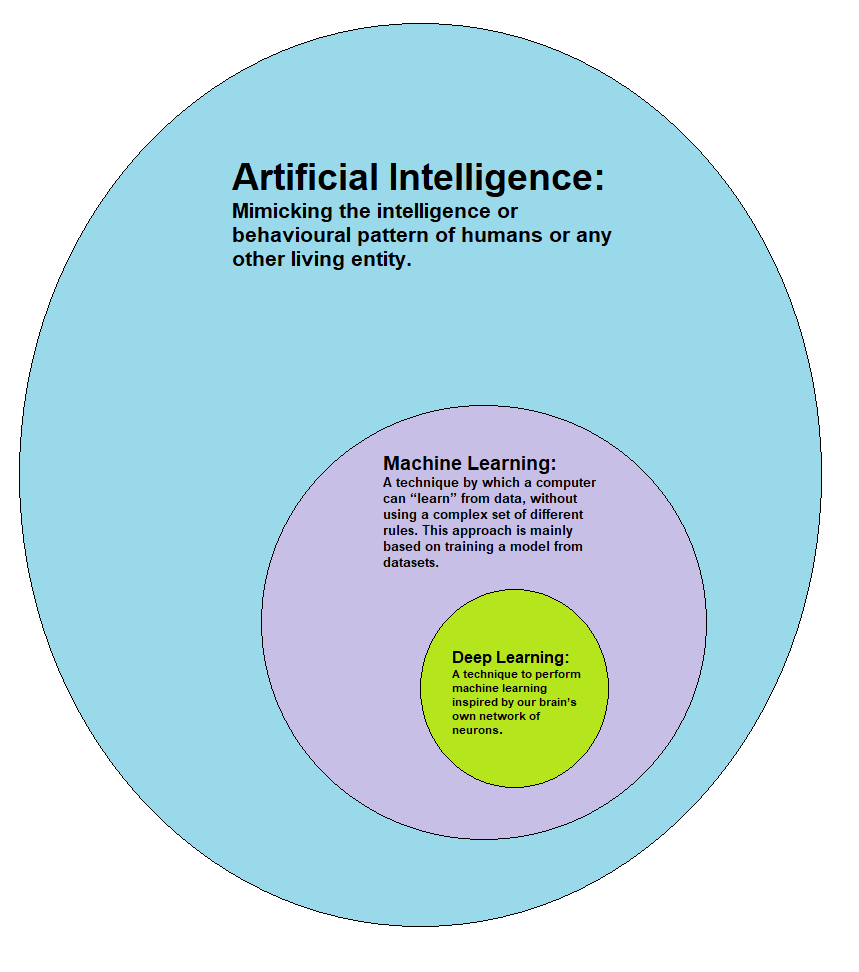
This learning process isn't one-size-fits-all. Depending on the data we have and the goal we want to achieve, machine learning can take one of three primary forms: supervised, unsupervised, or reinforcement learning.
Supervised Learning
Supervised learning is like studying with a set of flashcards. Each card has a question on one side (the input data) and the correct answer on the other (the label). The goal is to learn the relationship between the questions and answers so well that you can eventually predict the answer for a new, unseen question.
In ML, this means feeding an algorithm labeled data. For example, to build a spam filter, we would provide thousands of emails, each one labeled as either "spam" or "not spam." The learns the features commonly associated with spam (like certain keywords or sender patterns) and uses that knowledge to classify new, incoming emails. This is the most common form of machine learning, used for everything from predicting housing prices to identifying tumors in medical scans.
Supervised learning uses labeled data to make predictions about new, unlabeled data.
Unsupervised Learning
What if you don't have labeled data? That's where unsupervised learning comes in. Instead of learning from an answer key, the algorithm explores the data to find hidden structures or patterns on its own. It’s like being given a box of mixed Lego bricks and asked to sort them into piles. You don't know what the categories are called, but you can group them by color, shape, and size.
A classic application is for marketing. A company can feed customer purchase data into an unsupervised model. The model might identify distinct groups, like "frequent bargain shoppers," "high-spending weekend visitors," and "new parents buying baby products." The company didn't define these groups beforehand; the algorithm discovered them by finding similarities in behavior. This allows for much more targeted and effective marketing.
Unsupervised learning finds hidden patterns in unlabeled data.
Reinforcement Learning
Reinforcement learning (RL) operates on a different principle entirely: learning through trial and error. It's inspired by how animals learn. An algorithm, called an "agent," is placed in an environment and learns to achieve a goal by taking actions. For each action, it receives feedback in the form of rewards or penalties.
Imagine training a dog to fetch. When the dog brings the ball back, you give it a treat (a reward). When it gets distracted and chases a squirrel, it gets no treat (no reward, or a form of penalty). Over time, the dog learns that bringing the ball back is the best strategy to maximize its treats. An does the same, learning a sequence of actions—a policy—that will lead to the greatest cumulative reward.
This approach is perfect for dynamic, complex problems where the optimal path isn't obvious. It's the technology behind AIs that can master complex games like Go and Chess, as well as applications in robotics, logistics, and optimizing the energy consumption of data centers.
These three paradigms—supervised, unsupervised, and reinforcement learning—form the bedrock of machine learning. Each provides a different toolkit for extracting knowledge from data and building intelligent systems.
Ready to check your understanding?
What is the fundamental difference between machine learning and traditional programming?
A bank wants to build a system to predict whether a loan applicant is likely to default based on past loan data, where each past loan is marked as 'defaulted' or 'paid in full'. Which type of machine learning is most suitable for this task?
Understanding these core methods is the first step toward seeing how AI is reshaping our world, one dataset at a time.