Unlocking Artificial Intelligence
Introduction to Artificial Intelligence
Defining Intelligence
Artificial intelligence is the theory and development of computer systems able to perform tasks that normally require human intelligence. This goes beyond simple automation; it involves abilities like learning from experience, reasoning, solving problems, and understanding language.
Artificial Intelligence
noun
A wide-ranging branch of computer science concerned with building smart machines capable of performing tasks that typically require human intelligence.
At its core, AI aims to create systems that can perceive their environment, process that information, and make autonomous decisions to achieve specific goals. Think of it less as creating a thinking machine and more as building a tool that can recognise patterns and make predictions at a scale far beyond human capability.
Key Milestones
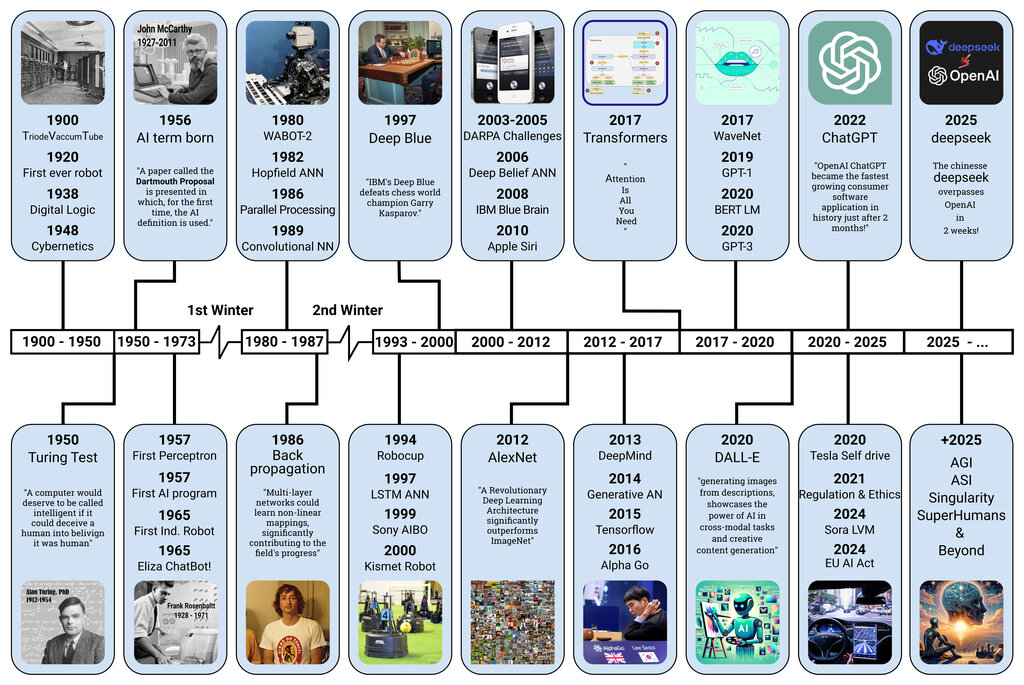
The concept of AI isn't new. It was formally established as an academic discipline at the Dartmouth Workshop in 1956. The years that followed were a mix of groundbreaking progress and periods of stalled funding, often called 'AI winters'. Early excitement often outpaced the available technology and data.
The recent AI boom is a direct result of two key factors: the availability of massive amounts of data (big data) and the development of powerful, affordable computing hardware, particularly graphics processing units (GPUs) that are well-suited for AI computations.
The Branches of AI
AI isn't a single, monolithic technology. It's an umbrella term for a collection of specialised subfields, each focusing on a different aspect of intelligence. Just as medicine has specialists like cardiologists and neurologists, AI has its own distinct branches.
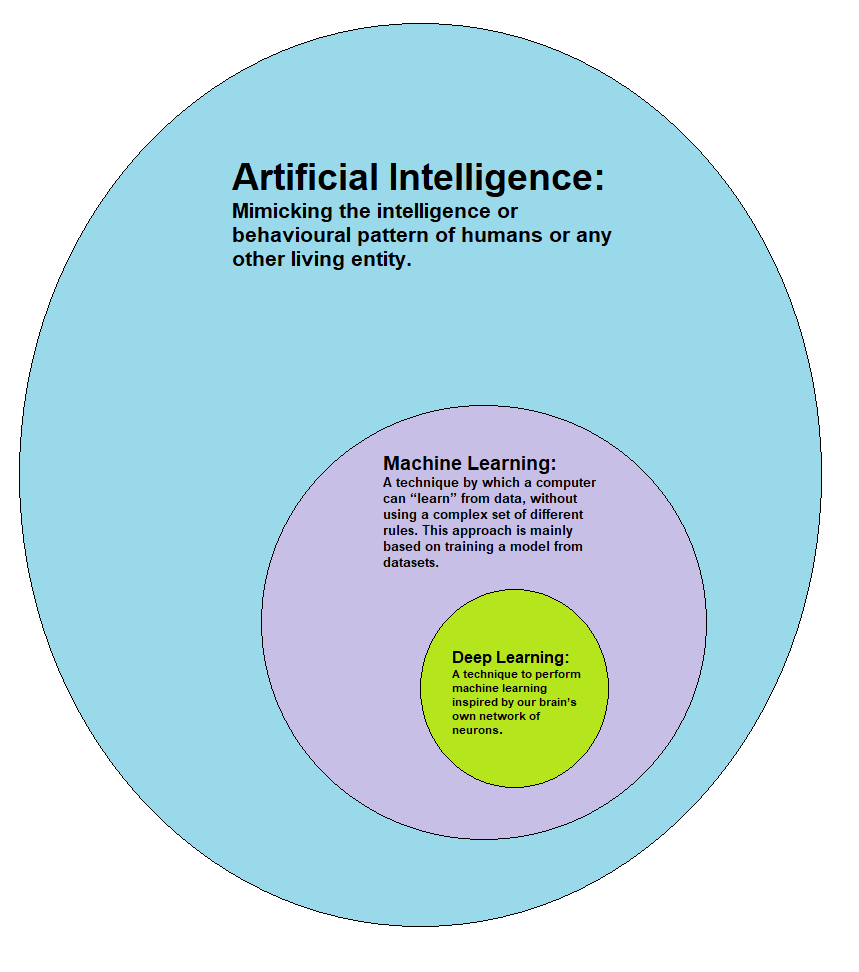
The most prominent subfield today is Machine Learning (ML). Instead of being programmed with explicit instructions, ML systems learn directly from data. They use statistical methods to find patterns and make predictions. A key trade-off in ML is the balance between model complexity and the risk of 'overfitting'—where the model learns the training data too well and performs poorly on new, unseen data.
Natural Language Processing (NLP) focuses on enabling computers to understand, interpret, and generate human language. This is the technology behind chatbots, language translation apps, and sentiment analysis tools. The main challenge in NLP is ambiguity; human language is full of context, slang, and nuance that is difficult for machines to parse.
Robotics integrates AI with physical machines. While not all robots use AI, advanced robotics relies on it for tasks like navigation, object manipulation, and decision-making in complex environments. This field blends computer science with mechanical and electrical engineering.
Industry Impact
AI's influence is spreading across nearly every industry, fundamentally changing how businesses operate and how we interact with technology.
| Industry | Application of AI | Impact |
|---|---|---|
| Healthcare | Analysing medical images (X-rays, MRIs) to detect diseases earlier and more accurately. | Improved diagnostics, personalised treatment plans. |
| Finance | Algorithmic trading, fraud detection, and credit scoring. | Increased efficiency, enhanced security, risk management. |
| Retail | Personalised product recommendations and supply chain optimisation. | Better customer experience, reduced waste, improved inventory. |
| Transportation | Self-driving cars, traffic optimisation, and route planning. | Increased safety, reduced congestion, improved logistics. |
The common thread is AI's ability to process vast datasets and uncover insights that would be impossible for humans to find. This allows for more informed decision-making, from a doctor diagnosing an illness to a logistics company planning its delivery routes.
What is the primary goal of Artificial Intelligence?
Which two factors are most responsible for the recent boom in AI development?
This overview provides a foundation for understanding the core concepts of AI. As we move forward, we'll delve deeper into these branches and explore their mechanisms in more detail.