Unlock Better Sleep
Understanding Sleep Basics
The Architecture of Sleep
Sleep isn't just an off switch for your brain. It's a highly organized state with a distinct structure. Think of it like a building with different floors, each with a specific purpose. Your mind and body visit these floors in a predictable sequence throughout the night.
The two main types of sleep are Non-Rapid Eye Movement (NREM) and Rapid Eye Movement (REM). Most of your night is spent in NREM sleep, which is broken down into three stages. Each one takes you deeper into slumber.
NREM
noun
Non-Rapid Eye Movement sleep, characterized by progressively deeper stages of relaxation and reduced brain activity.
Let's walk through the stages:
-
N1 (Light Sleep): This is the brief, transitional stage right after you doze off. Your muscles relax, your heart rate slows, and you can be easily woken up. It's the feeling of drifting in and out of consciousness.
-
N2 (Deeper Sleep): You spend about half your total sleep time in this stage. Your body temperature drops and eye movements stop. Your brain shows bursts of activity called sleep spindles and K-complexes, which are thought to help with memory consolidation and keeping you asleep through minor disturbances.
-
N3 (Deep Sleep): This is the most restorative stage, also known as slow-wave sleep. It's very difficult to wake someone from N3 sleep. During this time, your body repairs tissues, builds bone and muscle, and strengthens the immune system.
After the deep sleep of N3, you enter a completely different world.
REM
noun
Rapid Eye Movement sleep, a stage of sleep characterized by rapid eye movements, more dreaming and bodily movement, and faster pulse and breathing.
- REM Sleep: About 90 minutes after falling asleep, you hit your first REM cycle. Your eyes move rapidly back and forth behind your eyelids. Your breathing becomes faster and irregular, and your heart rate and blood pressure increase to near waking levels. This is when most vivid dreaming occurs. Your brain is highly active, processing emotions and consolidating memories. Interestingly, your limb muscles become temporarily paralyzed, which prevents you from acting out your dreams.
The Nightly Rhythm
You don't just go through these stages once. You cycle through them repeatedly all night long. A single sleep cycle, moving through N1, N2, N3, and then into REM, lasts about 90 to 110 minutes.
The composition of these cycles changes as the night progresses. Early in the night, your cycles contain more deep N3 sleep. As morning approaches, the REM stages get longer and the deep sleep stages get shorter. This pattern is why you typically need a full night's sleep to get the benefits of both deep physical rest and the mental restoration that happens during REM.
Your Internal Clock
What tells your body when to feel sleepy or awake? This is the job of your circadian rhythm, a 24-hour internal clock that regulates your sleep-wake cycle. This master clock is a tiny cluster of nerve cells in your brain called the suprachiasmatic nucleus (SCN), located in the hypothalamus.
The SCN coordinates all the biological clocks in your body, keeping them in sync. It's highly sensitive to light, which is the most powerful external cue for setting your clock. When light enters your eyes, it signals to the SCN that it's daytime, promoting wakefulness.
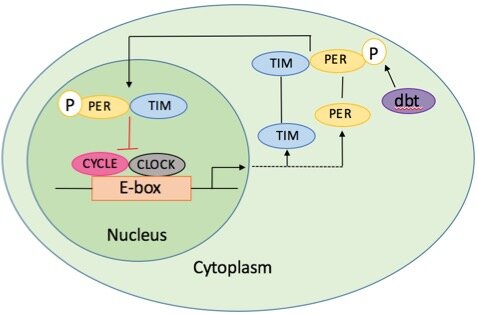
As darkness falls, the SCN signals the pineal gland to produce melatonin, a hormone that makes you feel drowsy. Melatonin levels stay elevated throughout the night, promoting sleep. When the sun rises and light hits your eyes again, melatonin production is suppressed, and your body prepares to wake up. This is why exposure to bright light in the morning helps you feel alert, while using bright screens at night can interfere with your ability to fall asleep.
Why We Sleep
Sleep is not lost time. It is a critical period for maintenance and repair that affects nearly every system in the body.
Physically, sleep is when your body does its heavy lifting for restoration. During deep sleep, growth hormone is released, which is essential for repairing cells and tissues. The immune system also gets a boost, producing proteins called cytokines that help fight infection and inflammation.
Mentally, sleep is crucial for brain function. It plays a key role in learning and memory, a process called memory consolidation. While you sleep, your brain strengthens important neural connections and prunes away weaker ones. This helps you retain new information, solve problems, and regulate your emotions. Without enough quality sleep, it's harder to focus, learn, and manage stress.
Getting enough hours of high-quality sleep fosters attention and concentration, which are prerequisites for most learning.
Now that you understand the basic mechanics of how sleep works, you have a foundation for exploring how to make it work better for you.