University Strategic Management Fundamentals
Introduction to Strategic Management
What Is Strategic Management?
Think of a company as a ship on a vast ocean. Without a map, a destination, and a captain steering the wheel, it would just drift. Strategic management is the art and science of being that captain. It's the ongoing process of setting goals, figuring out how to achieve them, and adjusting course along the way to ensure the organization not only survives but thrives.
In short, strategic management is about making decisions that steer the entire organization toward its long-term vision.
This isn't just about day-to-day operations. It’s about looking at the big picture. Where is the industry heading? What are our competitors doing? What are we uniquely good at? Answering these questions helps a company find its unique position in the market and create a sustainable competitive advantage.
The person at the helm of this process is the general manager. Their job is to see the whole map, not just one part of the ship. They formulate the grand strategy and ensure all departments, from marketing to finance to operations, are rowing in the same direction. They are responsible for analyzing information, making tough choices, and leading the crew to execute the plan.
The Strategic Management Process
Strategic management isn't a one-time event; it's a continuous cycle. While the details can vary, the process generally flows through four main phases.
- Analysis: First, you have to understand your current situation. This involves looking both inward at the organization's strengths and weaknesses and outward at the opportunities and threats in the market.
- Formulation: Based on the analysis, leaders develop a strategic plan. They define the company's mission and vision, set clear objectives, and decide on the high-level strategies to achieve them.
- Implementation: This is where the plan is put into action. It involves allocating resources, structuring teams, and developing policies to support the strategy. A great plan is useless without effective execution.
- Evaluation & Control: Finally, the company monitors its progress. Are the strategies working? Are we hitting our targets? This phase involves tracking performance and making adjustments as needed, which feeds right back into the analysis phase, starting the cycle anew.
Tools for Analyzing the Landscape
To make good decisions, managers need frameworks to help them organize their thinking. Two of the most fundamental tools used in the analysis phase are SWOT analysis and Porter's Five Forces.
Utilize frameworks like SWOT analysis (Strengths, Weaknesses, Opportunities, Threats) and Porter’s Five Forces model to comprehend market dynamics and competitive positioning.
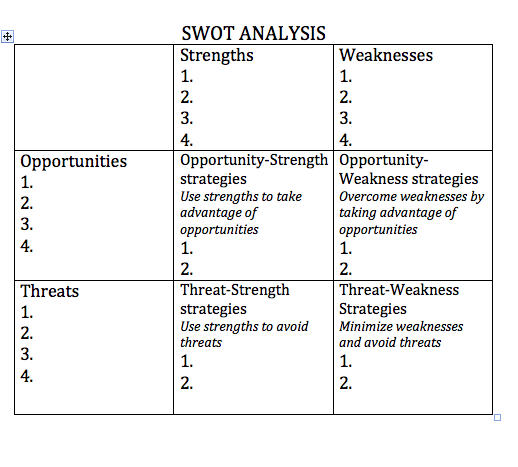
SWOT analysis is a simple but powerful framework for looking at a company's internal and external environment.
| Category | Focus | Description |
|---|---|---|
| Strengths | Internal | What does our organization do well? What unique resources do we have? |
| Weaknesses | Internal | Where do we need to improve? What are we lacking? |
| Opportunities | External | What market trends can we take advantage of? |
| Threats | External | What obstacles or competitors stand in our way? |
By mapping these four areas, a manager gets a clear snapshot of where the company stands. Strengths can be leveraged to pursue opportunities, while weaknesses might need to be addressed to guard against threats.
While SWOT provides a broad overview, Porter's Five Forces model helps managers zoom in on the competitive landscape of a specific industry. It's used to understand how profitable and attractive an industry is by analyzing five key competitive pressures.
The five forces are:
- Competitive Rivalry: How intense is the competition among existing players?
- Threat of New Entrants: How easy is it for new companies to enter the market?
- Threat of Substitute Products or Services: Can customers find a different way of doing what your product does?
- Bargaining Power of Buyers: How much power do customers have to drive down prices?
- Bargaining Power of Suppliers: How much power do your suppliers have to increase their prices?
By analyzing these forces, a company can better understand its industry's structure and position itself for success.
Understanding these foundational concepts is the first step toward thinking like a strategist. Let's see what you've learned.
What is the primary goal of strategic management?
A company is examining its internal strengths and weaknesses. Which strategic analysis tool is it most likely using?
Strategic management provides the map and compass for a business. By systematically analyzing the environment, formulating a clear plan, and executing it effectively, organizations can navigate the complexities of the market and achieve their long-term goals.