Universal History from Origins to Modernity
Earth's Formation and Life
A Hostile Beginning
Four and a half billion years ago, Earth was unrecognizable. The Hadean Eon was a period of intense heat and constant bombardment. The planet was a molten sphere, slowly cooling to form a primitive crust. There was no oxygen, and the atmosphere was a toxic mix of nitrogen, carbon dioxide, and methane. Volcanoes relentlessly spewed gases, and the surface was a chaotic landscape of magma oceans and impacting asteroids.
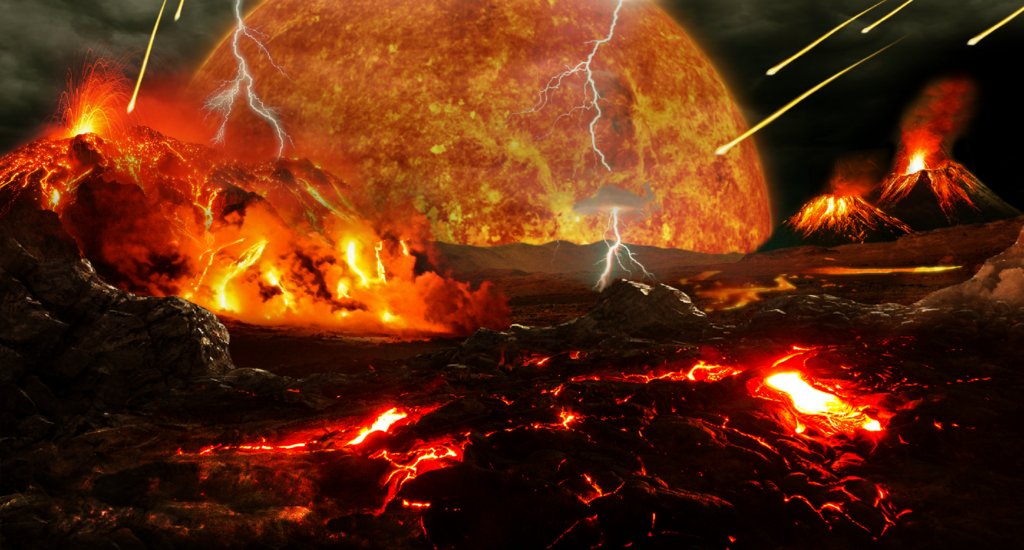
As Earth cooled further into the Archean Eon, water vapor condensed to form the first oceans. It was in these primordial seas, likely near hydrothermal vents, that life first sparked. The earliest organisms were simple, single-celled prokaryotes. They were anaerobes, thriving in an oxygen-free world. For over a billion years, these microbes were the sole inhabitants of the planet, quietly metabolizing chemicals in the deep.
The Oxygen Revolution
Around 2.4 billion years ago, a new type of bacterium evolved a revolutionary metabolic trick: photosynthesis. These organisms, cyanobacteria, harnessed sunlight to produce energy, releasing a waste product that would fundamentally alter the planet: oxygen. At first, this oxygen reacted with iron in the oceans, creating vast deposits of rust that settled on the seafloor. We see these today as banded iron formations, the primary geological evidence for this planetary shift.
The slow accumulation of oxygen in the atmosphere is known as the Great Oxygenation Event. For the anaerobic life that dominated Earth, it was a catastrophe. Oxygen was a corrosive poison, leading to the planet's first mass extinction.
This crisis, however, was also an opportunity. The rising oxygen levels created immense selective pressure, favoring organisms that could not only tolerate oxygen but use it. This led to the evolution of aerobic respiration, a far more efficient energy-producing pathway. This biochemical innovation was a prerequisite for the development of larger, more complex life forms, including the eukaryotic cell. The ability to harness oxygen is the very foundation of the complex metabolic pathways you see in clinical settings today.
Continents in Motion
While the atmosphere was changing, the ground beneath was also in flux. The Earth's crust is not a single, solid shell but is broken into massive pieces called tectonic plates. These plates drift on the semi-molten mantle beneath them in a process known as plate tectonics This movement has repeatedly assembled and broken apart supercontinents over geological time. The cycle of continents colliding and rifting dramatically alters ocean currents, global climate, and sea levels.
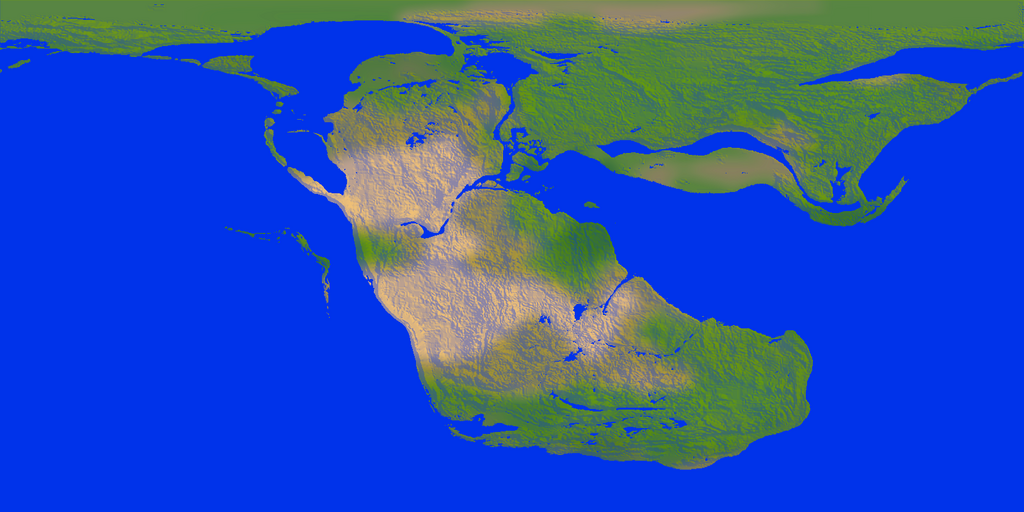
These continental shifts were crucial for biological evolution. When continents broke apart, populations of organisms became isolated, leading to divergent evolution and the formation of new species. When they collided, mountain ranges were thrown up, creating new habitats and weather patterns. This constant geological shuffling created a dynamic stage, providing a continuous source of new environmental niches for life to adapt to and fill.
Life's Big Bang
For nearly three billion years, life remained mostly simple and microscopic. Then, around 541 million years ago, something remarkable happened. In a relatively short geological timespan, the diversity of animal life exploded. This event, the Cambrian explosion, saw the appearance of the first organisms with hard shells, external skeletons, and limbs. Nearly all major animal phyla that exist today got their start during this period.
The Cambrian explosion wasn't an explosion of life itself, but an explosion of visible, complex animal body plans preserved in the fossil record.
The exact cause is still debated, but it was likely a combination of factors. Rising oxygen levels finally crossed a threshold that could support larger, more active animals. The end of a major global ice age created warmer, more hospitable seas. And the evolution of predation created a new selective pressure, driving an evolutionary arms race between predators and prey that spurred the development of shells, spines, and faster movement.
Following this diversification, life began its long march onto land. The Paleozoic Era saw the rise of fish, amphibians, and early reptiles. But this era ended with the most severe extinction event in Earth's history, the Permian-Triassic extinction, which wiped out over 90% of marine species. This cataclysm cleared the slate for the next dominant group: the dinosaurs.
Age of Reptiles and a New Beginning
The Mesozoic Era is famously the age of dinosaurs. For more than 150 million years, they were the dominant terrestrial vertebrates. During their reign, the supercontinent Pangea broke apart, shaping the continents we know today. The first mammals also appeared, but they were small, nocturnal creatures living in the shadows of the giant reptiles.
This long era came to a dramatic end 66 million years ago. An asteroid roughly ten kilometers wide slammed into the Yucatán Peninsula, triggering the K-Pg extinction event. The impact and its after-effects—global wildfires, tsunamis, and a years-long impact winter that blocked out the sun—caused the extinction of about 75% of all species, including all non-avian dinosaurs.
Just as with previous mass extinctions, this global disaster opened up new ecological niches. With the dinosaurs gone, mammals began to diversify rapidly. They grew larger, moved into the daylight, and spread across the globe. This post-extinction radiation eventually led to the evolution of primates, and ultimately, to us. Our own history is fundamentally tied to these vast geological and biological upheavals.
What was the atmosphere of Earth like during the Hadean Eon?
What was the primary geological evidence for the initial rise of oxygen in the atmosphere, an event known as the Great Oxidation Event?