Universal Design Fundamentals
Design Elements
The Building Blocks of Design
Every visual creation, from a website to a painting, is built from the same basic ingredients. These are the elements of design. They are the fundamental units that form the structure of any visual work. Think of them like letters in an alphabet. By themselves, they are simple. But when combined, they can create anything you can imagine.
Line and Shape
The simplest element is the line. It’s a mark that connects two points. But a line is more than just a divider. It can be thick or thin, straight or curved, smooth or jagged. Each quality gives it a different personality.
Straight, horizontal lines can feel calm and stable, like the horizon. Vertical lines might suggest height and strength. Curved lines create a sense of movement and flow, while jagged lines can convey energy, excitement, or chaos.
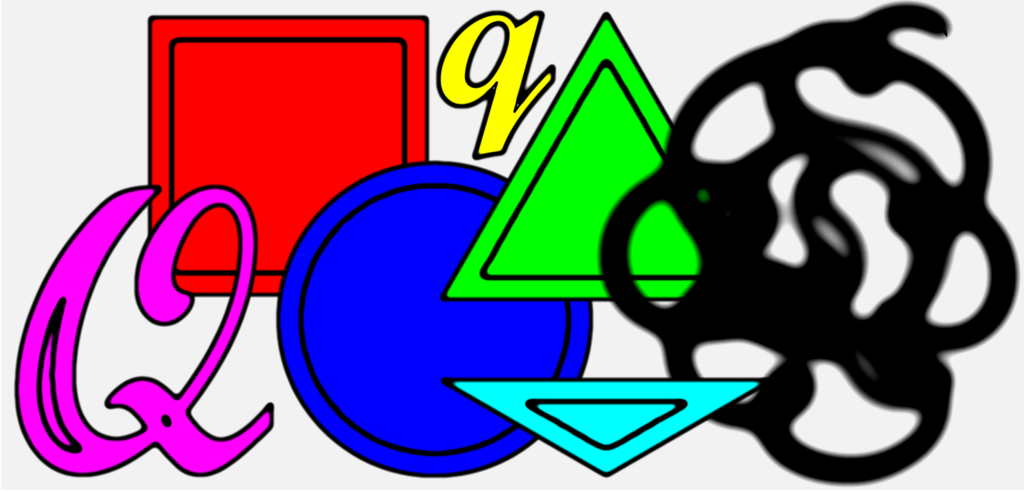
When a line encloses an area, it creates a shape. Shapes are two-dimensional, defined by their boundaries. We can group them into two main categories.
- Geometric shapes are precise and regular. Think of circles, squares, and triangles. They often feel structured, orderly, and man-made.
- Organic shapes are irregular and free-form. They resemble things found in nature, like clouds, leaves, or puddles. These shapes tend to feel more natural, soft, and spontaneous.
Form and Space
Form is the three-dimensional cousin of shape. While a square is a shape, a cube is a form. Forms have height, width, and depth. In a two-dimensional medium like a screen or a piece of paper, designers create the illusion of form using light, shadow, and perspective. This is what makes a flat circle look like a sphere or a flat square appear as a solid box.
Space is the area around, between, and within the other design elements. It's the canvas on which everything else exists. You can think of it in two ways:
- Positive space is the area occupied by the main objects or shapes.
- Negative space (or white space) is the empty area surrounding those objects.
Negative space is just as important as positive space. It gives elements room to breathe, reduces clutter, and can even create interesting shapes of its own. A clever use of space guides the viewer's eye and brings clarity to a design.
The design isn't finished when there is nothing more to add, but when there is nothing left to take away.
Color and Texture
Color is one of the most powerful and emotionally charged elements. It can attract attention, convey a mood, and communicate information without words. Every color has three basic properties:
- Hue: The pure color itself (e.g., red, blue, green).
- Value: How light or dark the color is (its tint or shade).
- Saturation: The intensity or purity of the color. A highly saturated color is bright and vivid, while a less saturated one is muted and dull.
Understanding these properties allows a designer to create palettes that are harmonious, contrasting, or subtle, depending on the goal.
Finally, texture refers to the surface quality of an object. It’s the element that engages our sense of touch, even when we’re just looking at a screen. Texture can be real or implied.
- Actual texture is the physical feel of a surface. Think of the roughness of sandpaper or the smoothness of glass.
- Implied texture is the visual illusion of a texture. A photograph of tree bark on a flat screen is a perfect example. You can see the roughness, but you can't feel it.
Texture adds depth, interest, and a layer of realism to a design. A smooth, glossy texture can feel modern and sleek, while a rough, organic texture can feel rustic and natural.
Ready to test your knowledge of these fundamental building blocks?
Which element of design is defined as the three-dimensional cousin of shape, possessing height, width, and depth?
A designer wants to create a feeling of calm and stability, like a peaceful horizon. Which type of line would be most effective?
These six elements are the vocabulary of visual language. By understanding what they are and how they work, you've taken the first step toward creating and interpreting any design you encounter.