Unity in Diversity and India's Social Fabric
Defining Many in One
The Fabric of India
India's identity is built on a powerful idea: unity in diversity, not unity despite it. This isn't just about different groups living side-by-side. It’s the belief that these differences in culture, language, and tradition weave together to create a stronger, more resilient nation. Think of it like a rope. A single thread is weak, but thousands of different threads braided together create something incredibly strong.
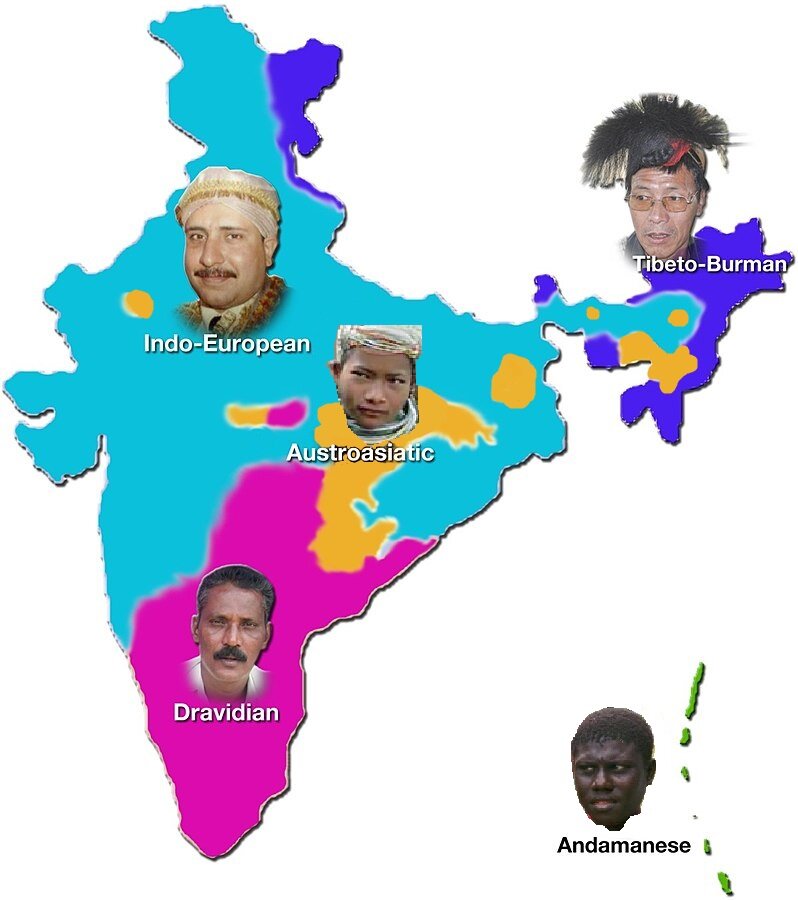
The scale of this diversity is staggering. The Anthropological Survey of India has identified over 4,635 distinct communities and more than 325 languages actively spoken across the country. This isn’t a modern phenomenon; it's the bedrock of Indian history. For centuries, this social and cultural variety has fueled innovation, art, and philosophy, creating a rich tapestry of human experience.
Diversity vs. Inequality
It's crucial to distinguish between diversity and inequality. They are not the same thing.
Diversity is about the differences that enrich a society. It's about celebrating different festivals, speaking different languages, cooking different foods, and practicing different faiths. These are differences of culture and identity.
Inequality, on the other hand, is about the unequal distribution of resources and opportunities. It arises when differences in caste, economic status, or gender are used to deny people access to education, healthcare, or justice. While diversity is a source of strength, inequality is a social problem that must be addressed.
| Feature | Diversity | Inequality |
|---|---|---|
| Nature | Differences in culture, language, beliefs | Differences in access to resources, opportunity |
| Effect on Society | Enriches and strengthens | Weakens and creates injustice |
| Goal | Celebrate and respect | Eliminate and create fairness |
From a competitive exam perspective, like the RMS CET, understanding this distinction is key. Questions often test your ability to see diversity as a foundational strength of the nation, while recognizing inequality as a challenge to its democratic ideals. A person’s cultural background is a part of their identity; their access to a good school should be a universal right.
A Nation Woven, Not Forged
Historically, some outsiders struggled to grasp this concept. The British historian Vincent Smith famously described India as an "ethnological museum" full of disparate peoples, implying it could never truly be a single nation. He saw the diversity as a fundamental weakness, a barrier to unified governance.
This view fundamentally misunderstands Indian civilization. India was never meant to be a monolithic state where everyone thinks, speaks, and worships the same way. The unity comes from shared values, a connected history, and a constitutional framework that protects and celebrates its differences. The diversity is the history, not a footnote to it.
India's unity is not based on sameness. It's a unity that finds strength in its countless variations.
This principle of finding strength in plurality remains one of India's most important contributions to the world. It’s a living experiment in how people from vastly different backgrounds can come together to build a shared future, not by erasing their differences, but by embracing them.
What is the central idea behind the phrase "unity in diversity" as it applies to India?
According to the text, what is the fundamental difference between diversity and inequality?