Unification of Germany and the Rise of Bismarck
Post-1815 Germanic Landscape
A New German Order
After Napoleon's defeat, the great powers of Europe convened at the in 1815 to redraw the continent's map. Their primary goal was not to create nations but to establish a durable balance of power. For the German-speaking lands, this meant avoiding a powerful, unified state in the heart of Europe. Instead, they replaced the defunct Holy Roman Empire with the German Confederation (Deutscher Bund), a loose association of 39 sovereign states.
The Confederation was designed for stability, not unity. It had a federal assembly, the Diet, in Frankfurt, but it possessed no real central authority. Each member state retained its own monarch, laws, and army.
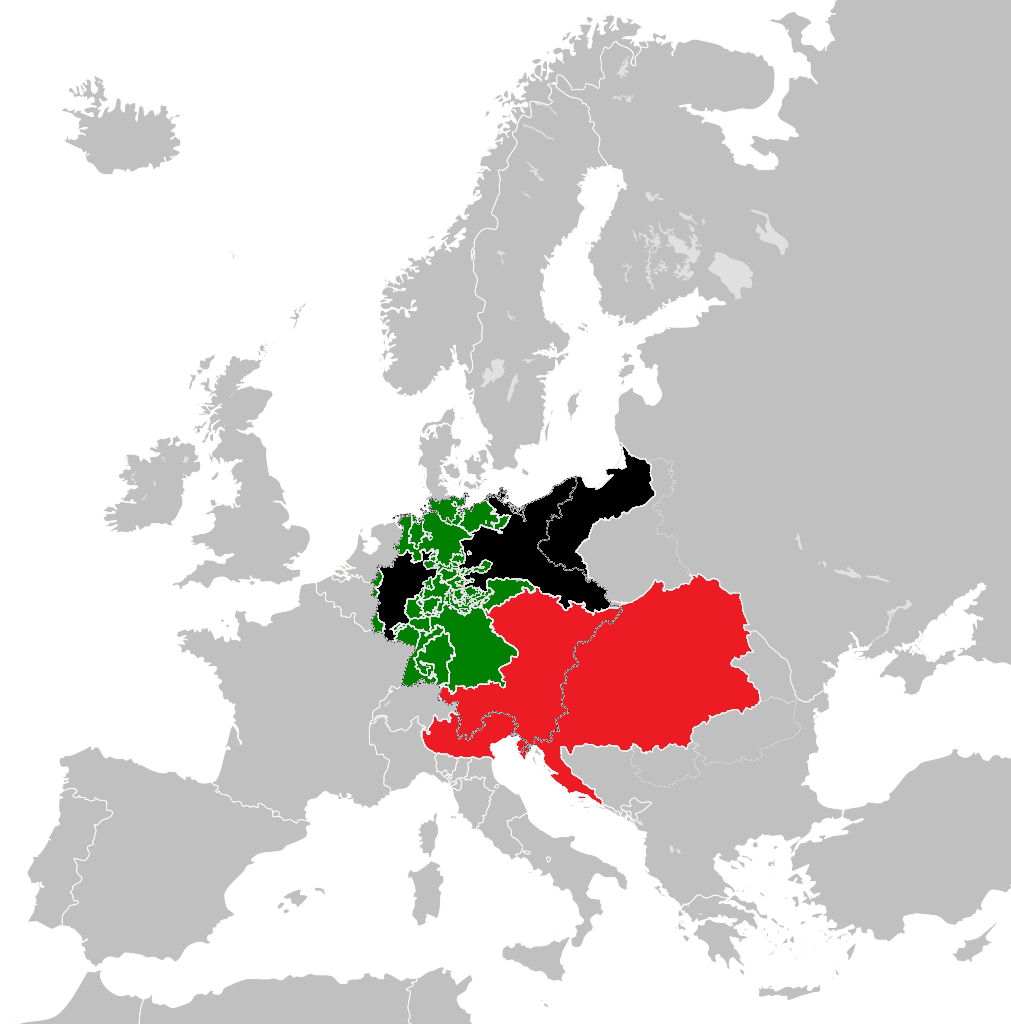
This arrangement institutionalised a long-standing rivalry. Within the Confederation, two powers vied for dominance: the Austrian Empire, the traditional head of the old Holy Roman Empire, and the rising Kingdom of Prussia. This dynamic, known as German dualism, defined the political landscape for the next 50 years. For students of Indian polity, this can be understood as a multi-polar system where two major powers asserted a form of suzerainty over smaller states, all while claiming formal sovereignty.
The German Question
The question of unification wouldn't stay dormant. Nationalists began to debate two primary models for a future German nation-state. The debate centred on whether a unified Germany should include the multi-ethnic Austrian Empire.
| Model | Leadership | Territory | Key Characteristic |
|---|---|---|---|
| Grossdeutschland | Austrian Empire | Included all German Confederation states, plus Austria's non-German lands | A vast, multi-ethnic empire. The "Greater German" solution. |
| Kleindeutschland | Kingdom of Prussia | Included all German Confederation states except Austria | A more ethnically homogenous German nation-state. The "Lesser German" solution. |
Austria favoured the Grossdeutschland (Greater Germany) model, as it would allow it to maintain its historic dominance over the German states. Prussia, seeking to displace Austria, championed the Kleindeutschland (Lesser Germany) solution, which would naturally place it in the leading role.
Unification Through Economics
Prussia found a powerful non-military tool to advance its agenda: economics. In 1834, it established the , or German Customs Union. This union abolished tariffs and trade barriers between member states, creating a unified economic zone. Most German states eagerly joined, seeing the benefits of free trade.
Crucially, Austria was excluded. Its protectionist economy was incompatible with the Zollverein's free-trade principles. Prussia had effectively created a Kleindeutschland in economic terms decades before it was forged in war. By linking the German states' economic fortunes to its own, Prussia isolated Austria and positioned itself as the natural leader of a future Germany.
The People's Uprising
The desire for unification wasn't just a matter for princes and ministers. In 1848, a wave of revolutions swept across Europe, including the German states. Liberal nationalists demanded political freedoms and a unified German nation.
This movement culminated in the of 1848, the first freely elected parliament for all of Germany. Delegates from across the Confederation gathered to draft a liberal constitution for a unified nation. After months of debate, they settled on a constitutional monarchy and offered the imperial crown to Prussia's King, Frederick William IV.
The Parliament ultimately chose the Kleindeutschland model, formally excluding Austria from the proposed German Empire.
But the king refused. An arch-conservative, he would not accept a crown "from the gutter," offered by commoners rather than his fellow princes. Without the support of Prussia, the Frankfurt Parliament collapsed. The liberal dream of unification from below had failed. It became clear that if Germany were to be unified, it would have to be forged from above, by the power of the states.
Now, let's test your understanding of this complex period.
What was the main purpose of the German Confederation (Deutscher Bund) established by the Congress of Vienna in 1815?
The concept of Kleindeutschland (Lesser Germany) proposed a unified Germany that would exclude which major power?
The failure of 1848 set the stage for a new, more pragmatic and militaristic approach to German unification, led by Prussia.