Understanding Zoning Checks
Introduction to Zoning Regulations
What is Zoning?
Think of a city as a giant house. You wouldn't put your bed in the kitchen or the stove in the bedroom. Everything has its place to make the house functional and pleasant. Zoning is how city planners do the same thing for a community. It's the process of dividing land into different zones where specific types of activities are allowed.
Zoning
noun
The practice of dividing land in a municipality into districts or zones within which certain land uses are permitted or prohibited.
The main goal is to protect public health, safety, and general welfare. This means separating incompatible uses, like keeping a noisy factory away from a quiet neighborhood, ensuring new buildings don't block all the sunlight from their neighbors, and making sure there's enough space for parks and schools. It's about creating a logical, safe, and predictable environment for everyone.
The Zoning Ordinance is used by the City to regulate the size, type, structure, and use of land or buildings in designated areas of the City.
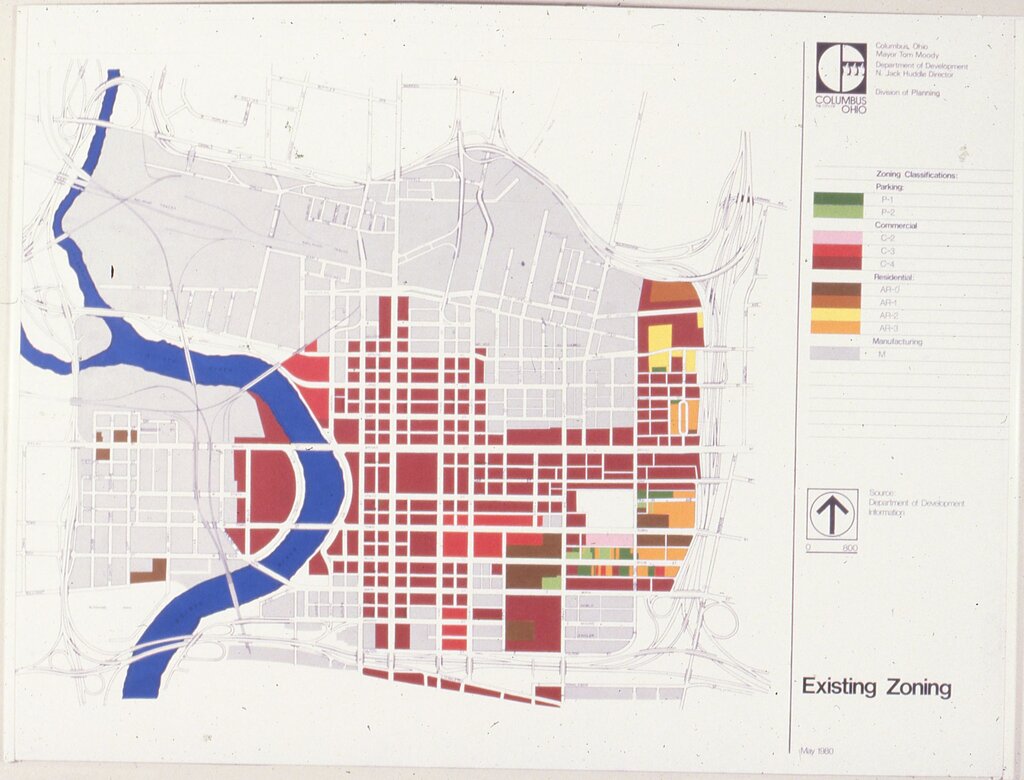
Zoning ordinances are local laws that spell out these rules. They create a map that colors different parts of the city for different uses, along with a text that explains what you can and can't do in each colored zone.
A Quick History Lesson
In the late 19th and early 20th centuries, American cities grew rapidly and chaotically. Without rules, factories could pop up next to homes, blanketing them with smoke and noise. This created unhealthy and unsafe living conditions. New York City enacted the first comprehensive zoning ordinance in 1916, largely to prevent massive skyscrapers from casting entire streets into permanent shadow.
The idea caught on. In the 1920s, the U.S. Department of Commerce published the Standard State Zoning Enabling Act (SZEA). This wasn't a federal law, but a model that states could adopt to give their cities and towns the legal authority to create their own zoning rules. Most states adopted a version of it, laying the groundwork for the system we have today.
The constitutionality of zoning was cemented in 1926 by the Supreme Court case Village of Euclid v. Ambler Realty Co. The court ruled that zoning was a legitimate exercise of a community's police power to protect the public's well-being.
Types of Zones
While the specifics vary from place to place, most zoning codes are built around a few common categories. Think of these as the basic building blocks of a city plan.
Residential Zones: These areas are primarily for housing. They are often subdivided further. For example, an R-1 zone might only allow single-family homes, while an R-3 zone could permit apartment buildings. This helps manage population density and ensures neighborhoods have the right character and infrastructure, like schools and utilities.
Commercial Zones: This is where business happens. These zones are for retail stores, offices, restaurants, and hotels. Like residential zones, they can be broken down into smaller categories, from small neighborhood corner stores to large regional shopping malls.
Industrial Zones: These areas are set aside for manufacturing, warehouses, and other industrial activities. They are typically located away from residential areas to minimize the impact of noise, traffic, and pollution on residents.
Mixed-Use Zones: A more modern approach, these zones allow a combination of uses in the same area or even the same building. You might see apartments above a coffee shop or offices next to a grocery store. This approach aims to create vibrant, walkable neighborhoods where people can live, work, and shop without needing a car.
More Than Just Use
Zoning isn't just about what you can do on a piece of land; it's also about how you can build on it. Ordinances include detailed rules to control the physical form of buildings and ensure orderly development. These rules are known as bulk and density regulations.
| Regulation Type | What It Controls | Why It Matters |
|---|---|---|
| Height Limits | The maximum height of a building. | Prevents new buildings from blocking light and air for neighbors; maintains the character of a neighborhood. |
| Setbacks | The minimum distance a building must be from the property lines. | Creates space for yards, sidewalks, and utilities; prevents overcrowding. |
| Lot Coverage | The percentage of a lot that can be covered by buildings. | Ensures there is open space for greenery, drainage, and recreation. |
| Floor Area Ratio (FAR) | The ratio of a building's total floor area to the size of the lot. | A more flexible way to control overall building size and density. |
Together, these rules shape the look and feel of a city, influencing everything from the amount of green space to the density of the population. They are the invisible blueprint guiding how our communities grow.
What was the primary motivation behind New York City's pioneering 1916 zoning ordinance?
The U.S. Supreme Court case that affirmed the constitutionality of zoning as a legitimate exercise of a community's police power was ____.
Zoning is a fundamental tool of urban planning that helps balance the needs of residents, businesses, and the environment. By establishing clear rules for land use and development, it creates a framework for building healthier, safer, and more organized communities.