Understanding Your Tool
Introduction to Tool Benefits
What Are Tools For?
At its core, a tool is anything that helps you accomplish a task. It could be a physical object like a hammer or a digital one like a spreadsheet. The fundamental purpose of any tool is to extend our natural abilities. They make us stronger, faster, more precise, and more capable than we would be on our own.
tool
noun
A device or implement, especially one held in the hand, used to carry out a particular function.
Think about trying to drive a nail into a piece of wood with your bare hands. It's nearly impossible and likely painful. But with a hammer, the task becomes simple. The hammer acts as an extension of your arm, concentrating force into a small area. This same principle applies to all tools, whether it's a telescope extending our vision to distant galaxies or software extending our ability to process vast amounts of information.
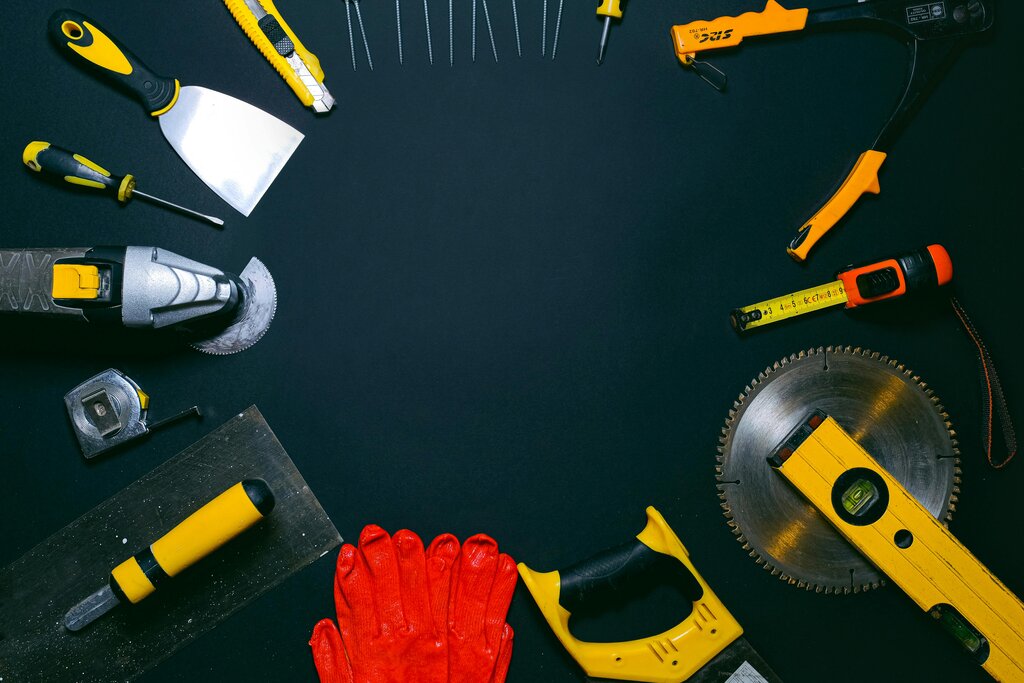
From Stone to Software
Tool use is not a recent invention; it's a defining characteristic of humanity. Our earliest ancestors began using simple stone tools millions of years ago. These sharpened rocks allowed them to cut, scrape, and hunt more effectively, fundamentally changing their relationship with their environment. It was a massive leap forward, allowing them to access new food sources and defend themselves.
As civilizations developed, so did our tools. The agricultural revolution was powered by the plow and irrigation systems. The Industrial Revolution was driven by steam engines, lathes, and machinery that could manufacture goods on a massive scale. Each leap in technology was accompanied by a new set of tools that redefined what was possible.

Today, we are in the midst of a digital revolution. Many of our most powerful tools are no longer physical objects but software and algorithms. These tools don't augment our physical strength; they augment our minds. They help us communicate instantly across the globe, analyze complex data, and automate repetitive mental tasks, freeing up our creativity for higher-level problems.
Every tool, from a sharpened rock to a complex algorithm, was created to solve a specific problem.
The Core Benefits
Regardless of the industry or the era, the reasons we use tools boil down to a few key benefits. Understanding these helps clarify their universal importance.
| Benefit | Description |
|---|---|
| Efficiency & Productivity | Tools allow us to complete tasks faster and with less effort. A power drill is much quicker than a hand drill, and accounting software is faster than a manual ledger. This increases output. |
| Precision & Quality | Many tasks require a level of accuracy that is difficult or impossible to achieve by hand. Tools like calipers, laser cutters, and design software enable precise, repeatable results, leading to higher-quality work. |
| Safety | Tools often make tasks safer. Using a ladder is safer than standing on a wobbly chair, and robots can handle hazardous materials, protecting human workers from harm. |
| Capability | Some tasks are simply impossible without tools. We cannot see microscopic organisms without a microscope or fly without an airplane. Tools open up entirely new possibilities. |
These benefits compound. When a task becomes more efficient, it frees up time and resources for other activities. When quality improves, products become more reliable and valuable. The impact of a good tool ripples outward, improving not just a single task but the entire system it's a part of.
The tools you use improve the way you work.
Now that you have a foundational understanding of what tools are and why they are so vital, it's time to test your knowledge.
What is the fundamental purpose of any tool?
How do modern digital tools primarily differ from historical tools like the plow or steam engine?