Understanding Your AI Assistant
Introduction to AI Assistants
More Than Just an App
An AI assistant is a piece of software that understands your language, follows your commands, and performs tasks for you. Think of it as a helper that lives in your phone, smart speaker, or computer. Its main job is to make technology easier to use by letting you talk to it naturally, just like you would with a person.
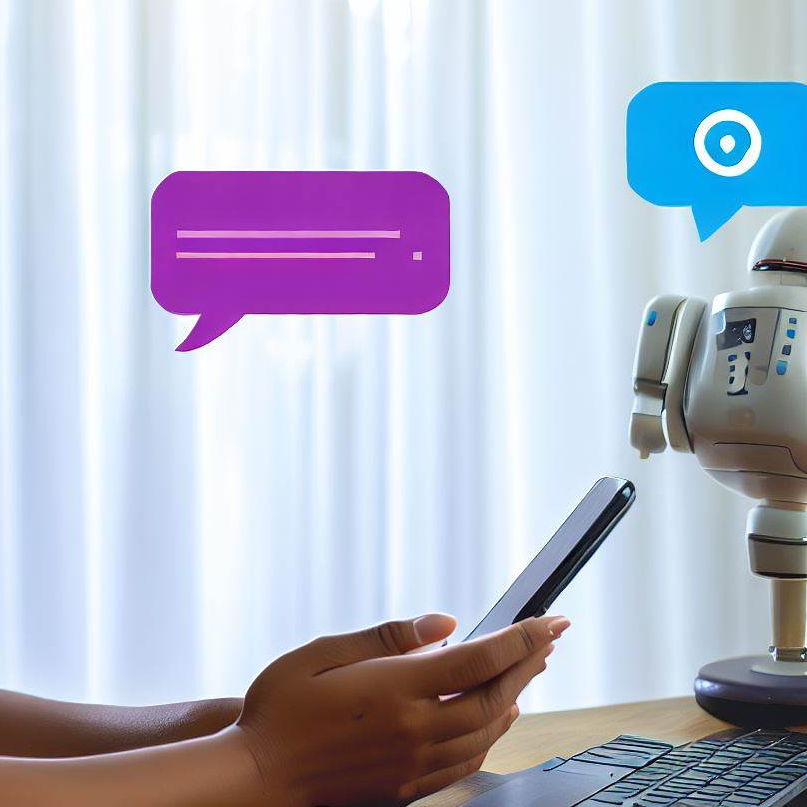
Instead of navigating menus and clicking buttons, you can just ask for what you want. This could be anything from setting an alarm to checking the weather or finding information online. The ultimate goal is to remove the barrier between you and your devices, making complex actions simple.
The purpose of an AI assistant is to bridge the gap between human language and machine action.
From Commands to Conversations
Early versions of this technology were very basic. You had to say a precise command like, "Call Mom," and if you phrased it differently, the system would get confused. There was no real understanding, just a list of pre-programmed phrases it could recognize.
Over time, these assistants evolved. They became much better at understanding the intent behind your words, not just the words themselves. The shift was from rigid command-following to flexible conversation. Now, you can say something more nuanced like, "What's the traffic like on my way to work?" and the assistant knows your work address, checks the current traffic conditions, and gives you a real-time update.
This evolution was driven by their ability to connect with other apps and services. A modern AI assistant can access your calendar, play music from your favorite streaming service, and even control lights in your home. It acts as a central hub, simplifying how you interact with all your different technologies.
The Brains of the Operation
Three core technologies work together to make AI assistants possible. They aren't magic; they're the result of clever engineering that helps computers make sense of our world.
Natural Language Processing
noun
The ability of a computer program to understand human language as it is spoken and written.
NLP is what allows the assistant to break down your sentences and figure out what you're asking. It's the technology that turns your spoken words into structured commands the machine can act on.
Machine Learning
noun
A type of artificial intelligence that allows software applications to become more accurate at predicting outcomes without being explicitly programmed to do so.
Machine learning, or ML, is how the assistant gets smarter over time. Every time you use it, it learns from your requests, preferences, and corrections. If you always ask for a certain type of music, it will learn to suggest similar artists. This ability to learn from experience makes the assistant more personalized and helpful.
Finally, all of this relies on data analysis. To answer your questions, the assistant needs access to vast amounts of information, whether it's pulling from the internet to find a fact or looking at your calendar to check your schedule. It analyzes this data in real time to provide relevant and accurate responses.
A Helper for Everything
AI assistants are showing up in many areas of life. For personal organization, they help manage schedules, set reminders, and create shopping lists, making daily routines more efficient.
In customer service, automated assistants called chatbots handle common questions on websites, freeing up human agents to solve more complex problems. And in the home, assistants can control everything from your thermostat to your television, creating a more connected and responsive living space.
In each case, the goal is the same: to use the power of AI to enhance productivity and make tasks a little bit easier.