Understanding Your AI Assistant
Introduction to AI
What Is Artificial Intelligence?
Artificial intelligence is about making machines smart. The goal is to create systems that can perform tasks that typically require human intelligence, like learning, reasoning, problem-solving, and understanding language.
Artificial Intelligence
noun
A field of computer science dedicated to creating systems capable of performing tasks that normally require human intelligence.
Think about how you learn to ride a bike. You don't follow a rigid set of instructions. You try, you fall, you adjust, and eventually, you figure it out. AI works in a similar way. It learns from data and experience, rather than just executing pre-programmed commands. This ability to learn and adapt is what makes AI so powerful.
A Quick Trip Through Time
The dream of intelligent machines isn't new; it has roots in ancient myths. But the scientific pursuit of AI began in the mid-20th century. The journey has been a rollercoaster of breakthroughs, excitement, and periods of slower progress known as "AI winters," when funding and interest dried up.
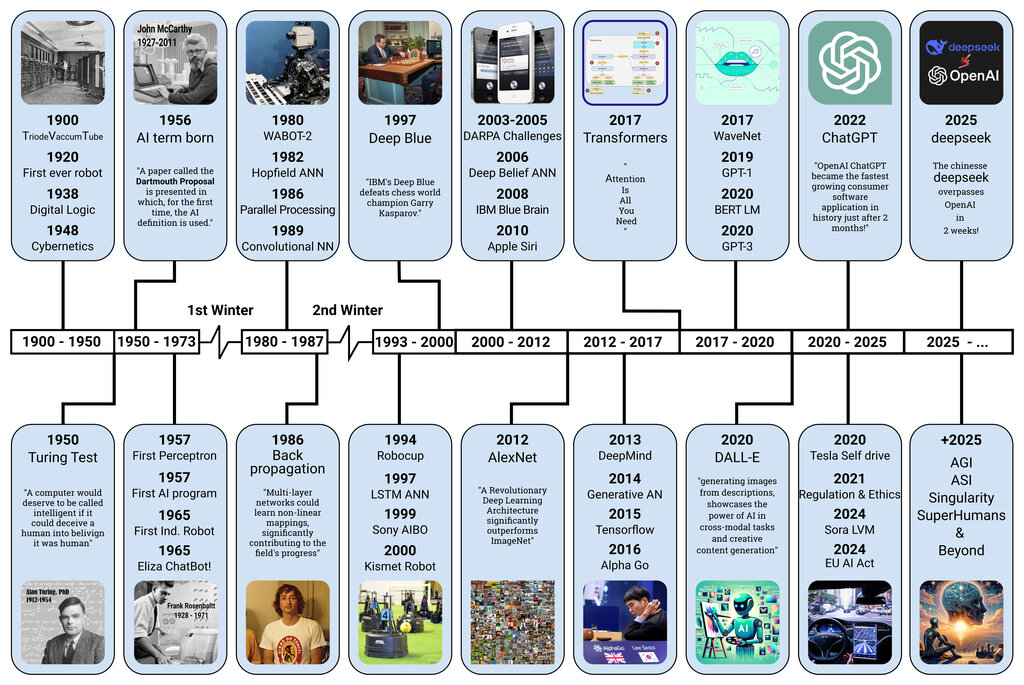
Early research in the 1950s was optimistic, focusing on logic and problem-solving. A key milestone was the Turing Test, proposed by Alan Turing as a way to measure a machine's intelligence. Later, the development of machine learning in the 1980s and 90s allowed computers to learn from data. The recent explosion in computing power and massive datasets has fueled the rise of deep learning, leading to the advanced AI we see today.
AI's history shows a pattern: big ideas are followed by practical challenges, leading to periods of both rapid advancement and quiet refinement.
AI in the Wild
AI is no longer confined to research labs. It's integrated into many of the tools and services we use daily. From navigating traffic to picking a movie, AI is working behind the scenes.
| Domain | AI Application |
|---|---|
| Entertainment | Recommending movies or music you might like |
| Finance | Detecting fraudulent credit card transactions |
| Transportation | Optimizing driving routes to avoid traffic |
| Healthcare | Analyzing medical images to help doctors spot diseases |
| Communication | Translating languages in real time |
For example, when your email service automatically filters spam, that's AI at work. An algorithm has learned to identify the characteristics of junk mail and moves it out of your inbox. Similarly, when you ask a virtual assistant on your phone for the weather, it uses AI to understand your speech and fetch the right information.
Two Kinds of AI
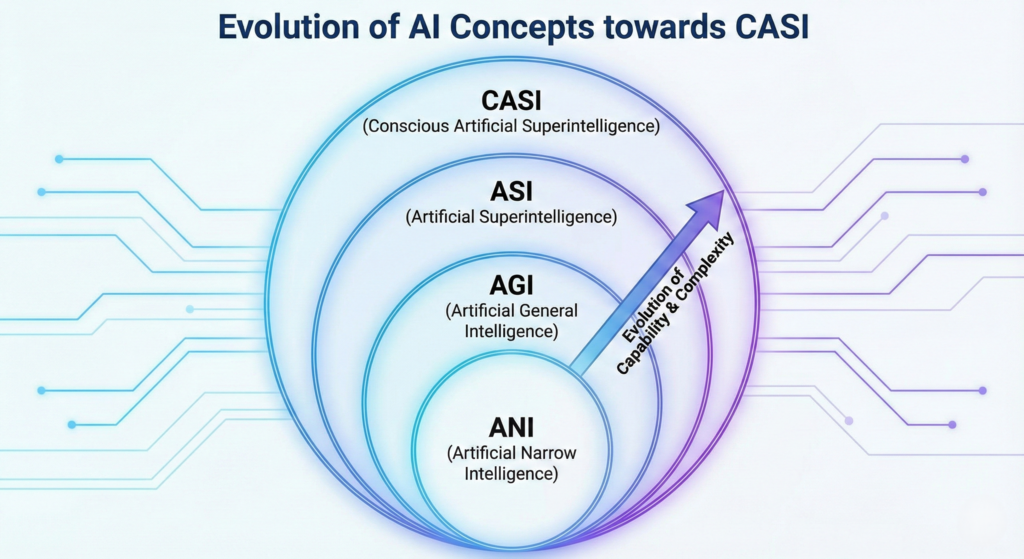
When people talk about AI, they are usually referring to one of two broad categories: narrow AI or general AI.
The distinction is simple: one is a master of a single trade, while the other is a jack-of-all-trades.
Artificial Narrow Intelligence
noun
AI systems that are designed and trained for one particular task. Also known as Weak AI.
All the AI that exists in the world today is narrow AI. It's incredibly powerful but operates within a limited context. A spam filter can't drive a car, and a chess program can't recommend a movie. They are specialists, honed for a single purpose.
Artificial General Intelligence
noun
A theoretical form of AI where a machine would have an intelligence equal to humans, capable of understanding, learning, and applying its intelligence to solve any problem.
Artificial General Intelligence, or AGI, is the stuff of science fiction—for now. It refers to a machine with the flexibility and resourcefulness of a human mind. An AGI could switch between tasks as different as composing music, performing scientific research, and having a meaningful conversation. While AGI remains a long-term goal for many researchers, it does not currently exist.
Time to review what we've covered.
Ready to test your knowledge?
What is the primary goal of Artificial Intelligence?
The type of AI that can drive a car but cannot have a meaningful conversation is known as:
Understanding these basics provides a solid foundation for exploring the more advanced aspects of AI.