Understanding World War II Causation and Progression
Treaty of Versailles
The Treaty of Versailles
On June 28, 1919, five years to the day after the assassination that sparked World War I, leaders gathered in the Hall of Mirrors at the Palace of Versailles to sign the treaty that would formally end it. The location was symbolic; it was the same hall where the German Empire had been proclaimed in 1871 after its victory over France. Now, a defeated Germany faced the terms set by the victorious Allied powers, primarily France, Great Britain, and the United States.
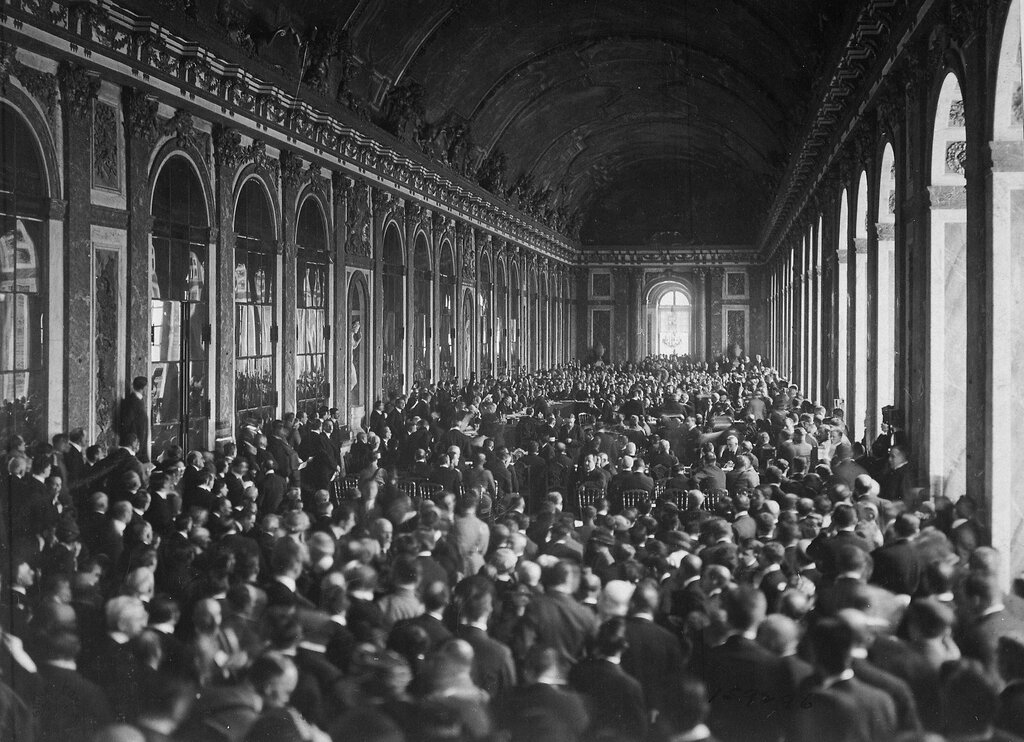
The negotiations were dominated by the 'Big Three': Prime Minister Georges Clemenceau of France, Prime Minister David Lloyd George of Great Britain, and President Woodrow Wilson of the United States. Each had different aims. Clemenceau sought to cripple Germany to ensure it could never again threaten France. Lloyd George aimed to rebuild Germany as a trading partner but also make it pay. Wilson, an idealist, pushed for his Fourteen Points and the creation of a League of Nations to ensure future peace. German delegates were not allowed to participate in the negotiations.
A Punishing Peace
The final treaty was a complex document, but its core provisions were aimed squarely at punishing and weakening Germany. The terms were far harsher than Germany had anticipated, based on Wilson's more lenient Fourteen Points. They covered territory, military power, finances, and blame for the war.
| Provision | Details |
|---|---|
| Territorial Losses | Germany lost 13% of its European territory, including Alsace-Lorraine to France and significant areas to Poland. All overseas colonies were forfeited. |
| Military Restrictions | The army was limited to 100,000 men. Conscription was banned. The navy was severely restricted, and it was forbidden from having an air force, submarines, or tanks. |
| War Guilt Clause | Article 231 forced Germany to accept sole responsibility for causing the war and all the damage it inflicted. |
| Reparations | Germany was required to pay massive financial reparations to the Allied nations for war damages. The final sum was set in 1921 at 132 billion gold marks. |
These terms were presented to Germany as non-negotiable. The country faced the threat of a renewed invasion if it refused to sign. This led many Germans to view the treaty not as a peace agreement, but as a Diktat—a dictated peace.
Impact on Germany
The consequences for Germany were immediate and severe. The loss of industrial regions like the Saar and Upper Silesia crippled its economy. The requirement to pay reparations, coupled with the existing war debt, led to hyperinflation in the early 1920s. The German mark became virtually worthless, wiping out the savings of the middle class and causing widespread economic hardship.
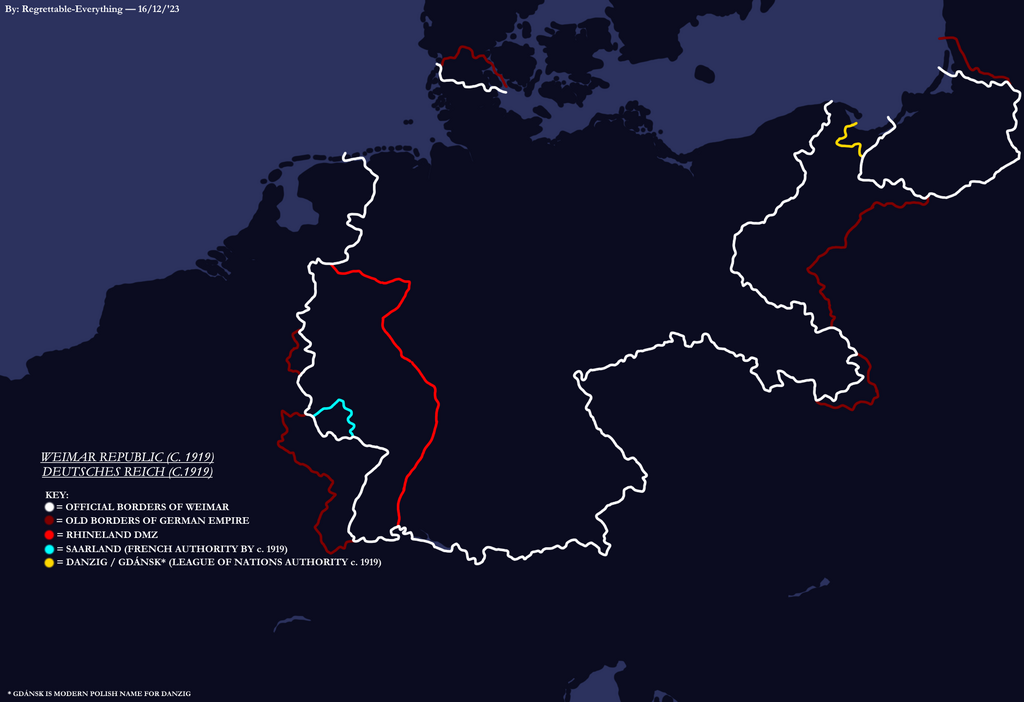
Politically, the treaty was a source of deep national humiliation. The War Guilt Clause was particularly hated, as many Germans did not believe they were solely responsible for the war. This created a powerful sense of injustice and resentment that undermined the new democratic government, the Weimar Republic. Extremist political groups on both the left and right capitalized on this anger, blaming the government for accepting the humiliating terms.
Furious at what they saw as a harsh “diktat” (a dictated peace), right-wing German politicians used the treaty as a nationalist rallying point.
A New European Map
The treaty didn't just affect Germany; it redrew the map of Europe. It was one of several treaties signed after the war that dismantled the Austro-Hungarian, Ottoman, and Russian Empires. New countries like Poland, Czechoslovakia, and Yugoslavia were created, designed around the principle of self-determination for ethnic groups.
However, these new borders often created as many problems as they solved, trapping significant ethnic minorities within new states. The new geopolitical landscape was fragile. The exclusion of Germany and the newly formed Soviet Union from the initial League of Nations, combined with the U.S. Senate's refusal to ratify the treaty and join the League, weakened the new international order from the start.
Many historians argue that by seeking to both punish and weaken Germany, rather than integrating it into a stable post-war order, the Treaty of Versailles created conditions that fueled future conflict. The economic instability and national resentment it fostered provided fertile ground for the rise of ideologies that would plunge Europe into war once again just two decades later.
Now, let's check your understanding of the treaty and its consequences.
The Treaty of Versailles was signed in the Hall of Mirrors, a location of symbolic significance because it was the same place where:
Which of the 'Big Three' leaders most strongly advocated for punishing Germany severely to prevent it from ever threatening his country again?
The Treaty of Versailles reshaped Europe, but its legacy was one of bitterness and instability, setting the stage for the turbulent decades that followed.