Understanding World Models
Introduction to World Models
The World Inside the Machine
When you catch a ball, you don't solve physics equations in your head. You just... know where the ball is going to be. Your brain has built an intuitive model of how objects move through the air. This internal simulation helps you predict the future and act accordingly.
In artificial intelligence, this concept is called a world model. It's an AI's internal representation of how its environment works. Instead of just reacting to inputs, an agent with a world model can simulate possibilities, understand cause and effect, and plan its actions.
In AI, a “world model” is a learned internal representation of an environment’s dynamics — a model that can simulate how the world evolves over time in response to actions, under constraints like physics and causality.
Think of it as a cognitive sandbox. Before a self-driving car changes lanes, its world model can run a quick simulation: "If I move into the left lane now, what will that other car probably do? Is there space?" This ability to foresee consequences is a crucial step towards more sophisticated and safer AI.
From Human Minds to AI
The idea of internal models isn't new. In 1943, psychologist Kenneth Craik suggested that the brain builds "small-scale models" of reality to anticipate events and make sense of the world. We constantly use these mental models to navigate our daily lives, from figuring out the best way to stack groceries to understanding social situations.
Early AI researchers tried to build these models by hand. They would explicitly program all the rules and logic of an environment, like the rules of chess. This worked for well-defined, closed systems, but it's impossible to manually code a model that captures the complexity of the real world.
The game-changer was machine learning. Modern AI systems don't need to be spoon-fed the rules. Instead, they learn their own world models by observing massive amounts of data. A robot might learn about gravity by repeatedly watching objects fall, eventually building an internal model that can predict the trajectory of a dropped apple without ever being taught Newton's laws.
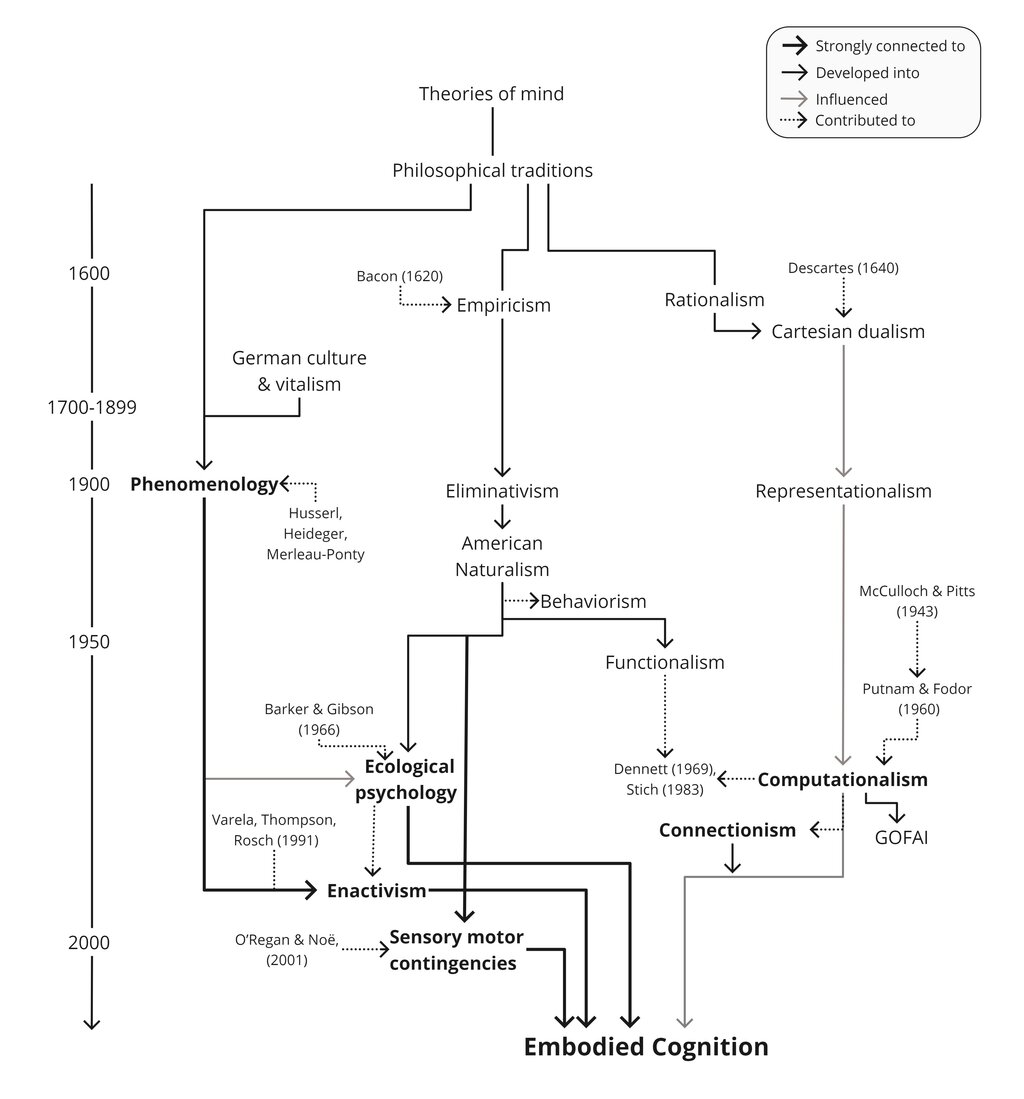
Our human mental models are rich and flexible, built from a lifetime of varied experiences, social learning, and innate biases. We can reason abstractly and transfer knowledge between wildly different situations.
AI world models, by contrast, are typically more specialized and data-driven. They excel at modeling the specific dynamics of the environment they were trained on, whether it's a video game or traffic patterns. While they can achieve superhuman performance in these narrow domains, they lack the broad, common-sense understanding that humans take for granted.
How World Models Work
At its core, a world model has a few key jobs. It needs to perceive the environment, represent that information internally, and then use that representation to simulate future states.
Let’s break that down:
-
State Representation: The model takes in raw sensory data, like pixels from a camera, and encodes it into a more compact, abstract format. This is often called a latent state. It’s a summary of everything important about the current situation.
-
Transition Model: This is the predictive heart of the system. It learns the “physics” of the environment. Given the current state and a potential action, the transition model predicts the next state. It answers the question, “If I do this, what happens next?”
By repeatedly applying the transition model, an agent can “dream” or imagine long sequences of future events. This ability to simulate the future is what allows for planning, reasoning, and intelligent decision-making, moving AI from simply recognizing patterns to understanding and interacting with the world.
What is the primary function of a world model in an AI agent?
A self-driving car's world model is an example of an early, hand-coded AI system.
World models are a fundamental concept, bridging the gap between perception and action, and enabling AI to move beyond simple reactions toward genuine understanding.