Understanding Wi-Fi QAM Modulation
Introduction to Wireless Communication
Sending Signals Through the Air
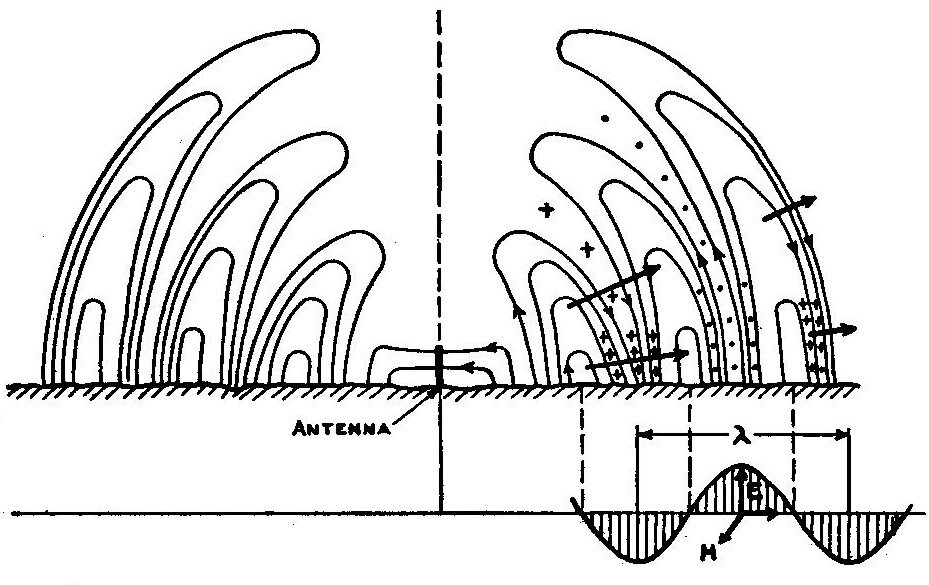
At its heart, wireless communication is the process of turning information into invisible waves of energy. Think of it like this: when you speak, you create sound waves that travel through the air to someone's ear. Wireless technology does something similar, but instead of sound, it uses electromagnetic waves to carry data over vast distances.
A device like your phone or a radio tower acts as a transmitter. It takes a signal, like your voice or a stream of data from the internet, and encodes it onto a specific radio wave. This wave, now carrying your information, radiates outward in all directions. A receiver, such as another phone or your car radio, is tuned to listen for that specific wave. When it catches it, it decodes the information, turning it back into sound or data you can use.
The Electromagnetic Spectrum
All these wireless signals travel along a massive, invisible highway called the electromagnetic spectrum. This spectrum is the entire range of electromagnetic radiation, from very low-energy radio waves to high-energy gamma rays. We use different sections of this spectrum for different purposes.
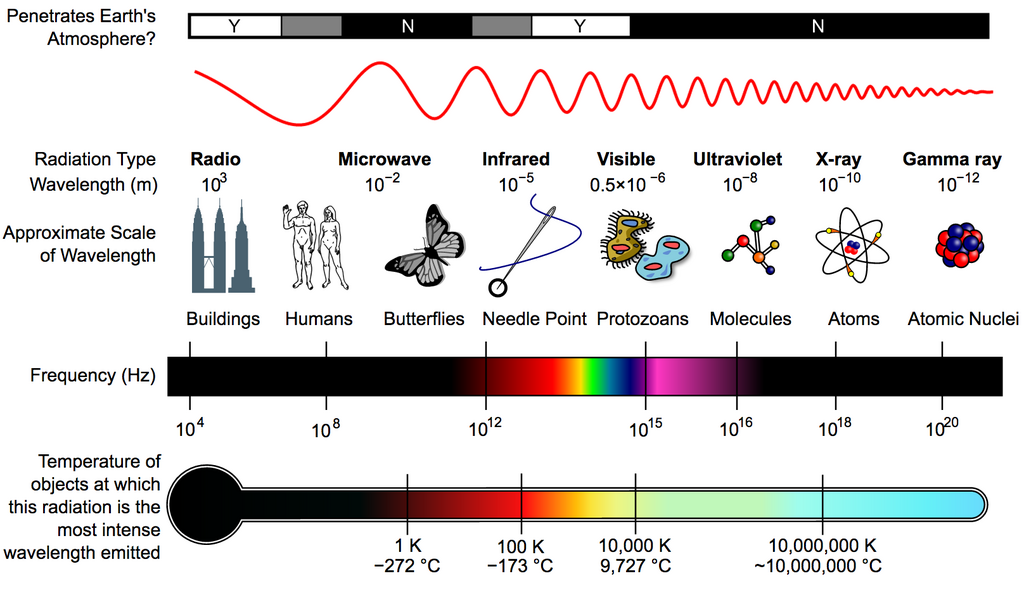
Every wave on this spectrum has two key properties: frequency and wavelength. Frequency is how many wave cycles pass a point in one second, while wavelength is the distance from one wave peak to the next. They have an inverse relationship: the higher the frequency, the shorter the wavelength.
frequency
noun
The rate at which a wave's cycle repeats, measured in Hertz (Hz). One Hertz is one cycle per second.
Frequency Bands
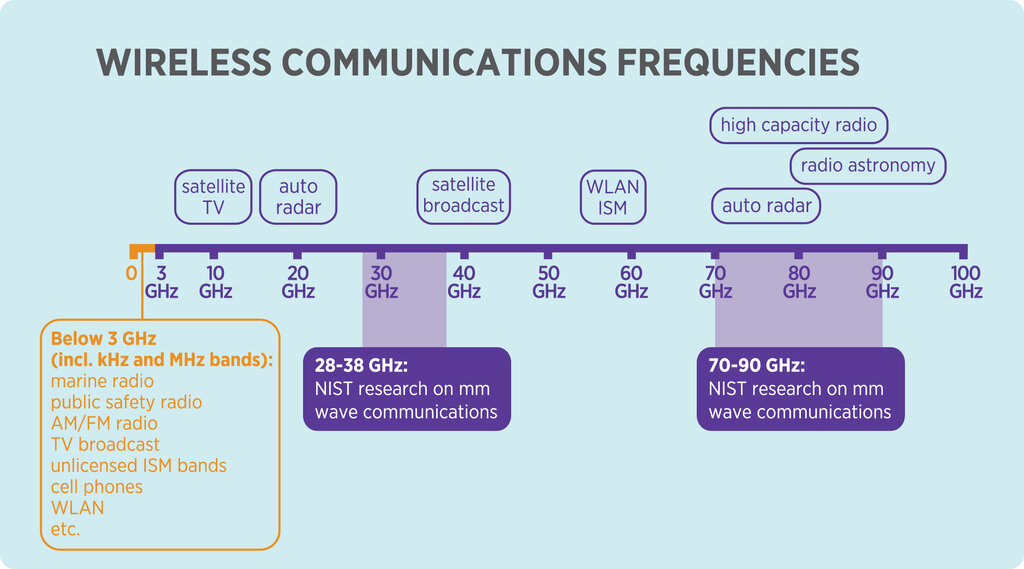
To keep all these signals from interfering with each other, the electromagnetic spectrum is divided into segments called frequency bands. Regulators like the FCC in the United States assign these bands for specific uses. For example, your FM radio uses the band from 88 to 108 megahertz (MHz), while your home Wi-Fi typically uses bands at 2.4 or 5 gigahertz (GHz).
The choice of frequency band involves a trade-off. Lower-frequency waves can travel farther and pass through obstacles like walls more easily, but they can't carry as much data. Higher-frequency waves can carry huge amounts of data, which is great for streaming video, but they have a shorter range and are more easily blocked by obstacles.
Lower Frequency = Longer Range, Less Data Higher Frequency = Shorter Range, More Data
How Signals Travel
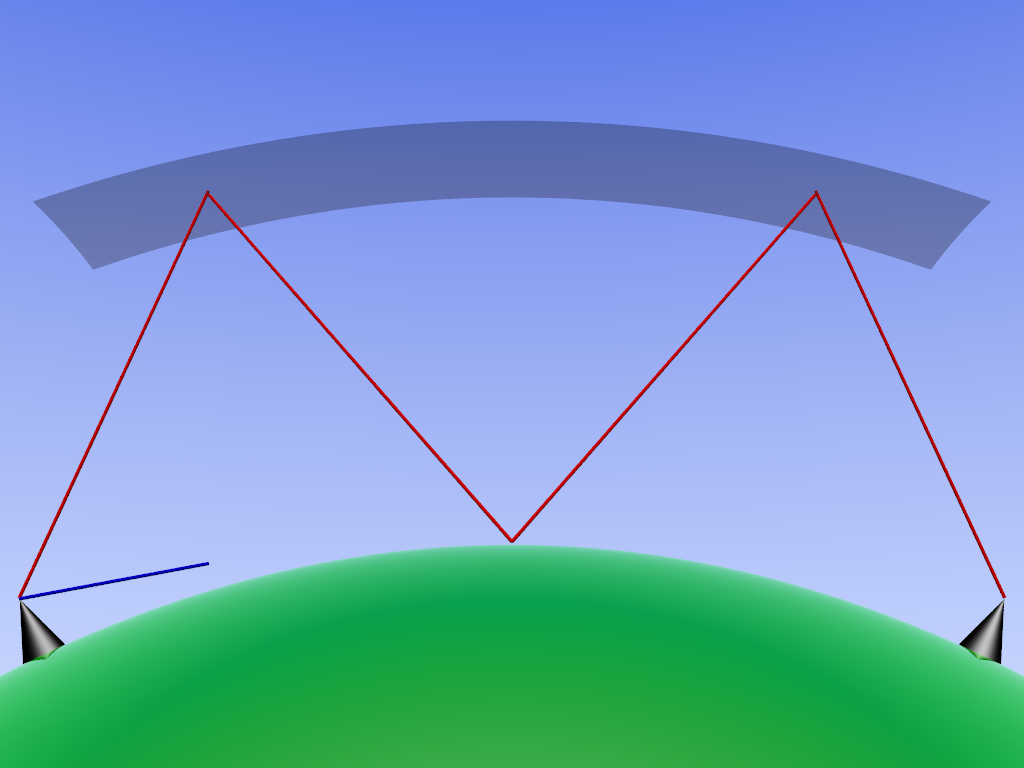
The journey of a wireless signal from a transmitter to a receiver is called propagation. In a perfect world, this signal would travel in a straight, uninterrupted line. But in reality, signals face several challenges on their trip.
For one, signals get weaker as they travel farther from their source, a phenomenon called attenuation. They also run into obstacles. When a signal hits an object, a few things can happen:
- Reflection: The signal bounces off a surface, like a mirror reflecting light. This is why you might get poor cell service in a concrete canyon between tall buildings.
- Refraction: The signal bends as it passes through a medium, like the atmosphere. This is how radio waves can sometimes travel over the horizon.
- Diffraction: The signal bends and spreads out as it passes around an object, allowing it to reach areas that aren't in the direct line of sight.
- Absorption: The signal is absorbed by an object and converted into heat. Water is very good at absorbing radio waves, which is why your Wi-Fi signal might struggle to reach the patio if it has to pass through a person or a fish tank.
Understanding these basic principles—how we turn data into waves, the spectrum they travel on, and the challenges they face along the way—is the first step to mastering how wireless communication works.
What is the primary function of a transmitter in wireless communication?
True or False: As the frequency of an electromagnetic wave increases, its wavelength also increases.