Understanding Weather Patterns
Introduction to Weather
What Is Weather?
Weather is what's happening in the atmosphere at a specific time and place. Think of it as the air's mood for the day. Is it sunny, rainy, windy, or calm? That's the weather. It can change from hour to hour and from one neighborhood to the next.
When you look out the window to decide if you need a jacket or an umbrella, you're checking the weather. It’s the short-term condition of the atmosphere, the blanket of air surrounding our planet.
The Elements of Weather
Weather isn't just one thing; it's a combination of different ingredients. Meteorologists, the scientists who study weather, measure several key elements to understand and predict what the atmosphere will do next.
Temperature is how hot or cold the air is. It’s one of the first things we notice. Temperature is measured with a thermometer in degrees Fahrenheit (°F) or Celsius (°C).
Humidity tells us how much water vapor is in the air. High humidity on a hot day can make the air feel sticky and heavy, because the air is already holding a lot of moisture.
humidity
noun
The amount of water vapor present in the air. Water vapor is the gaseous state of water and is invisible.
Wind is simply moving air. It's caused by differences in air pressure from one place to another. Air moves from areas of high pressure to areas of low pressure, creating everything from a gentle breeze to a powerful gust.
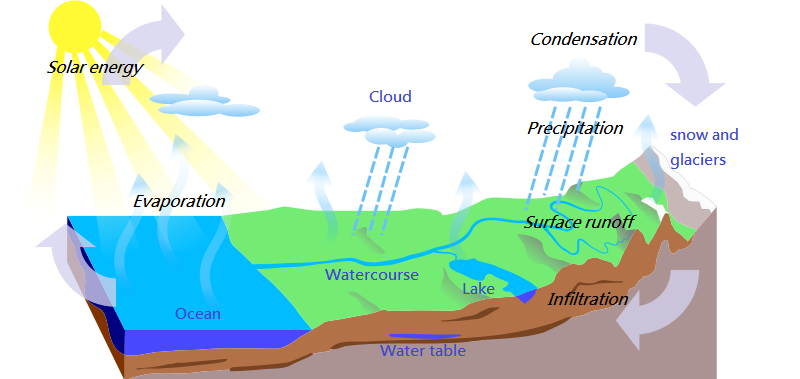
Precipitation is any form of water that falls from clouds in the sky. This includes rain, snow, sleet, and hail. Precipitation is a crucial part of the Earth's water cycle, where water evaporates from the surface, condenses into clouds, and falls back to Earth.
Weather vs. Climate
People often use the words "weather" and "climate" interchangeably, but they mean very different things. The main difference is time.
A good way to remember it is: Climate is what you expect, but weather is what you get.
If you live in a desert, you expect it to be hot and dry. That's the climate. But if one afternoon a surprise thunderstorm rolls through, that's the weather for that day. Climate describes the long-term average of weather in a particular region over many years, typically 30 or more. Weather describes the conditions right now or over a short period.
| Feature | Weather | Climate |
|---|---|---|
| Time Scale | Short-term (minutes, hours, days) | Long-term (decades, centuries) |
| Area | Localized (a city or small region) | Broad (a large region or entire planet) |
| Example | A snowstorm in Chicago tomorrow | Chicago has cold, snowy winters |
Understanding this difference is key. A single cold day doesn't disprove a warming climate, just as one hot day in winter doesn't mean winter is over. Climate is the bigger picture.
Ready to check your understanding of these basic concepts? Let's see what you've learned.
Which of the following best describes weather?
A meteorologist says, "Seattle has a reputation for being rainy." This statement is a description of the city's ______.