Understanding Wave Amplitude
Introduction to Waves
What Is a Wave?
Think about tossing a stone into a calm pond. Ripples spread out from where the stone hit the water. Those ripples are a perfect example of a wave. It's a disturbance that travels, carrying energy from one place to another.
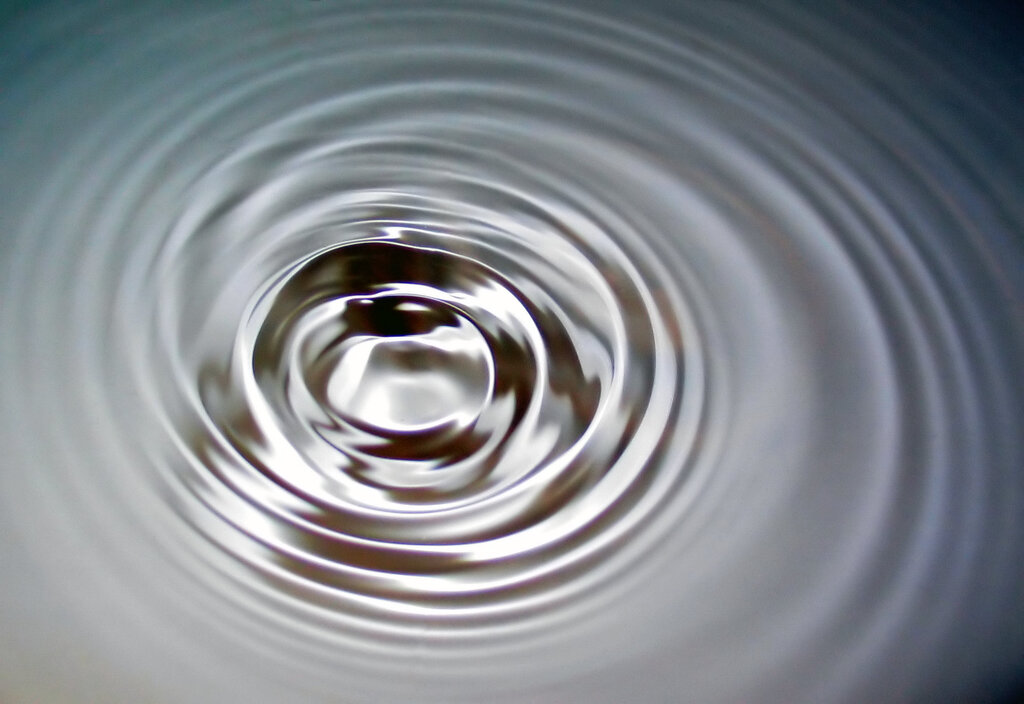
The key idea is that the wave moves, but the stuff it's moving through doesn't travel with it. The water in the pond mostly just moves up and down. It's the energy from the stone's splash that travels outward across the surface. A nearby leaf would bob in place, but it wouldn't be carried to the edge of the pond by the wave.
A wave is a disturbance that transfers energy through a medium without transferring matter
This principle applies to all kinds of waves, from the gentle lapping of water to the invisible signals that bring music to your radio. While they seem different, they all share this core function of transferring energy. We can sort nearly all waves into two main categories.
Mechanical Waves
Mechanical waves are the hands-on type. They need something to travel through—a substance called a medium. Sound is a great example. When a bell rings, it vibrates. Those vibrations push and pull on the nearby air particles, which then push and pull on their neighbors, and so on. The sound wave travels through the air to your ear.
medium
noun
A substance or material that can carry a wave or energy.
Without a medium, mechanical waves can't exist. This is why there's no sound in the vacuum of space. There are no air particles to carry the vibrations. Other examples include the waves on a guitar string, ripples in water, and even the seismic waves from an earthquake that travel through the Earth.
Mechanical waves need a medium. No medium, no wave.
Electromagnetic Waves
Unlike their mechanical cousins, electromagnetic (EM) waves don't need a medium. They are happy to travel through the empty vacuum of space. These waves are disturbances in electric and magnetic fields. They are, in a sense, self-propagating.
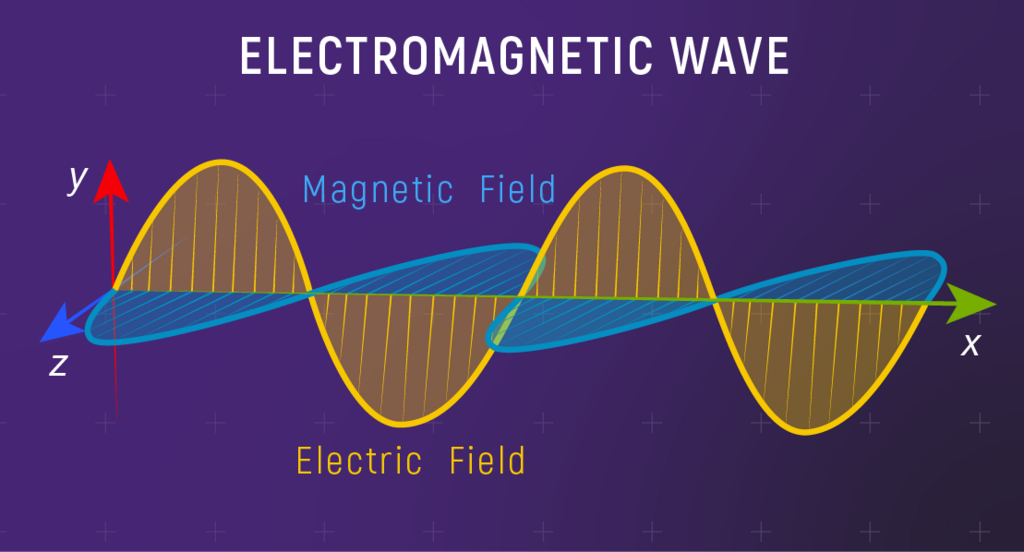
The most familiar example is light. Light from the sun travels millions of miles through the vacuum of space to reach us. If light were a mechanical wave, we'd live in darkness. Other types of EM waves include radio waves, microwaves, X-rays, and ultraviolet (UV) rays. They all travel at the same incredible speed in a vacuum: the speed of light.
Here is a simple breakdown of the key differences:
| Feature | Mechanical Waves | Electromagnetic Waves |
|---|---|---|
| Requires a Medium? | Yes (solid, liquid, or gas) | No (can travel in a vacuum) |
| What is Waving? | Particles of the medium | Electric and magnetic fields |
| Examples | Sound, water waves, seismic waves | Light, radio waves, X-rays |
Understanding this basic distinction is the first step to exploring the fascinating world of wave physics. It helps explain everything from how we hear music to how we see the stars.
Ready to check your understanding? Let's see what you've learned.
What is the primary function of a wave?
Which of the following requires a medium to travel?
Whether they need a medium or not, all waves share the fundamental job of moving energy through the universe.