Understanding Vibe Coding
Introduction to Vibe Coding
A New Way to Code
Instead of meticulously writing line after line of code, what if you could just describe what you want an application to do? That's the core idea behind vibe coding. It’s a style of programming where a developer uses plain English to give instructions to an AI, which then generates the necessary code.
Think of it as collaborating with a coding partner who is fluent in every programming language. You explain the concept, and the AI handles the syntax.
This process relies on powerful large language models (LLMs) trained on vast amounts of code. The developer's job shifts from writing code to writing effective prompts that clearly communicate the desired functionality and even the 'vibe' of the final product—its style, tone, or user experience.
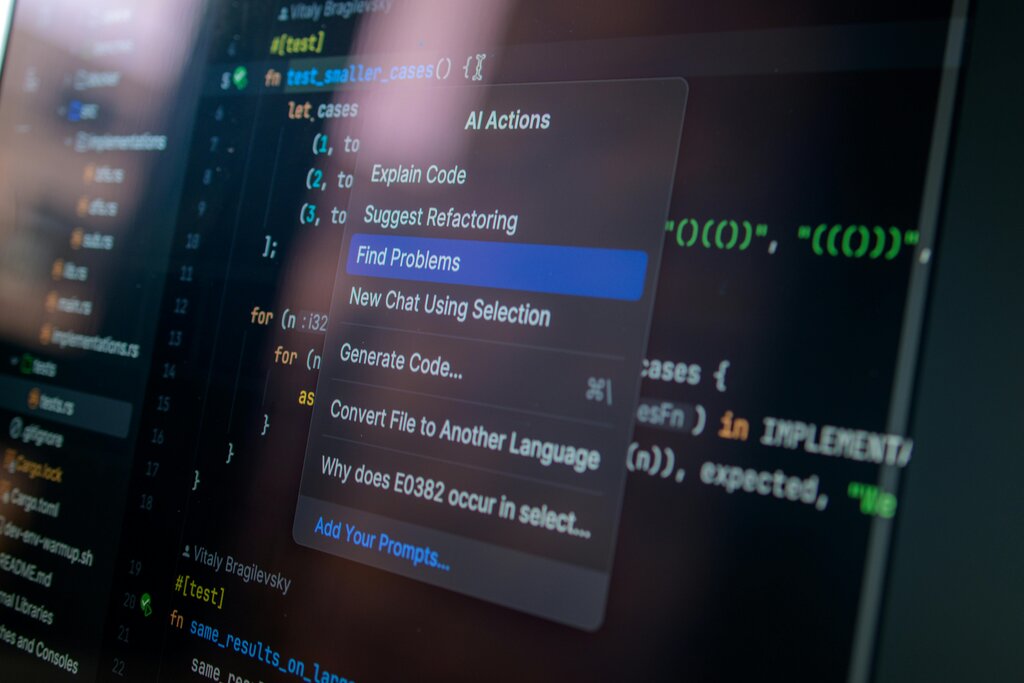
The developer guides the AI, refining the prompts and reviewing the output. It’s an iterative conversation, making the process feel more like a creative dialogue than a rigid set of instructions.
Origin and Reception
The term 'vibe coding' was coined by AI researcher Andrej Karpathy in February 2025. It perfectly captured this new, more intuitive approach to software development that was emerging with the rise of capable generative AI.
Vibe coding is an AI-powered, conversational approach to development where the programmer describes what they want in natural language, and the AI generates executable code to match that intent.
The concept resonated quickly within the tech community. The term's popularity grew so fast that by the end of the year, it was recognized for its cultural impact. Merriam-Webster added it to its 'slang & trending' list, and the Collins English Dictionary named 'vibe coding' its Word of the Year for 2025. This rapid adoption highlights a major shift in how we think about creating software.
The Basic Workflow
So, what does vibe coding look like in practice? It's a cyclical process of communication and refinement between the developer and the AI.
-
Prompt: The developer starts by writing a prompt that describes the task. This can be anything from "Create a login form with a username and password field" to "Build a simple weather app that shows the temperature for a given city."
-
Generate: The LLM processes the prompt and generates a block of code in the requested language.
-
Review: The developer inspects the code. Does it work? Is it efficient? Is it secure?
-
Refine: Based on the review, the developer refines the prompt. They might say, "Add a 'forgot password' link to the form" or "Make the temperature display in both Celsius and Fahrenheit." This loop continues until the code meets all requirements.
This iterative nature is key. Vibe coding isn't about getting perfect code on the first try. It’s about quickly creating a baseline and then refining it through a natural conversation with an AI assistant.
Time to check your understanding.
What is the core idea behind 'vibe coding'?
In the vibe coding process, what is the developer's primary role after the AI generates the initial code?
By shifting the focus from syntax to intent, vibe coding represents a fundamental change in software development, making it more accessible and conversational.