Understanding Urinary Tract Infections
Urinary System Anatomy
The Body's Filtration Plant
Your body's urinary system is a highly efficient filtration and waste removal plant. It works around the clock to clean your blood, maintain a stable balance of salts and water, and remove waste products. This system consists of four main parts working in concert: two kidneys, two ureters, the bladder, and the urethra. Together, they produce, store, and eliminate urine, a liquid waste product.
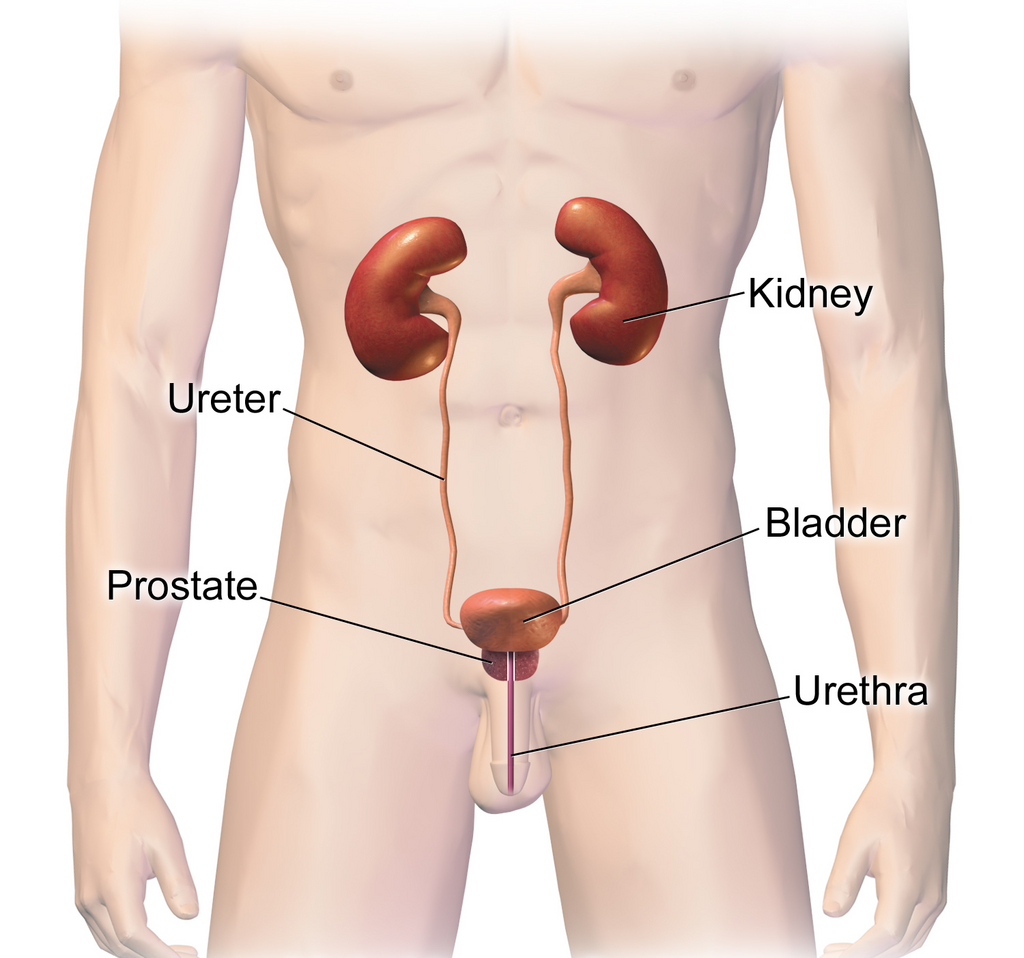
Think of it as a journey. The process begins in the kidneys, where blood is filtered. The resulting urine then travels down the ureters to the bladder for storage. When the time is right, the bladder expels the urine from the body through the urethra. Each step is carefully controlled to keep your body healthy.
The Kidneys
The kidneys are two bean-shaped organs, each about the size of a fist. They are located on either side of the spine, just below the rib cage. While their primary job is to filter about 120 to 150 quarts of blood a day to produce about 1 to 2 quarts of urine, they do much more. Kidneys also regulate blood pressure, control the production of red blood cells, and maintain the body's balance of electrolytes like sodium and potassium.
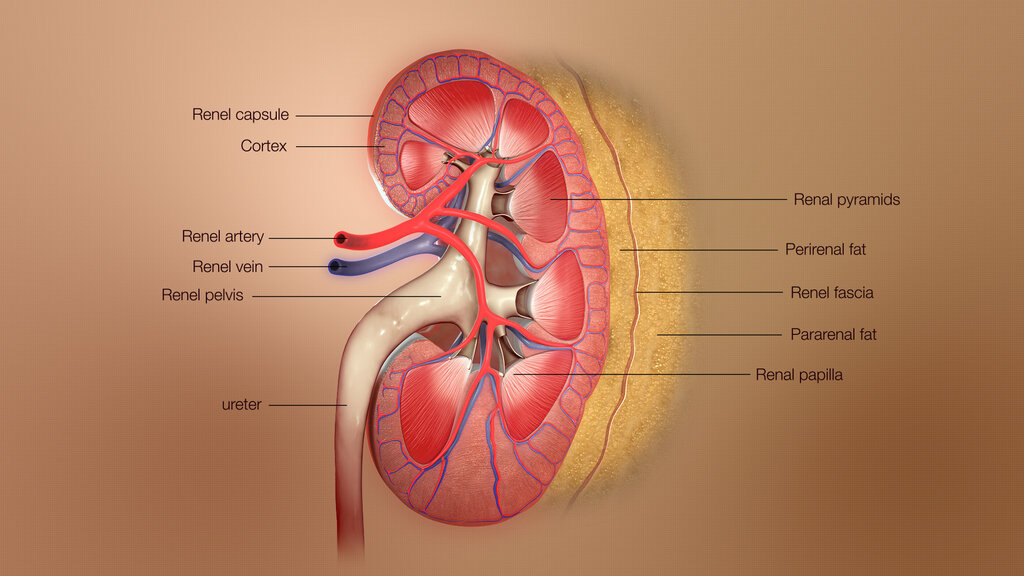
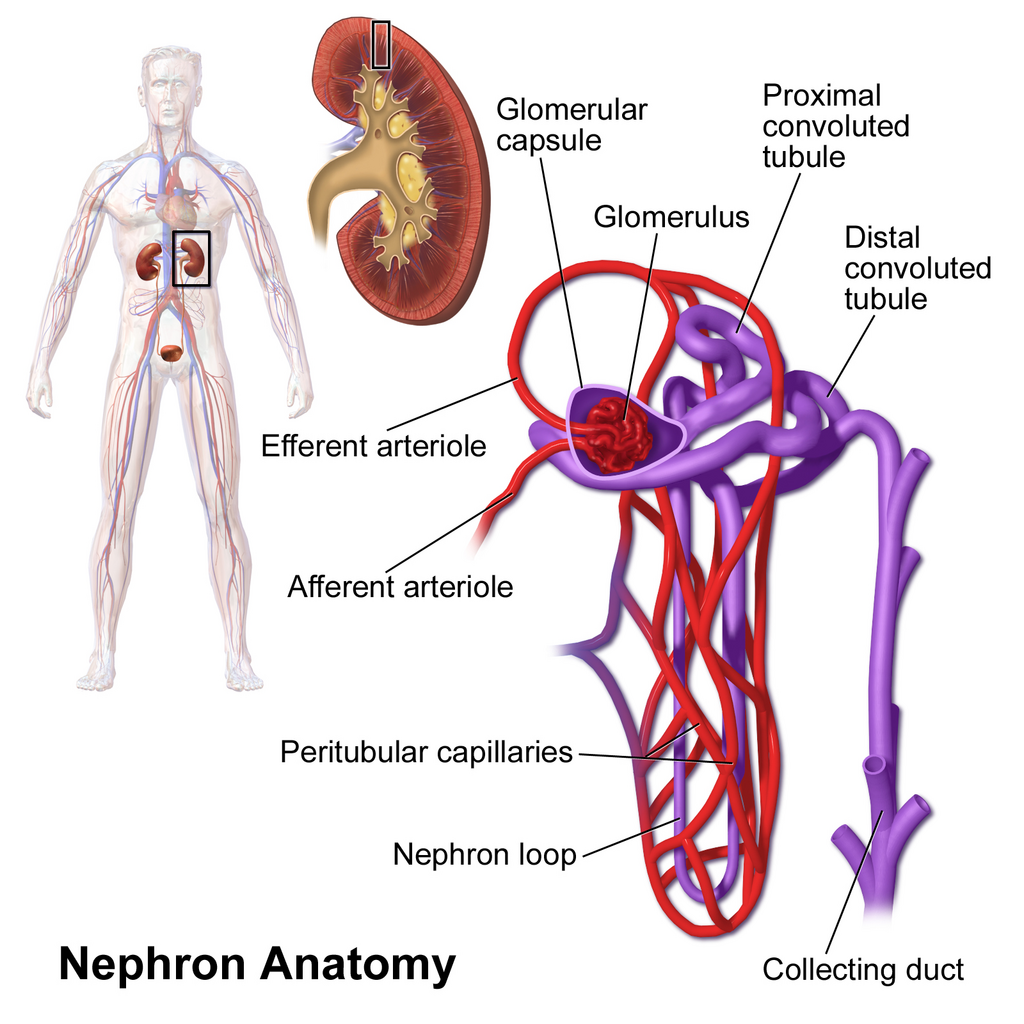
Inside each kidney are about a million tiny filtering units called nephrons. Each nephron has two main parts: a glomerulus and a tubule. The glomerulus acts like a sieve, filtering your blood. As blood flows through it, water and waste products are forced out, while larger molecules like proteins and blood cells are kept in. The filtered fluid then passes into the tubule. Here, essential minerals and water are reabsorbed back into the blood, and additional wastes are added to the fluid. What's left at the end of this process is urine.
The urine collects in a funnel-like area in the center of the kidney called the renal pelvis before moving on to the next stage.
The Pathway Out
Once urine is formed, it doesn't stay in the kidneys. It's transported away and eventually expelled from the body through a series of tubes and a storage organ.
Ureters
noun
Narrow tubes that carry urine from the kidneys to the bladder.
The ureters are thin tubes of muscle that connect each kidney to the bladder. They aren't passive pipelines; they actively push urine downward in small spurts through a process called peristalsis. Where the ureters enter the bladder, small one-way valves prevent urine from flowing back up into the kidneys.
The bladder is a hollow, muscular organ that sits in your pelvis. It acts as a reservoir for urine, and its walls are made of a special muscle called the detrusor muscle, which allows it to stretch significantly to hold urine and contract to push it out.
An average adult bladder can comfortably hold up to about 16 ounces (2 cups) of urine. The process of urination, or micturition, is controlled by two sphincters. The internal sphincter opens automatically when the bladder is full. The external sphincter is under voluntary control, giving you the ability to decide when to urinate.
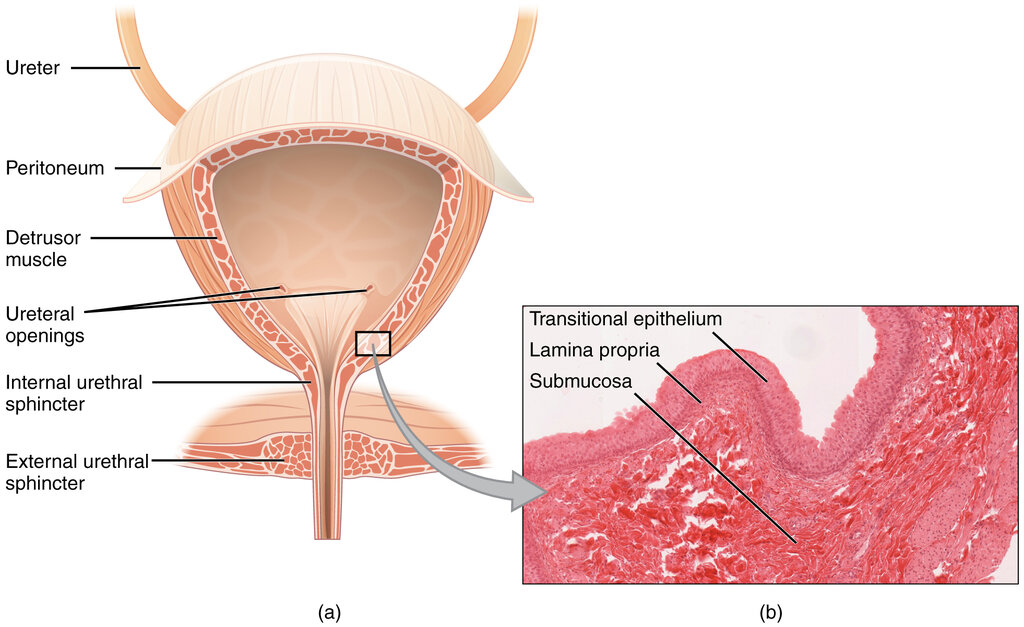
Finally, the urethra is the tube that carries urine from the bladder out of the body. In females, the urethra is short (about 1.5 inches) and its opening is located just above the vaginal opening. In males, the urethra is much longer (about 8 inches), passing through the prostate gland and the penis. This difference in length is a key anatomical distinction between the male and female urinary tracts.
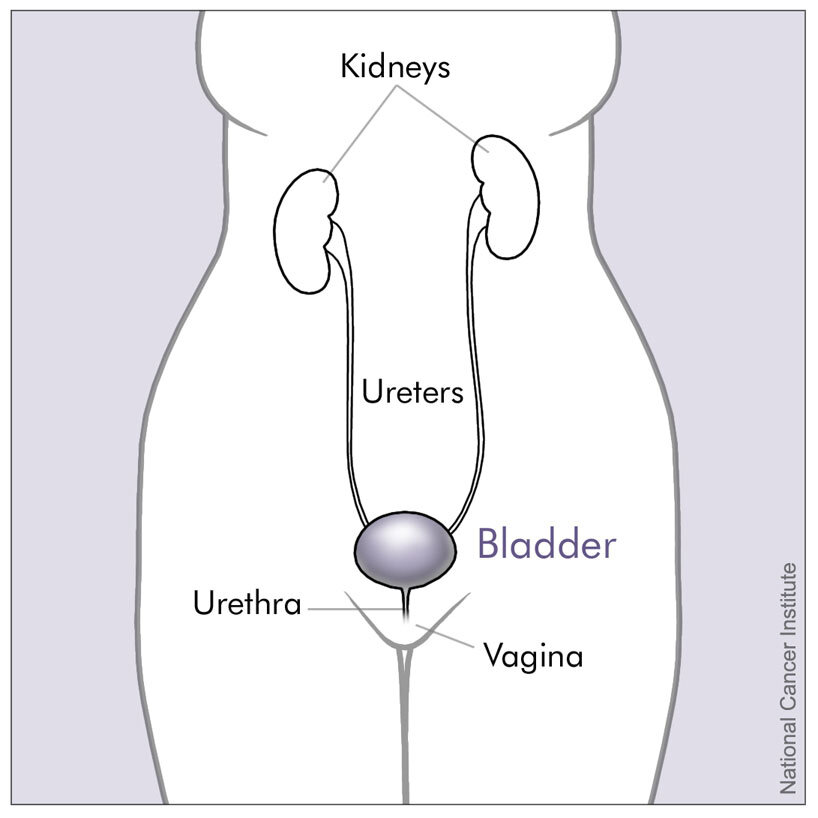
Let's review the main components of this system.
Now, test your understanding of how these parts work together.
What is the primary role of the nephrons within the kidneys?
Trace the correct path of urine from its formation to its expulsion from the body.
Understanding the structure and function of the urinary system is the first step in learning about its health. Each part, from the complex nephron to the simple tube of the urethra, plays a vital role in keeping your body clean and balanced.