Understanding the US Constitution
Foundations of American Government
Ideas That Launched a Nation
The United States didn't just appear out of thin air. It was built on a foundation of powerful ideas that had been brewing for centuries, particularly during a period in Europe called the Enlightenment. Thinkers during this time began to question the traditional power of kings and churches, focusing instead on reason, individual rights, and the nature of government.
Enlightenment
noun
An intellectual and cultural movement in the 17th and 18th centuries that emphasized reason, individualism, and skepticism toward traditional institutions.
One of the most influential Enlightenment thinkers was an English philosopher named John Locke. He argued that every person is born with certain natural rights that no government can take away. For Locke, these were the rights to life, liberty, and property.
Locke also introduced the idea of a social contract. This is an unspoken agreement between the people and their government. The people agree to give up some of their absolute freedom in exchange for the government's protection of their natural rights. But, and this is the crucial part, if the government breaks that contract and starts trampling on those rights, the people have the right to create a new government.
Government exists to protect our rights. If it fails, the people have the right to change it. This was a revolutionary idea.
These ideas crossed the Atlantic and deeply influenced the American colonists. When Thomas Jefferson sat down to write the Declaration of Independence, he channeled Locke's philosophy. The famous phrase "Life, Liberty and the pursuit of Happiness" is a direct echo of Locke's natural rights. The Declaration is essentially a list of grievances arguing that King George III had broken the social contract with the American colonies, giving them the right to form their own nation.
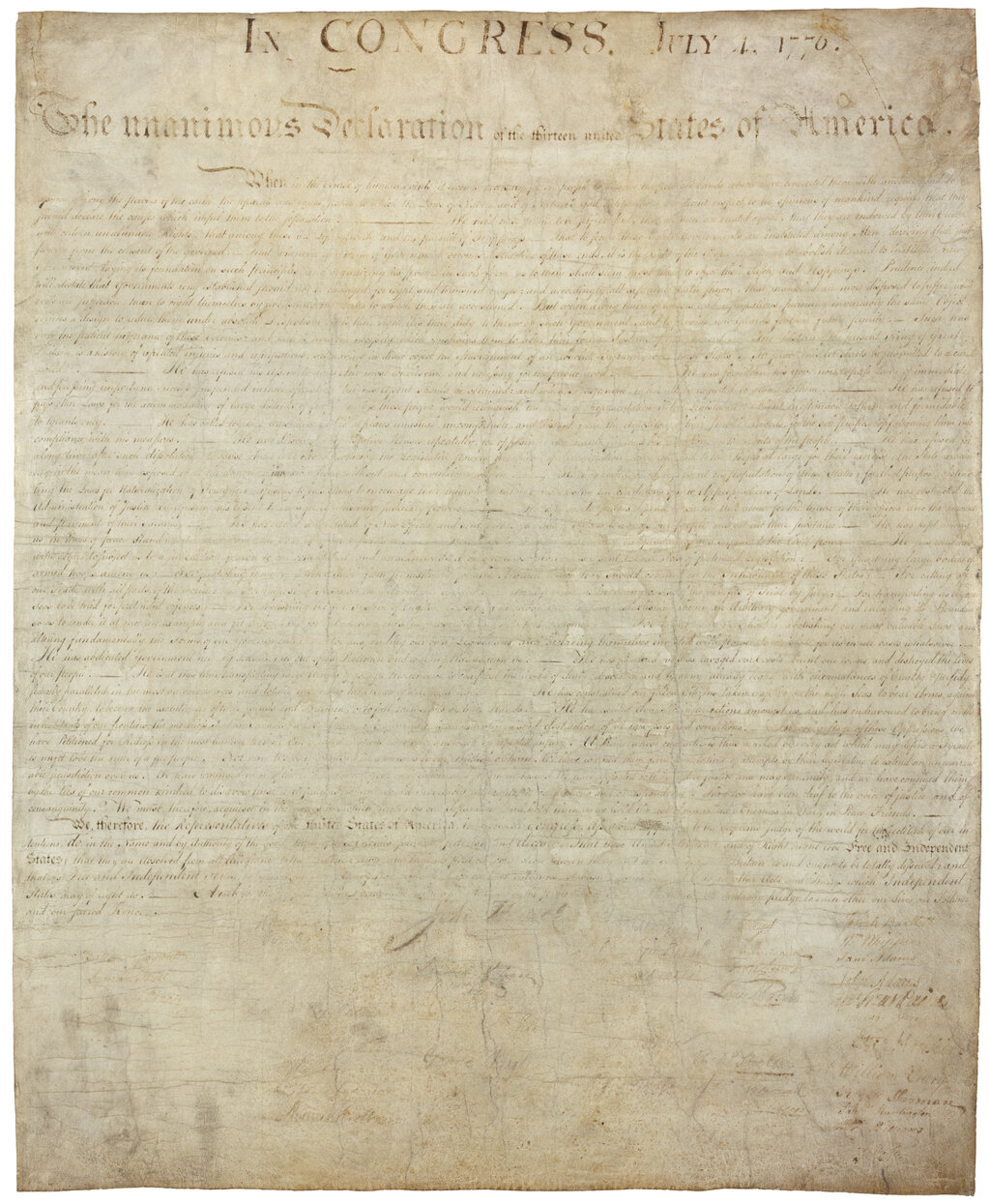
The Declaration's emphasis on natural rights, consent of the governed, and justified revolution reflected ideas from Enlightenment thinkers like John Locke and Jean-Jacques Rousseau
The First Attempt
Declaring independence was one thing; creating a functional government was another. The newly freed states were wary of creating a powerful central government like the British monarchy they had just overthrown. Their first attempt was a document called the Articles of Confederation, which served as the first constitution of the United States.
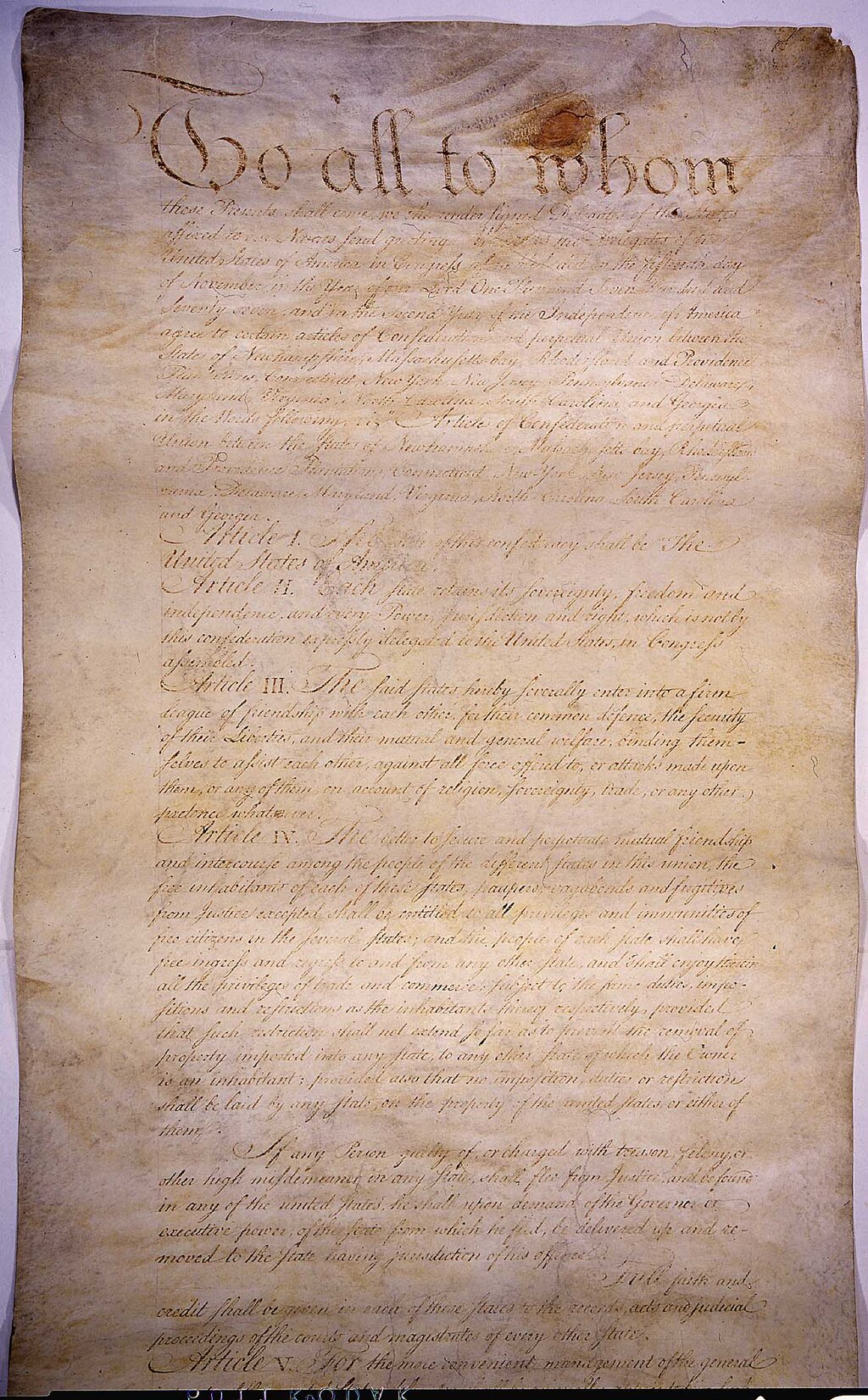
Under the Articles, the states kept most of the power. The national government was incredibly weak, by design. It could declare war, make treaties, and coin money, but it couldn't do much else. This structure quickly led to serious problems.
Why the Articles Failed
The central government's weaknesses under the Articles were debilitating. Here were the biggest issues:
| Weakness | Consequence |
|---|---|
| No Power to Tax | The national government had to request money from the states, which often refused. This left the country broke and unable to pay its debts or soldiers. |
| No Executive Branch | There was no president to enforce laws. The government was just a congress, making it difficult to conduct business or act decisively. |
| No National Court System | Disputes between states had no federal venue for resolution. |
| Required Unanimous Vote to Amend | A single state could block any changes to the Articles, making it nearly impossible to fix its own flaws. |
| Each State Had One Vote | Heavily populated states like Virginia had the same power as small states like Delaware, which many saw as unfair. |
An event called Shays' Rebellion in 1786 highlighted just how fragile the new nation was. Farmers in Massachusetts, many of them Revolutionary War veterans who hadn't been paid, were losing their farms to debt. They rose up in protest, and the national government was powerless to stop them. It took a privately funded army to put down the rebellion.
This scare convinced many of America's leaders that the Articles of Confederation weren't working. The ideals of the revolution were at risk. They needed a new framework, one that could create a government strong enough to protect the nation without infringing on the rights it was founded to protect.
Let's review the key ideas from this period.
According to the philosopher John Locke, which of the following are considered "natural rights"?
The phrase "Life, Liberty and the pursuit of Happiness" in the Declaration of Independence is a direct reflection of the ideas of which Enlightenment thinker?