Understanding the Transformer Framework
Introduction to Neural Networks
The Building Blocks
At its heart, a neural network is inspired by the human brain. It's made of simple processing units called neurons. Think of a single artificial neuron like a tiny decision-maker. It receives one or more inputs, each with an associated importance, or weight. The neuron sums up all these weighted inputs.
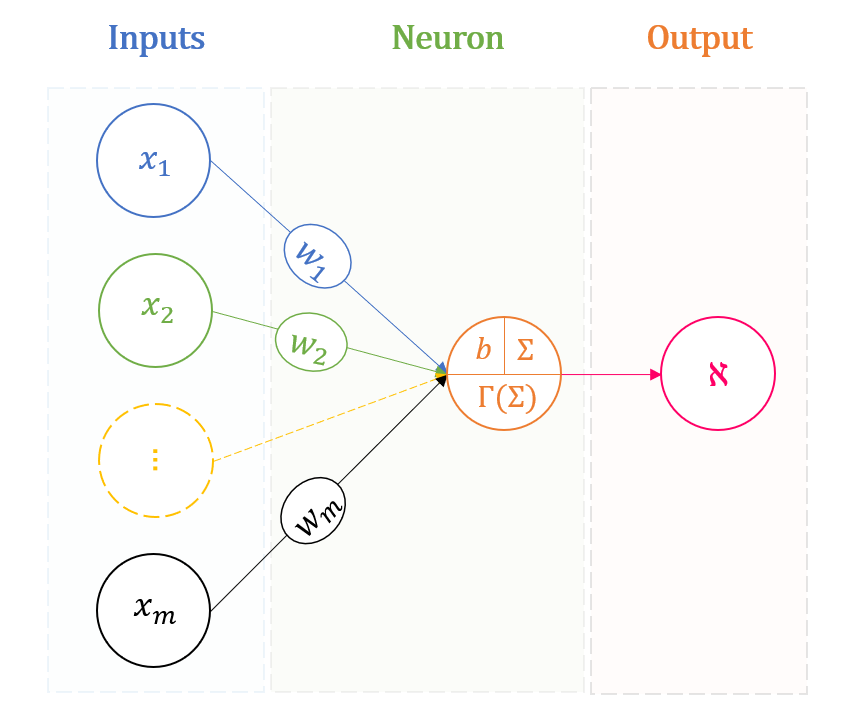
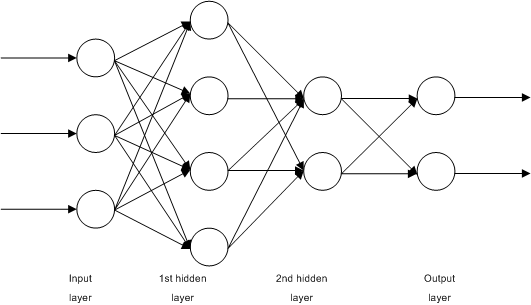
But a single neuron can't do much on its own. The real power comes from connecting many of them together in layers. A typical network has at least three types of layers:
- Input Layer: This is the network's front door. It receives the initial data, like the pixels of an image or the words in a sentence.
- Hidden Layers: These are the intermediate layers between the input and output. This is where most of the computation happens. A network can have many hidden layers, and the term "deep learning" comes from using a deep stack of them.
- Output Layer: This is the final layer that produces the result, such as a prediction or a classification.
The Spark of Activation
After a neuron sums its weighted inputs, it doesn't just pass that sum along. It runs the total through an activation function. This function is a crucial step that introduces non-linearity to the network.
Without it, no matter how many layers you stack, the network would behave like a simple linear model, unable to learn complex patterns in data like speech or images. The activation function decides whether the neuron should "fire" and pass on a signal, and how strong that signal should be.
An activation function acts like a gatekeeper, determining the output of a neuron based on its total input.
One popular activation function is the Rectified Linear Unit, or ReLU. It's very simple: if the input is positive, it passes the value through. If it's negative, it outputs zero. This sounds basic, but it's incredibly effective in practice.
Learning From Mistakes
So how does a network actually learn? It's a two-part process of making a guess, checking how wrong it is, and then adjusting its internal weights to make a better guess next time. This cycle is often repeated thousands or even millions of times.
The first part is forward propagation. This is the straightforward flow of information from the input layer, through the hidden layers, to the output layer. The network takes your data and passes it forward to make a prediction. Easy enough.
Next, the network compares its prediction to the actual, correct answer using a loss function. The loss function calculates a score that represents the error, or "loss." A high loss means the prediction was way off; a low loss means it was close.
The goal of training is to minimize the value of the loss function.
To minimize this loss, the network needs to adjust its weights. This is where gradient descent comes in. Imagine you're a hiker on a mountain in thick fog, and you want to get to the lowest point in the valley. You can't see the whole landscape, but you can feel the slope of the ground right where you're standing. Your best bet is to take a step in the steepest downhill direction. You repeat this process, and eventually, you'll reach the bottom.
In this analogy, your position on the mountain is the current set of weights, and the altitude is the loss. The steepest downhill direction is the gradient. Gradient descent is the algorithm that calculates this gradient and tells the network how to adjust its weights to reduce the loss.
But how do we efficiently calculate the gradient for every single weight in a massive network? That's the job of backpropagation. It starts at the output layer, where the error is first calculated. It then works its way backward through the network, layer by layer, calculating the contribution of each weight to the overall error. It's a clever way of distributing the blame and telling each weight exactly how to change to improve the final prediction.
Forward propagation makes a prediction. Backpropagation corrects the mistake.
Let's check your understanding of these core concepts.
What is the primary role of an activation function in a neural network?
In the analogy of a hiker on a foggy mountain, which concept from neural network training does the 'altitude' of the hiker represent?
These building blocks—neurons, layers, activation functions, and the learning cycle of forward and backward propagation—are the foundation upon which more complex architectures are built.