Understanding the Scientific Process
Introduction to Scientific Inquiry
A Framework for Discovery
Science isn't just a collection of facts; it's a way of asking questions. At its heart is scientific inquiry, the systematic process used to explore the world and build reliable knowledge. Think of it less as a rigid checklist and more as a flexible framework for investigation. It provides a structured path from a simple question to a well-supported answer.
Scientific inquiry can be understood as a flexible process that includes various steps such as questioning, observing, hypothesizing, experimenting, and drawing conclusions.
The goal of this process is to ensure that findings are based on evidence and can be tested by others. It's a method designed to minimize bias and lead to conclusions that are as objective as possible.
It Starts with a Question
Every scientific journey begins with an observation. You notice something and wonder why it happens. Maybe you see that plants near a window grow taller than plants across the room. Or you notice that your phone battery seems to drain faster on cold days. These observations are the seeds of inquiry.
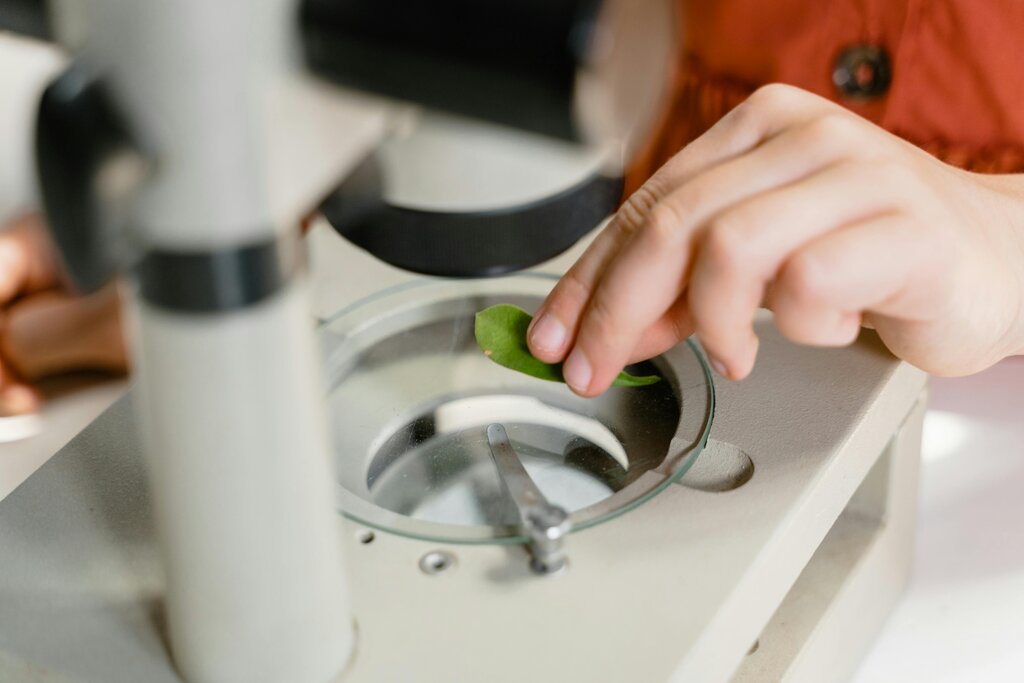
An observation leads to a question. Why do the plants by the window grow taller? Does cold weather really affect battery life? A good scientific question is specific and focused. It turns a general curiosity into a problem that can be investigated.
Forming a Hypothesis
Once you have a question, the next step is to propose a possible answer. This proposed answer is called a hypothesis.
Hypothesis
noun
A testable statement about the relationship between two or more variables or a proposed explanation for some observed phenomenon.
A hypothesis isn't just a random guess. It's an educated, informed guess based on your initial observations and any background knowledge you have. Crucially, a scientific hypothesis must be testable. This means you must be able to design an experiment or make observations that could prove it false.
A statement that can't be tested isn't a scientific hypothesis. For example, “Blue is a prettier color than red” is an opinion, not a hypothesis, because there's no way to test it objectively.
Let's take our plant observation. A testable hypothesis might be: “Plants grow taller with more exposure to sunlight.” This is a clear, specific statement that we can now try to test.
The Cycle of Science
Scientific inquiry is not a straight line from question to answer. It's an iterative process, meaning it often repeats. You form a hypothesis, test it, and analyze the results. Those results might support your hypothesis, or they might not. Either outcome provides new information.
If the results don't support the hypothesis, it's not a failure. It's a learning opportunity. The scientist uses the new information to revise the hypothesis or formulate a completely new one. For example, if we find that sunlight isn't the only factor affecting our plants, we might revise our hypothesis to include water or soil nutrients.
If the results do support the hypothesis, the process continues. Other scientists will try to replicate the experiment to see if they get the same results. This continuous cycle of testing, refining, and re-testing is how scientific knowledge becomes stronger and more reliable over time. It's a self-correcting system that builds on itself to paint an ever-clearer picture of how the world works.