Understanding the Roots of Emotional Exhaustion
Biological Foundations of Mood
The Chronic Stress Connection
When you feel persistently down or unmotivated, it's not just in your head—it's in your body's wiring. A key player is the Hypothalamic-Pituitary-Adrenal (HPA) axis, your body's central stress response system. Think of it as an ancient alarm system designed to handle short-term threats, like seeing a predator.
The hypothalamus signals the pituitary gland, which in turn tells the adrenal glands to release cortisol, the primary stress hormone. This works beautifully for brief dangers. It sharpens your focus and gets your body ready for action. But in the modern world, stressors are often chronic—work deadlines, financial worries, relationship issues. When the HPA axis is constantly activated, it never gets a chance to reset.
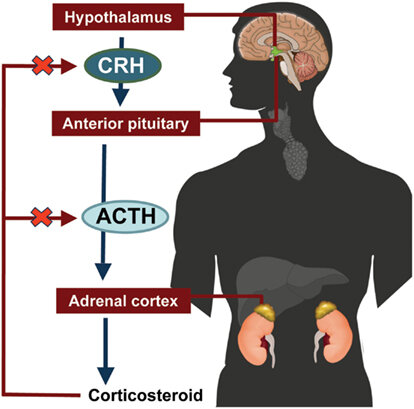
This leads to HPA axis dysregulation. The system either becomes overactive, flooding your body with cortisol, or it burns out and becomes blunted, unable to respond effectively when needed. This constant exposure to high cortisol levels isn't just a feeling; it has physical consequences for your brain.
How Stress Reshapes the Brain
Prolonged cortisol exposure directly affects brain structures crucial for mood and memory. The brain isn't static; it constantly changes in response to experience, a process called neuroplasticity. Chronic stress, unfortunately, can drive negative plastic changes.
Two areas are particularly vulnerable:
-
The Hippocampus: This region is central to learning, memory, and emotional regulation. It's rich in cortisol receptors, making it highly sensitive to stress. Chronic stress can actually cause the hippocampus to shrink, impairing its ability to form new memories and, critically, to help turn off the HPA axis stress response.
-
The Amygdala: This is the brain's fear center. While stress shrinks the hippocampus, it can cause the amygdala to grow and become more active. An overactive amygdala means you're more likely to perceive threats, feel anxious, and get stuck in a state of high alert.
This creates a vicious cycle: stress impairs the part of the brain that shuts off stress, while strengthening the part that detects it.
Motivation, Reward, and Energy
You've likely heard about the 'chemical imbalance' theory of depression, which often focuses on low serotonin. While neurotransmitters are vital, this idea is an oversimplification. The reality is more about how entire neural circuits function, especially those involving dopamine.
Dopamine is often misunderstood as the 'pleasure chemical.' It's more accurately the 'motivation chemical.' It drives your desire to seek out rewarding experiences—food, social connection, personal achievements. It creates the 'wanting,' not just the 'liking.' When the dopamine system becomes blunted, often due to chronic stress, things that used to be enjoyable lose their appeal. This is anhedonia, a core symptom of depression. The effort required to do something feels greater than the potential reward, leading to that feeling of being 'stuck' or lethargic.
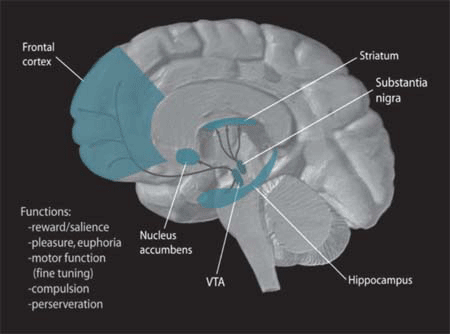
Serotonin and norepinephrine also play key roles. Serotonin helps regulate mood, sleep, and appetite, while norepinephrine is involved in alertness and energy. When these systems are dysregulated, you might experience the classic physical symptoms of low mood: poor sleep, changes in appetite, and a profound lack of energy.
The Brain's On/Off Switch
Beyond the monoamines, the brain's most abundant neurotransmitters are glutamate and GABA. They act as the brain's primary 'on' (excitatory) and 'off' (inhibitory) signals. A healthy brain maintains a delicate balance between them.
Chronic stress throws this balance out of whack. It can lead to an excess of glutamate. This over-excitation isn't just linked to anxiety and restlessness; in high amounts, glutamate can become neurotoxic, damaging neurons and contributing to the structural changes seen in the hippocampus.
At the same time, the function of GABA can be impaired. GABA's job is to calm the nervous system down. Without enough inhibitory control from GABA, the brain can get stuck in an overactive, anxious state. It becomes difficult to quiet racing thoughts or shut off the body's stress response.
Persistently high cortisol levels can begin to impair brain function, particularly in areas responsible for memory and emotional regulation like the hippocampus and prefrontal cortex.
Understanding these interconnected systems—the HPA axis, neuroplasticity in the hippocampus and amygdala, and the balance of key neurotransmitters—shows that persistent low mood is deeply rooted in biology. It’s not a single broken part, but a system-wide dysregulation driven by the body’s response to chronic stress.
Let's review the concepts we've covered.
What is the primary role of the Hypothalamic-Pituitary-Adrenal (HPA) axis?
Chronic stress and prolonged cortisol exposure tend to have opposite effects on the hippocampus and the amygdala. This statement is:
These biological foundations provide a clearer picture of why low moods can feel so persistent and physically draining. They also highlight potential pathways for intervention, from managing stress to rebalancing neural circuits.